 Annie Teh · · 5 min read
How would you market a dating app for elites?

Marketing isn’t one-size-fits-all. Various tactics can be employed depending on the product, seller, and target customers. But bold experiments can sometimes go haywire.
Enter Ivory. The startup brands itself as an exclusive dating app for elites, but has aligned itself with questionable subjects like the Kardashians and the Graduate Mother’s scheme, a controversial population planning program in Singapore in the 80s that favored university graduates. The name itself incites thoughts of an “ivory tower,” from which elitists look down upon the rest of humanity.
Understandably, this created a lot of controversy. Since their launch, they’ve been faced with a slew of press, mostly unfavourable towards the brand, calling it elitist and and even eugenic. One article by Coconuts Singapore even jokingly claims that Ivory’s selective user base is there to “[ensure] that bloodlines and tendencies to treat waiters badly go untarnished.”
But does that mean their press launch was a flop? Is their marketing ploy a result of bad taste or strategic positioning? And most importantly, has it worked?
We reached out to three marketing professionals to find out what went right and what went wrong.
Is bad publicity always bad?
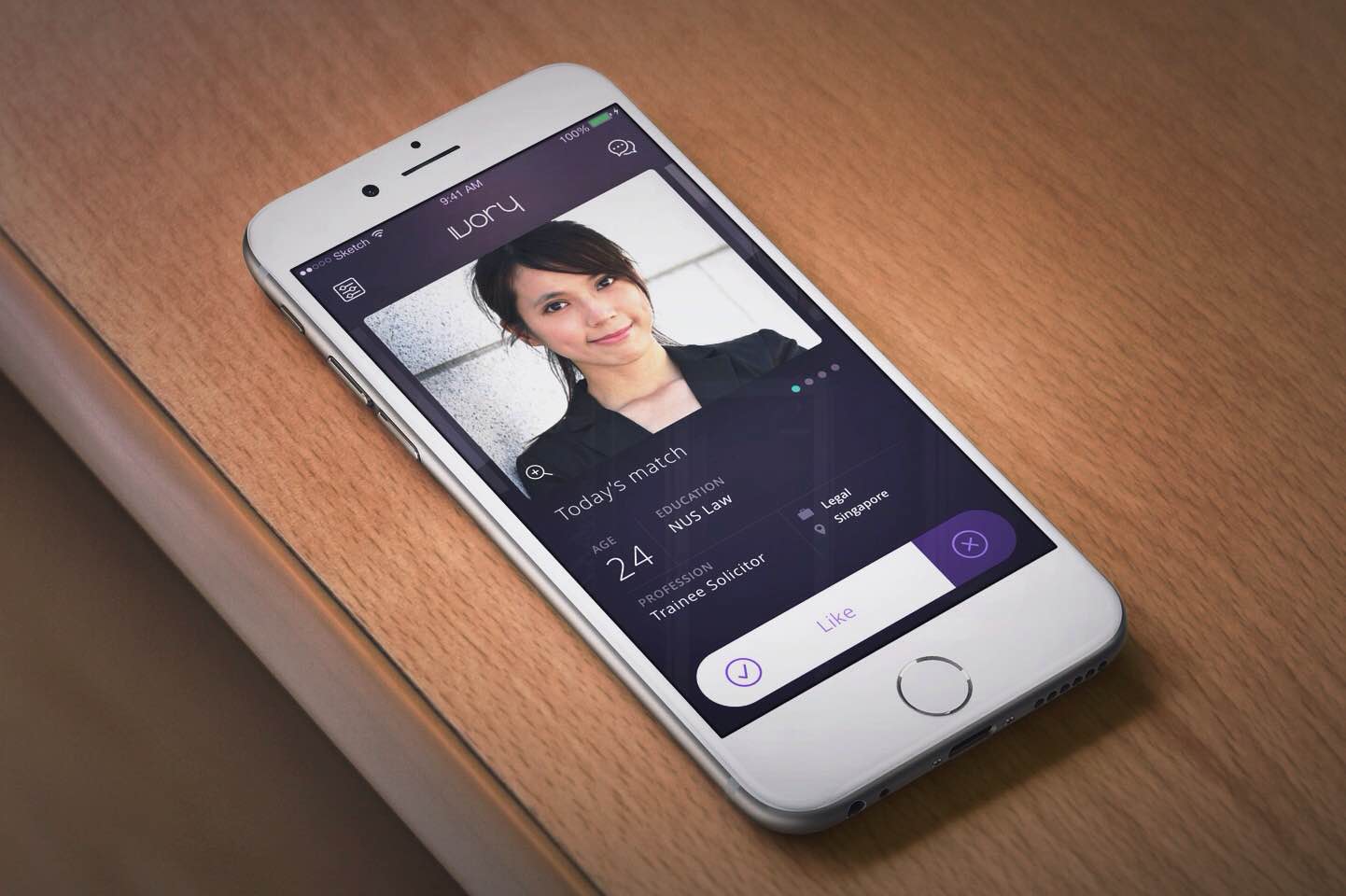
A mockup of the Ivory app.
All publicity is good publicity, the saying goes. But is that true?
Perhaps it is more accurate to say that bad publicity is still publicity. Amy Kean, regional director of strategy, Mindshare APAC, shared with Tech in Asia that when managed well, bad publicity can help bring financial growth to a company. Ashley Madison, for example, added 4 million members right after its big data leak.
“Some businesses are in the lucky position of being able to court controversy to great effect: having an ad complained about generates free PR that often outweighs the original paid media value, and even a bold move such as advertising on porn sites has been found to win people’s respect (and cash), just due to the sheer bravery of the business decision.”
Of course, this is barring all other costs — reports shared that Ashley Madison’s data leak was connected to several suicide cases.
While bad publicity has worked in the past, Susie Hughes, Vice President of Allison+Partners argues that the rise of social media makes it harder to manage the voices telling a brand’s story.
“Social media has given voices outside the brand — namely customers, influencers and other stakeholders — the ability to tell a brand’s story on its behalf and if this isn’t closely monitored, it can quickly get out of hand. The brand not only loses control of the narrative but also the opportunity to effectively respond. Bad publicity is simply bad publicity, and it can now mushroom and go viral so fast that the truth can be drastically skewed or indeed lost.”
The unlikeable villain

Image credit: Pixabay
When you look past Ivory’s communication efforts, you may argue that they’re catering to a niche market, even if everyone else hates it. Hui Min Cheong, Head of Marketing at Tech in Asia, shared that controversy, while difficult to control, does create conversation.
“[Ivory’s marketing campaign] went wrong because they used a mass market approach when their target audience is very niche, but it went ‘right’ because they created something controversial to begin with. Controversy always attracts attention.”
But the attention might not have been maximized to build an audience. While they’re riding on the “elitism” controversy in Singapore to promote its exclusivity, Kean says that their brand voice misses the mark. Instead of being snarky and endearing, they verge on unappealing.
If Ivory want to be the Donald Trump of dating sites, then they may as well run with it.
“The communication on the site itself is a little too negative about ‘everyone else’ to be emotionally appealing or endearing. There might not be enough tongue in their cheeks for this initial burst of PR to go the distance. Even with an evil villain in a Disney film there’s something about them you warm to: a joke, a tick, a complicated childhood… but this evil villain is just plain rude.”
Moving ahead

Image Credit: Pixabay
It’s impossible to rewind the clock now, but as Ivory’s product has yet to be released, there’s still a lot of room for Ivory to improve its image. According to Kean, this doesn’t mean dropping the “evil villain” persona, but riding on it in a way that it appeals to the right crowd.
Real-life stunts would work in favor of the startup, like working with influencers that fit the Ivory profile, or having digital out-of-home executions (like dynamic advertisements or location-based data collection) that scans your face and wallet to see if you quality as an Ivory member.
“If Ivory want to play the evil villain and be the Donald Trump of dating sites then they may as well run with it – club nights only for well-dressed attractive people or exclusive ‘power’ lanes in the CBD for powerful people to walk along, away from the riffraff, sponsored by the app. Mix it with a bit of radio advertising to maintain awareness and keep people talking and they’ll at least get an initial burst of intrigued potential applicants.”
Cheong, on the other hand, suggests that keeping the Ivory community closed would enhance that concept of exclusivity. Since the intended market is niche, word-of-mouth may attract the right crowd instead of a mass-market approach. Reach out to the Tatler crowd, for example, instead of mass readership on Mothership.sg.
Ivory’s response
Tech in Asia reached out to the Ivory team to find out how it’s done since the app opened for signups in April. According to Ivory’s spokesperson, it has received 500 to 1,000 signups to date. Perhaps there is something to be said about controversy.
Here’s what Ivory says in response to the backlash it received:
“The Ivory team is still working on perfecting our sarcasm. We’re very much in the business of creating a curated community of ambitious individuals, from students to civil servants to doctors. There isn’t any bar on profiles we’d accept.”
Get clued in
Itching to learn more about content marketing? Fill in the very simple form below, and we’ll drop you an update the next time we share new insights. Let us know what you want to learn next in the comments below!
Brand Pulse is Tech in Asia’s very own take on sponsored content. Our Brand Pulse team works closely with reputable brands to create educational, insightful, and credible content for our audience. To find out more, visit us at brandpulse.techinasia.com, or drop us an email at brandpulse@techinasia.com.
Stay updated on the go with our mobile app.
Get latest insights with smoother, more personalized experience through TIA mobile app.
Recommended reads
 GudangAda gears up for challenges as it guns for profitability
 Animoca co-leads $1.75m round of IreneDAO creator
 Coinbase to halt operations in Japan amid crypto slump
 Meta launches Avatars Store in Singapore
 The necessary nature of branded content
 The important and unseen role that content delivery networks play in our daily lives
 QuickBytes: How this startup supports side hustles and flexible work
 Why Seedly is moving on from ShopBack and joining CompareAsiaGroup
 20 fresh tech and startup jobs in Asia this week
 High-voltage drama in the world’s fastest-growing video-streaming market




Edited by Terence Lee and Nadine Freischlad
(And yes, we’re serious about ethics and transparency. More information here.)






📅 Upcoming Events
22 October 2026
Payoneer x CSPN Summit 2026