Ezra Ferraz · · 4 min read
The next industry ripe for disruption in the Philippines: ed-tech
Few industries in the Philippines are as ripe for disruption as education. Teach for the Philippines, for example, sends graduates from the top universities in the country to teach in public schools. The program was of course based on Teach for America, and the same pattern holds true for most alternative education and ed-tech initiatives in the Philippines: they come from abroad.
One of the latest and most promising companies to set up shop in the Philippines is Quipper. Headquartered in London, the ed-tech company has only been in the country since January this year yet has already got good traction. They’ve partnered with the Philippine Department of Education to provide Quipper School – their online platform full of grade-aligned curriculum from kindergarten through twelfth grade – to schools in Quezon City, one of the major cities that makes up Metro Manila.
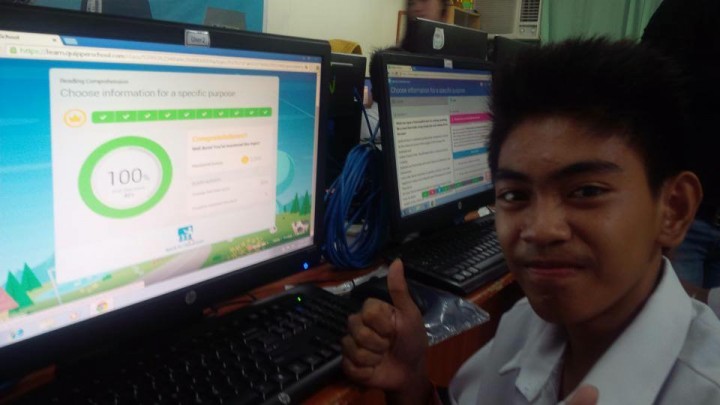
Results show that student scores on the national achievement test (NAT) improve through use of Quipper School, the startup claims, which features content for standard subjects such as math, English, and science, along with localized content like Filipino and social studies. For both types of subjects, Quipper employs fifteen to twenty professional editors and teachers from the Philippines to make sure that the curriculum is aligned with the national standards set by the Department of Education.
Quipper shoulders the costs of implementing Quipper School, earning money only when teachers avail of premium features – in other words, they are trying to conquer the Philippine educational market on a freemium model.
Teachers can pull from the material available on Quipper School to more quickly create assignments, most of which are homework rather than class work, as well as more accurately track student progress. Students can use Quipper School through any web-connected device, login to the platform via their Facebook account, and even post their achievements, such as how many topics they’ve mastered, on their Facebook Wall.
See: New education site in China turns to students to make lessons
Teacher, meet Quipper
Yet the picture is not all rosy. Compared to other Southeast Asian markets that Quipper operates in, such as Indonesia and Thailand, the Philippines lags behind in terms of infrastructure, marketing director Takuya Homma (pictured below) reveals. He says that many teachers and students do not have the best internet connectivity or devices to use Quipper School.

According to Homma, these technical roadblocks are easily overcome by cultural tendencies. “The appetite for being innovative and trying to learn new technologies is as advanced in the Philippines as in other countries and we’re very happy about it,” Homma says.
Homma cites several examples to this end. Some Filipinos may not have web access at home, so they avail of the internet shops that are a staple of Philippine neighborhoods. The teachers, too, are sometimes reluctant to adopt Quipper, at least initially. “Some teachers are hesitant to be innovative and change the traditional means of teaching,” he adds.
To overcome their resistance, Homma and his team invoke the most compelling sell points of Quipper, including the fact it will expose their students to digital technology, allow them to learn anytime and anywhere, and save the teacher’s time as it relates to sourcing, creating, and grading homework. To date, more than 10,000 teachers in the Philippines have registered with Quipper School.
Once they get on board with the idea of Quipper School, Homma says, “They get the hang of it pretty quickly.”





Stay updated on the go with our mobile app.
Get latest insights with smoother, more personalized experience through TIA mobile app.