- Premium Content It takes our newsroom weeks - if not months - to investigate and produce stories for our premium content. You can’t find them anywhere else.
 Kul Bhushan · · 5 min read
Why China’s crypto exodus is a boon for green bitcoin mining
Cryptocurrency has often been labeled a volatile asset, and Elon Musk has helped cement that reputation.
Musk’s main issue with the virtual currency is that mining bitcoin consumes a massive amount of energy – enough to make any environmentalist raise an eyebrow.

Photo credit: 123rf
While some studies have shown that cryptocurrency’s total carbon footprint is much smaller than conventional financial services industries like banking, digital currencies are still rather energy intensive.
In fact, if bitcoin were a nation, it would rank among the top 30 energy-consuming countries globally.
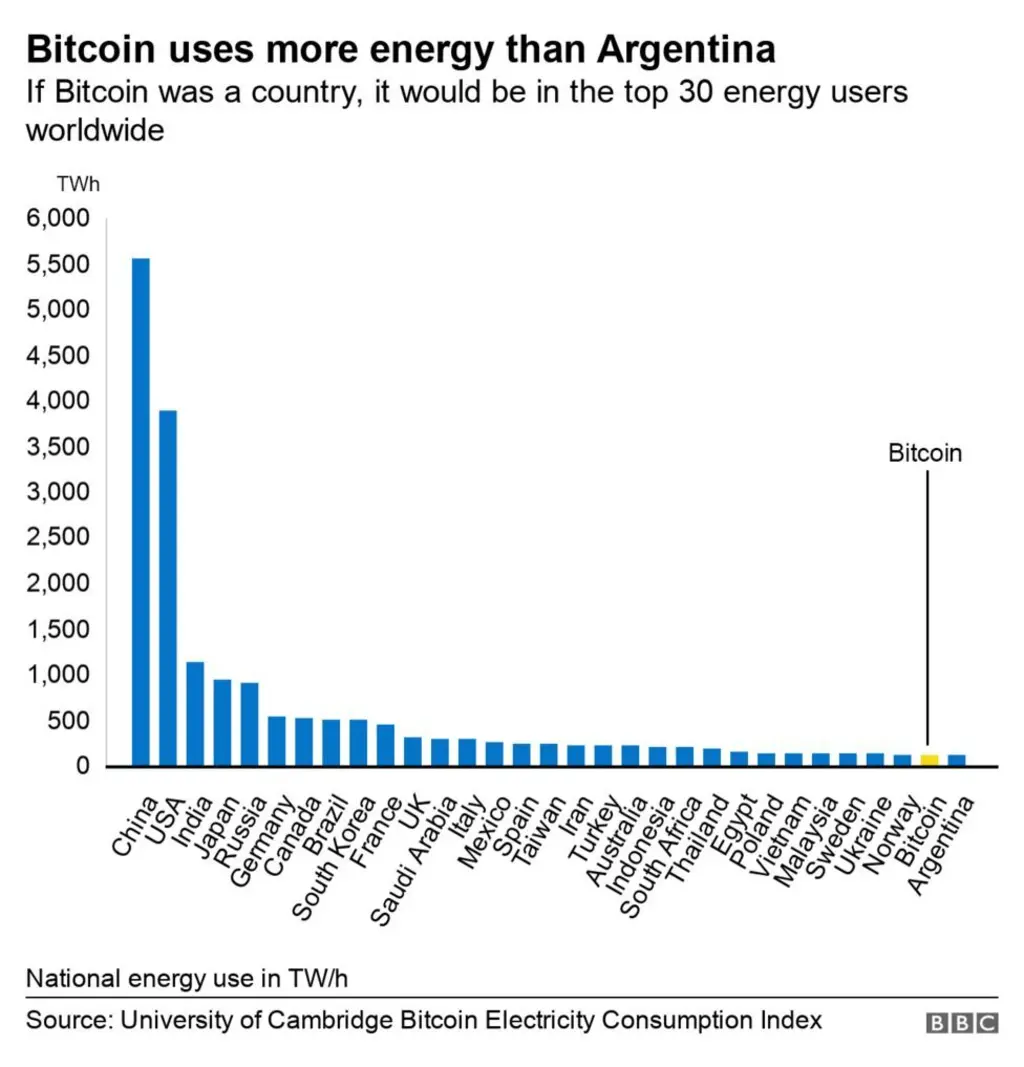
Bitcoin’s usage of electricity compared with that of countries / Image credit: BBC report
Speaking of nations, China may have played an unintentional role in getting crypto miners to go green when it intensified a crackdown on all kinds of bitcoin mining activities within its borders in June this year.
It’s worth noting that China has long been considered a central hub for the bitcoin mining network. The clampdown was a body blow to the industry, taking half the world’s bitcoin miners offline overnight.
According to data from the Cambridge Centre for Alternative Finance, Chinese miners were responsible for about 70% of global bitcoin production. They did use some renewable energy, such as hydropower in the rainy season, for instance, but coal was their primary source of power for the rest of the year.
Beijing’s crackdown on cryptocurrencies is believed to pave the path for a state-backed digital yuan, which has been in development since 2014.
Theories aside, miners are being forced to shift their bases to geographies with more stable or permissive regulatory regimes. Many of these destination countries, especially Paris Accord signatories, are looking to switch to environmentally friendly sources of energy and reduce their carbon footprints, which may drive crypto miners to swiftly adopt environment-friendly practices.
This possible shift to sustainable mining could, in turn, give the clean energy industry a major boost.
A boon for solar energy?
Energy demand for mining cryptocurrency is most likely to pick up in the future. However, this doesn’t necessarily mean that the activity will consume more fossil fuels as well. In fact, there’s a good chance that bitcoin mining could forge a symbiotic relationship with the renewable energy market, which itself is expected to grow to US$1.5 trillion by 2025.
Creative solutions abound
Stay ahead in Asia’s tech landscape
This is premium content. Subscribe to read the full story.
The migration of crypto miners out of China could very well be a blessing in disguise for the renewable energy industry.
We know this is not ideal. ⌛ Sign up in 20 seconds. Cancel anytime.
Our subscriber community includes professionals from these companies:





Stay updated on the go with our mobile app.
Get latest insights with smoother, more personalized experience through TIA mobile app.