Eva Xiao · · 6 min read
Free lunch, crypto-style: Why blockchain startups are giving away their tokens

Photo credit: lucas Favre / Unsplash
As the number of cryptocurrencies continues to multiply – there are currently over 1,500 – rising above the noise is increasingly difficult for startups in the blockchain industry. That’s one reason why giving away tokens for free – as counterintuitive as it sounds – is becoming a popular way to attract users.
Called “airdrops,” these cryptocurrency freebies are used to incentivize a broad range of user behavior, from joining the company’s Telegram community and promoting their project on social media, to actually paying for more of their project’s tokens.
Sometimes users don’t have to do anything at all except own a certain amount of ether (ETH) or bitcoin. In China, airdrops are aptly referred to as “handing out candy.”
“It’s a very easy way to capture markets. Everyone loves free stuff,” explains Rhythm Gupta, founder of Aristo Capital, a cryptocurrency mutual fund. “So whenever you give them something for free, they’ll do whatever they need to for you.”
Everyone loves free stuff.
Thanks to initial coin offerings (ICOs), where companies create and sell their own tokens, a rush of capital has become accessible for blockchain startups – some of which have raised millions of dollars in minutes. Last year, companies raised a total of US$6.1 billion through token crowdsales, according to ICOdata.
But ICOs aren’t just about funding: They’re also a way to market the company’s project and seed their initial user base. Airdrops can do that, too, except that unlike a token crowdsale, there’s no cost or financial risk on the user’s side. The hope is that once people get their hands on free tokens, they’ll pay more attention to the startup’s project or even become an early adopter.
That’s especially important for companies that abstain from ICOs and raise capital via more traditional channels, such as institutional investors and angels. After raising funds privately, for instance, securities platform Polymath gave away 10 million POLY tokens to potential users – the equivalent of US$12.4 million at the time of writing.
“A lot of projects are fully funded by private sales – they don’t even do ICOs anymore,” says Maggie Yi, researcher at I Blockchain Capital, a cryptocurrency fund based in Shanghai. “But the project still wants people to pay attention to its project, so they airdrop tokens to their community.”
In countries like China, where ICOs are banned, airdrops are also an alternative way to distribute cryptocurrency to a wide base of people without running afoul of regulators.
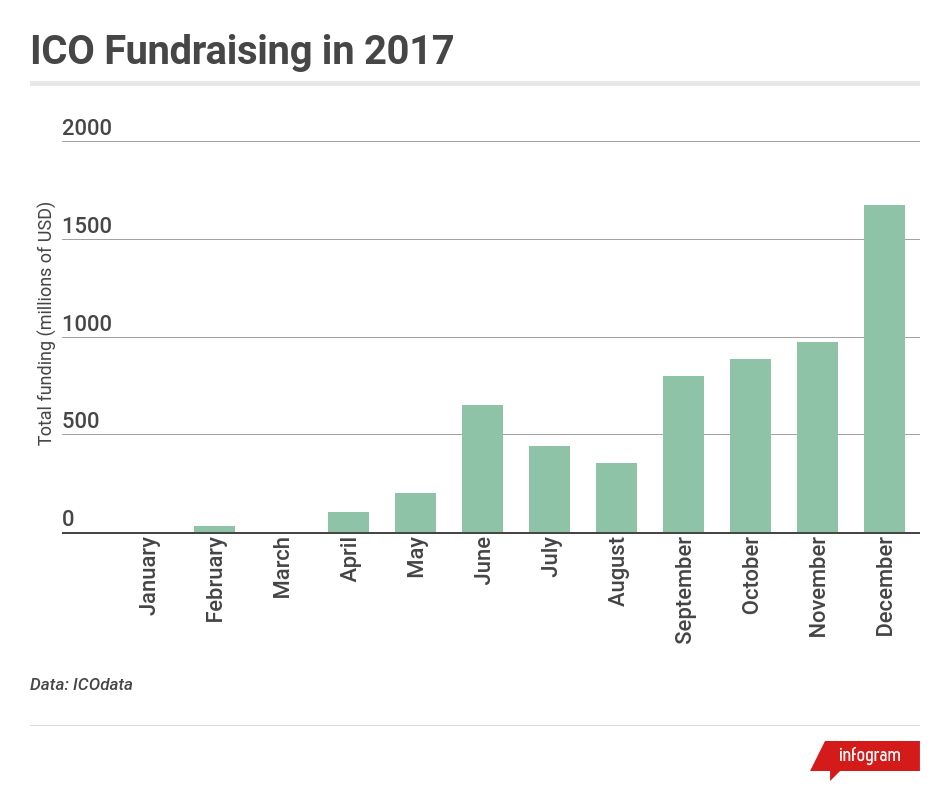
2017 saw 884 initial coin offerings worldwide, according to ICOdata.
Crypto marketing
Email spam





Stay updated on the go with our mobile app.
Get latest insights with smoother, more personalized experience through TIA mobile app.