- Premium Content It takes our newsroom weeks - if not months - to investigate and produce stories for our premium content. You can’t find them anywhere else.
 Jofie Yordan · · 7 min read
Indonesia’s unicorns have been avoiding community group buying, but the clock’s ticking
Pinduoduo and its social commerce model have ushered in a new phase of ecommerce in China, and the country’s ecommerce giants have all followed suit.
The model, in which consumers pool orders to enjoy deep discounts, also has potential in Indonesia, particularly in targeting the many underserved consumers in lower-tier cities or rural areas. But it will take more than copy-pasting the Pinduoduo way for it to work here.
“It is not as simple as providing a marketplace and facilitating these transactions through a mobile app,” says Yinglan Tan, founding managing partner at Insignia Ventures Partners.
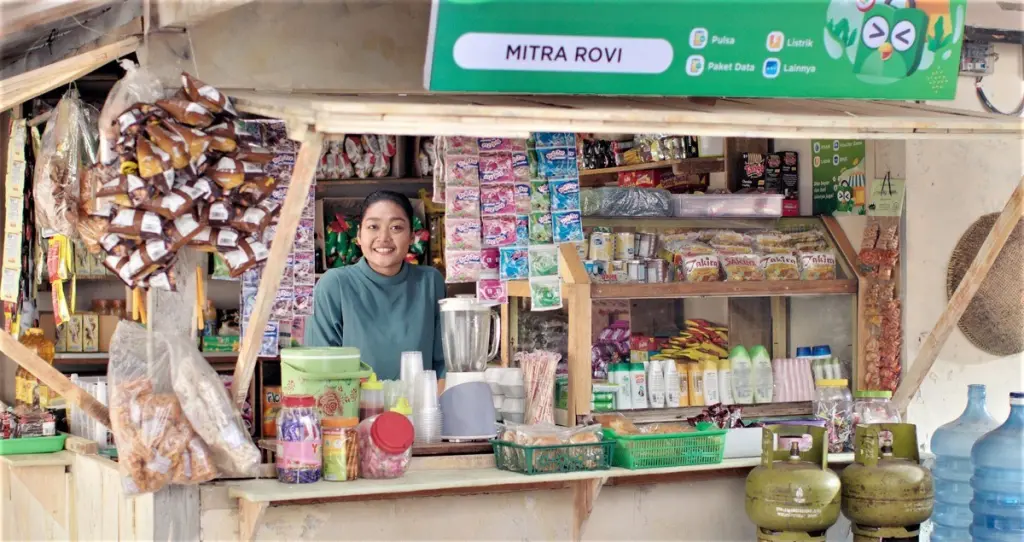
Mitra Tokopedia / Photo credit: Tokopedia
An online-to-offline (O2O) approach seems to be the way to go, as shown by social commerce startups Super, Chilibeli, and KitaBeli. It’s also inevitable that the major ecommerce players will take a closer look: The likes of Bukalapak, Tokopedia, and Grab are notably in the O2O space as well.
But there’s reason to believe that the unicorns – with their thousands of employees, other (and more promising) business lines, as well as investor expectations – have less of an upper hand. In a fragmented space like this, a smaller company’s nimbler approach could prove decisive.
A key to penetrating lower-tier cities
Community group buying is a hyperlocal approach to social commerce that organizes multiple people living in close proximity so they can collectively bargain on items through bulk purchases. Considered a subset of social commerce, community group buying has become noteworthy in China with big players like Meituan and Pinduoduo diving into the space.
Insignia’s Tan finds that Indonesia is an obvious breeding ground for social commerce.
“The appeal [of social commerce] resonates in second-tier and third-tier cities in the region, where costs are not the only key pain point but also the lack of infrastructure,” he explains. For example, a lack of roads for last-mile supply trucks prevents “more consistent and widespread distribution of various goods in these areas.”
In Indonesia, multiple startups have cropped up in the social commerce space, including Super, which recently secured US$28 million in funding led by SoftBank Ventures Asia, and the East Ventures-backed KitaBeli. The region’s ecommerce giants are also monitoring the space.
“In China, social commerce really offers [ecommerce companies] the ability to penetrate lower-tier cities while at the same time remaining profitable,” says a source close to a regional unicorn who declined to be named.
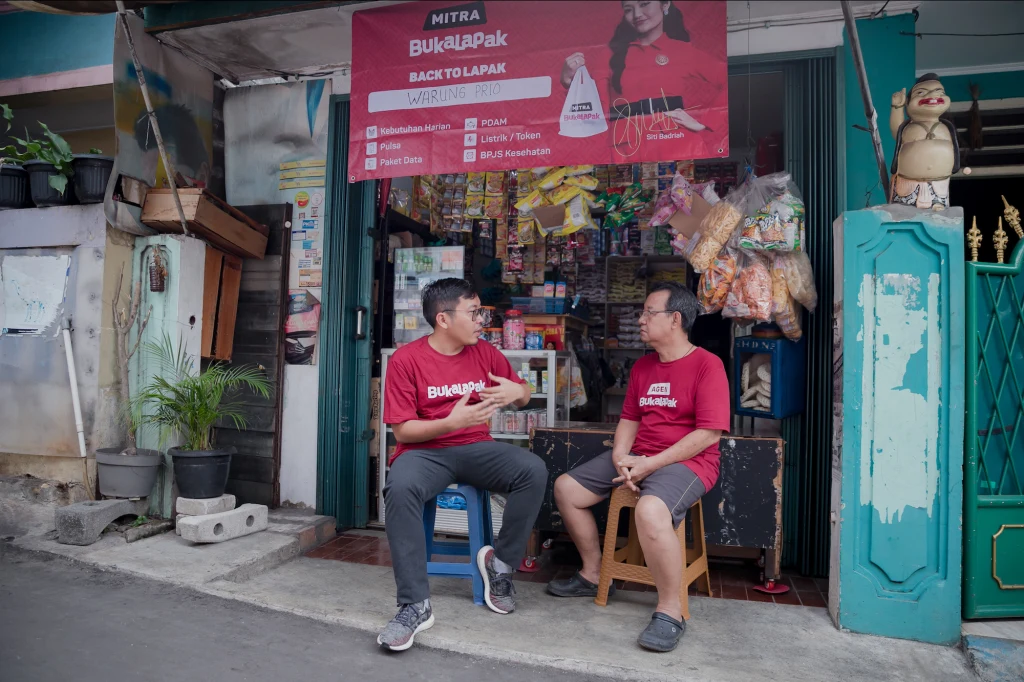
Co-founder and ex-CEO Achmad Zaky with a Bukalapak partner / Photo credit: Bukalapak
Penetrating lower-tier cities is indeed a priority for these companies, considering that the majority of total ecommerce volume in Indonesia still comes from the Greater Jakarta area. But unlike with China’s ecommerce heavyweights, the group-buying model is more the exception rather than the norm among Indonesia’s ecommerce unicorns.
Why unicorns don’t have the upper hand
Stay ahead in Asia’s tech landscape
This is premium content. Subscribe to read the full story.
Unlike in China, the archipelago’s ecommerce giants have not joined the community group-buying frenzy yet. But they might swoop in soon.
We know this is not ideal. ⌛ Sign up in 20 seconds. Cancel anytime.
Our subscriber community includes professionals from these companies:





Stay updated on the go with our mobile app.
Get latest insights with smoother, more personalized experience through TIA mobile app.