- Premium Content It takes our newsroom weeks - if not months - to investigate and produce stories for our premium content. You can’t find them anywhere else.
 Ardi Wirdana · · 7 min read
Can Indonesia’s Shopify-like startups usurp ecommerce giants?
As Indonesia’s ecommerce battle shifts to public markets, the next battleground appears to be shaping up. Fueled in part by the Covid-19 pandemic, a number of startups are seeking to become Indonesia’s answer to Canadian tech giant Shopify.
One of them is BukuKas, a digital ledger for small and medium-sized enterprises (SMEs). Established in 2019, BukuKas rolled out a separate app late last year to tap into the glaring ecommerce opportunity in the country.
Called Tokko, the new app helps small businesses – many of which were affected by Covid-19-related restrictions – set up web stores and sell more effectively on social channels.
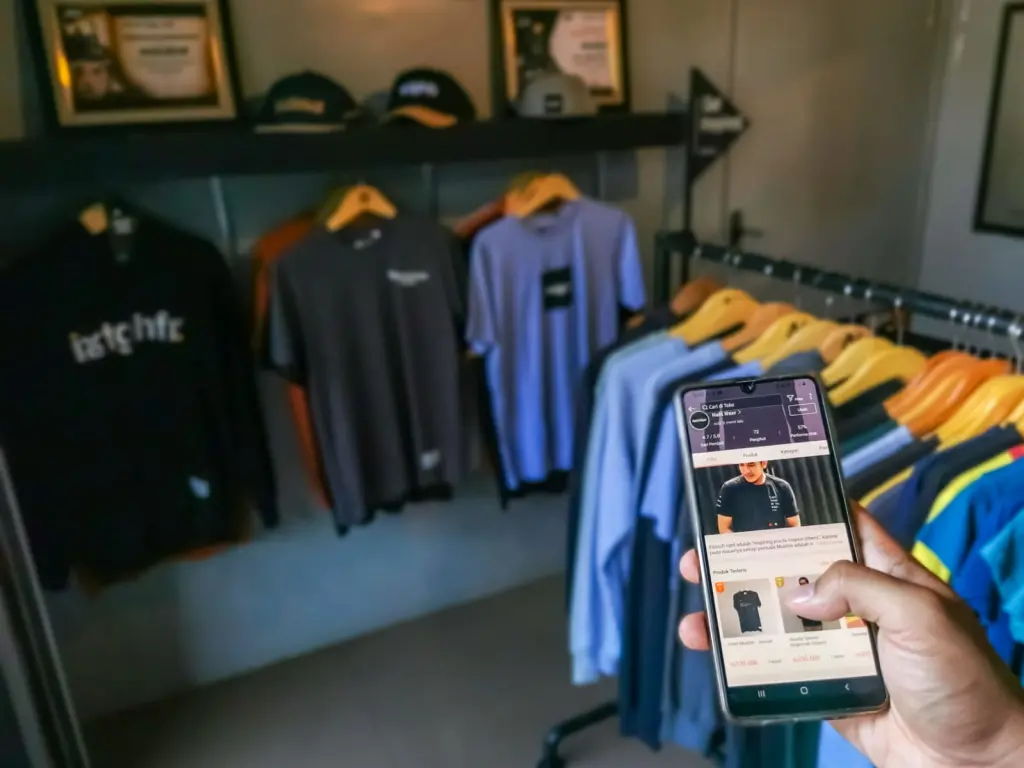
An Indonesian SME clothing brand using ecommerce platform to increase sales / Photo credit: Tech in Asia
At a time when digital marketplaces are seen as the only efficient and viable way for small businesses to sell online, BukuKas co-founder and CEO Krishnan Menon believes that Tokko can be a breath of fresh air.
“It’s [a way] for direct-to-consumer (D2C) brands and small merchants to serve their customers directly using a simple software stack,” says Menon, a Lazada alum and co-founder of D2C furniture company Fabelio.
Indeed, leaving large marketplaces for platforms like Shopify is a trend that’s quietly unfolding across the region. In Indonesia, Menon is only one of many founders eyeing this niche.
Bookkeeping apps BukuWarung and CrediBook, as well as decacorn Gojek are among those that have also jumped on the bandwagon, rolling out Tokoko, CrediStore and GoStore, respectively. Meanwhile, East Ventures-backed Desty launched during the pandemic, joining a small group of existing ecommerce enablers in the Indonesian market, which includes Sirclo, TokoTalk, and Avana.

Shopify but simpler
When talking about their model and ambition, players in the space are quick to point to Shopify.
The platform allows anyone to set up an online store and sell products directly to customers. After going public in 2015 at a valuation of US$1.3 billion, Shopify expanded globally, and the tech giant says that it now powers over 1.7 million businesses worldwide. The Toronto-based company does not have an Indonesian office, though its platform is commonly used in the country.
While Shopify’s Indonesian counterparts share the same mission, there are notable differences in approach and product offering.
For example, unlike Shopify, almost all Indonesian players offer their basic web store solution for free. They then monetize their product through premium upgrades or transaction fees.
Learning from past stumbles
Riding on social media traffic
Squaring up to marketplace giants
Stay ahead in Asia’s tech landscape
This is premium content. Subscribe to read the full story.
The pandemic has forced MSMEs to explore new digital channels, prompting several players – including Gojek – to launch online shop builders.
We know this is not ideal. ⌛ Sign up in 20 seconds. Cancel anytime.
Our subscriber community includes professionals from these companies:





Stay updated on the go with our mobile app.
Get latest insights with smoother, more personalized experience through TIA mobile app.








📅 Upcoming Events
22 October 2026
Payoneer x CSPN Summit 2026