- Premium Content It takes our newsroom weeks - if not months - to investigate and produce stories for our premium content. You can’t find them anywhere else.
 Putra Muskita · · 5 min read
Indonesia’s ecommerce logistics giants brace for a price war
Unlike their ecommerce partners with their glitzy billion-dollar valuations, Indonesia’s third-party logistics companies mostly stay in the background. But that has changed in the past few months.
First, SiCepat raised a US$170 million series B round, which founder The Kim Hai claims makes the company as a “soonicorn.”
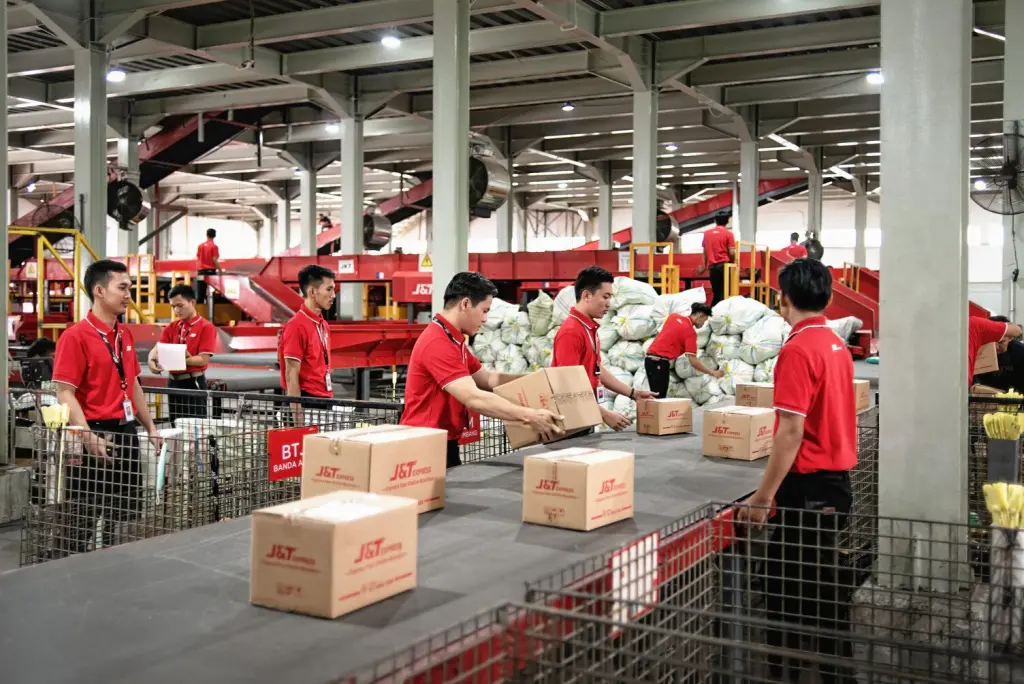
Photo credit: J&T Express
Just weeks later, J&T Express – founded by Jet Lee, formerly the Indonesia CEO for Chinese mobile phone brand Oppo – banked a whopping US$2 billion as it mulls an initial public offering in the US. The pre-money valuation is reported to be US$6 billion.
Despite being in the business for less than a decade, these companies have been able to go up against established incumbents by adopting an ecommerce-first approach, which lets them ride on their partners’ exponential growth.
While SiCepat and J&T both claim profitability, the recent fundraising will be essential in their quest for market dominance.
Pricing makes the difference
The pandemic has sharply increased ecommerce transactions in many countries, and Indonesia is no exception, says J&T Express CEO Robin Lo. At the same time, online marketplaces, which are still unprofitable, are trying to reduce cash burn, a lot of which can be attributed to shipping subsidies.
This means that for ecommerce-focused logistics companies, the margins will get tighter.
When ecommerce companies roll back shipping subsidies, logistics companies are asked to bear the costs, according to the co-founder of an Indonesian logistics firm who declined to be named. In return, they get volume commitments from the platforms.
Corporate rates can go as low as 40% less than the published rate.
“It’s no wonder that J&T, SiCepat et al. require large capital injections – they need to give very low prices to ecommerce platforms,” he says. “The hope is that the large volumes they get can cut down costs.”
Corporate rates can go as low as 40% less than the published rate, says a regional manager for logistics at a major ecommerce platform. For instance, the corporate rate for next-day delivery can go for 5,000 rupiah (US$0.34) per kilogram. That’s the typical rate, although platforms like Shopee and Lazada often push down prices in exchange for volume. J&T Express is said to have gone even lower at 4,500 rupiah (US$0.31) per kilogram.
“What is the cost like at rates like that?” the source asks.
But pricing pressure doesn’t come from just the ecommerce platforms.
Regional ambitions
Stay ahead in Asia’s tech landscape
This is premium content. Subscribe to read the full story.
As these companies raise funds in the hundreds of millions of dollars and secure valuations worth a billion or more, a price war may be imminent.
We know this is not ideal. ⌛ Sign up in 20 seconds. Cancel anytime.
Our subscriber community includes professionals from these companies:





Stay updated on the go with our mobile app.
Get latest insights with smoother, more personalized experience through TIA mobile app.