Stefanie Yeo · · 7 min read
This startup is unlocking contactless payments for SMEs in SEA

Summary:
- Many Southeast Asian consumers now prefer cashless payments, but some MSMEs are hesitant to adopt them because of high transaction fees, expensive hardware, and complex setup processes.
- Software Point-of-Sale (SoftPOS) solutions enable merchants to accept contactless payments using standard devices instead of specialized hardware, streamlining the process significantly.
- Soft Space aims to be at the forefront of SoftPOS solutions, helping businesses as they embrace contactless payments and stay competitive.
- Learn more about Soft Space and the rise of SoftPOS.
What did you use to pay the last time you dined out? It probably wasn’t cash.
In Southeast Asia, cash is no longer king. Consumers in the region are going cashless, and this has changed how businesses approach payments.
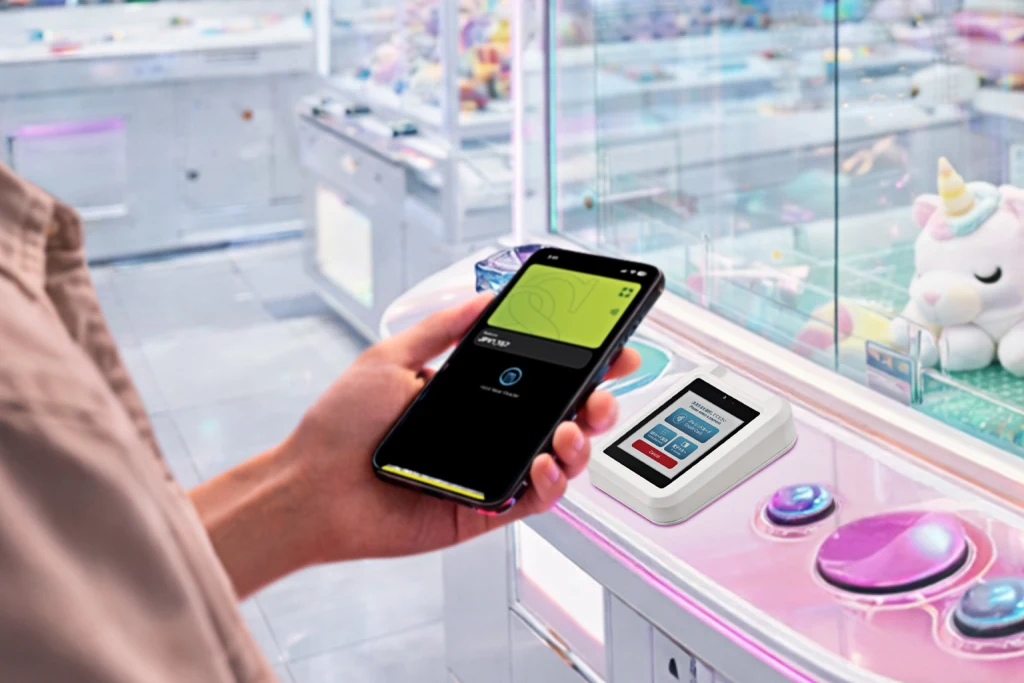
Cashless payments have become increasingly ubiquitous, even beyond traditional retail / Photo credit: Soft Space
A Visa study found that six in 10 consumers in Southeast Asia now prefer cashless payments, with 34% favoring cards and 26% opting for mobile wallets.
“These statistics confirm what we’re seeing in many of the 30 global markets we operate in,” says Joel Tay, CEO of Soft Space, a payments solutions provider based in Malaysia. “In Southeast Asia, where digital adoption is surging, businesses that move early into cashless are building a competitive edge in a rapidly evolving digital economy.”
But while cashless is now the way to go for many consumers, getting merchants to accept all types of contactless payment is easier said than done.
Barriers to adoption
Embracing contactless payments can be daunting, especially for smaller merchants.
Most small businesses in Asia know that going cashless could help them reach more consumers and improve efficiency. Still, 26% of MSMEs in the region don’t accept card payments because they find the transaction fees too high, according to a survey conducted by Visa.
These businesses also grapple with other related costs and anxieties, including those related to setup, maintenance, and training.
Despite a surge in contactless payments in Thailand following Covid-19, for example, many merchants hesitate to accept card payments due to concerns around cost and trust, as well as complex onboarding processes. This hampers the kind of experience that they can provide users.
It also limits their potential customer pool. In Singapore, for instance, most hawker stalls accept QR payments, but not cards. A tourist who has neither cash on hand nor access to a local QR payment method may then choose to dine at a chain restaurant that accepts cards, instead of patronizing a local hawker center.
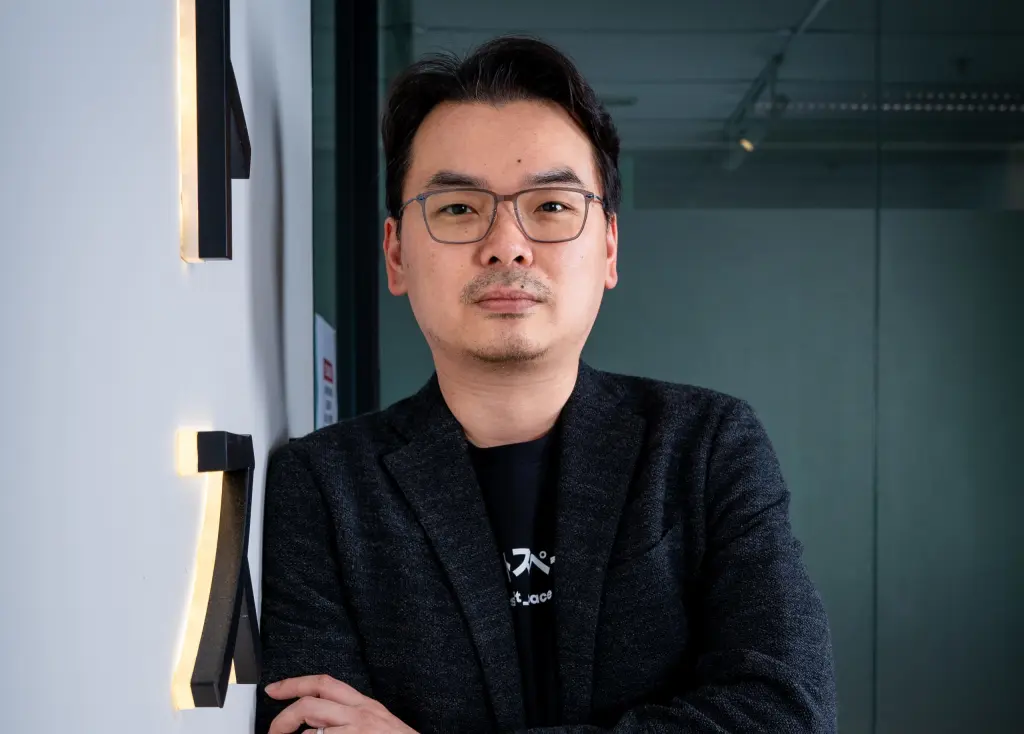
Joel Tay, CEO of Soft Space / Photo credit: Soft Space
“The examples in markets like Singapore and Thailand show how quickly consumer expectations are shifting toward digital convenience,” Tay explains. “For merchants, this isn’t just about keeping up; it’s about tapping into new opportunities by making cashless payments simple and secure.”
This begs the question: What can be done to address these barriers to adoption?
The answer could lie in SoftPOS solutions.
Tackling all the pain points
SoftPOS technology allows merchants to accept payments directly through commercial off-the-shelf (COTS) smartphones or tablets without the need for traditional hardware POS terminals.
It can also be integrated with merchants’ existing apps, so payments can be made seamlessly instead of having to call up another app. Moreover, it can be integrated with other tools such as customer relationship management platforms.
For instance, initiatives like Visa and the Siam Commercial Bank’s expansion of Visa’s Tap to Pay at Bangkok’s Chatuchak and Pratunam markets present new opportunities for merchants of all sizes that can now use their smartphones to receive cashless payments.
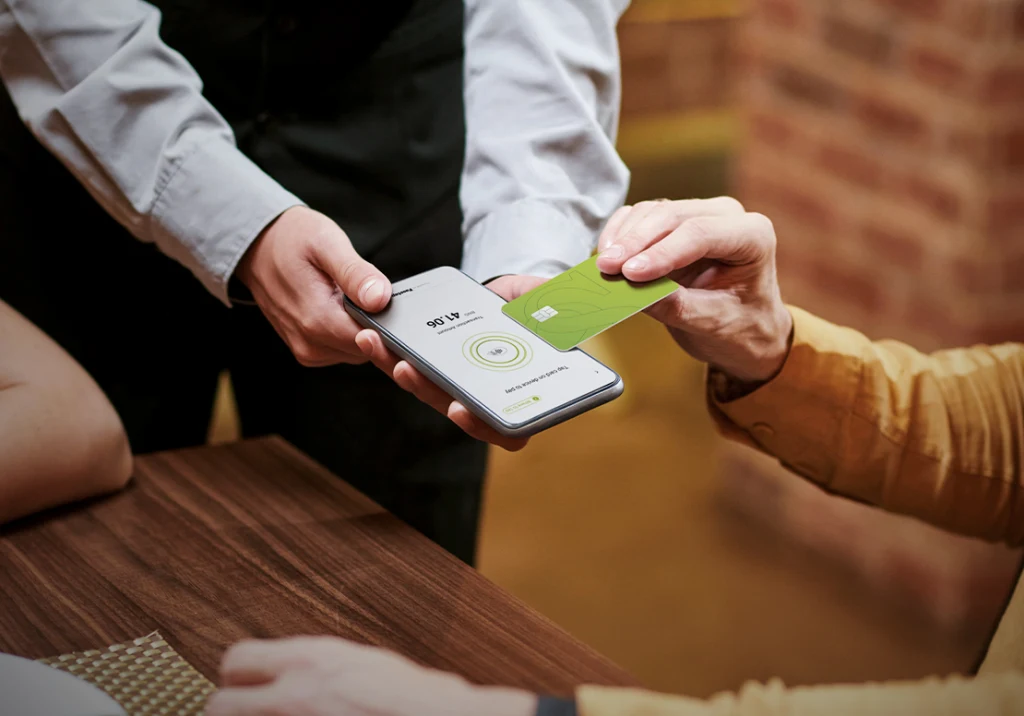
Contactless payments can be accepted on NFC-enabled smart devices / Photo credit: Soft Space
“The reduced costs of COTS devices drastically lower the barrier for adoption among merchants while allowing organizations such as banks to lower the cost of contactless card acceptance, which further fuels its growth,” Tay shares.
Soft Space is taking things a step further by improving existing SoftPOS offerings through collaborations with device manufacturers and organizations like banks and telcos.
SoftPOS can utilize any device with near-field communication (NFC) capabilities to accept contactless payments. In theory, a merchant can use their own smartphone to receive these payments, although Tay acknowledges that this may not be the preferred option.
“For SoftPOS to be widely used by merchants, devices must cost less than US$100,” he explains. “Device manufacturers work with us to source low-cost devices while banks and telcos partner with us to deliver customized ‘business-in-a-box’ solutions with integrated ‘mini’ POS systems to some customers. With this, they are able to offer affordable devices to merchants who may be uncomfortable using personal smartphones.”
The firm works to configure these COTS devices so they can meet businesses’ diverse needs while also adhering to the standards set by the NFC Forum, which specifies that the antenna must be able to read contactless cards up to 6 centimeters away.
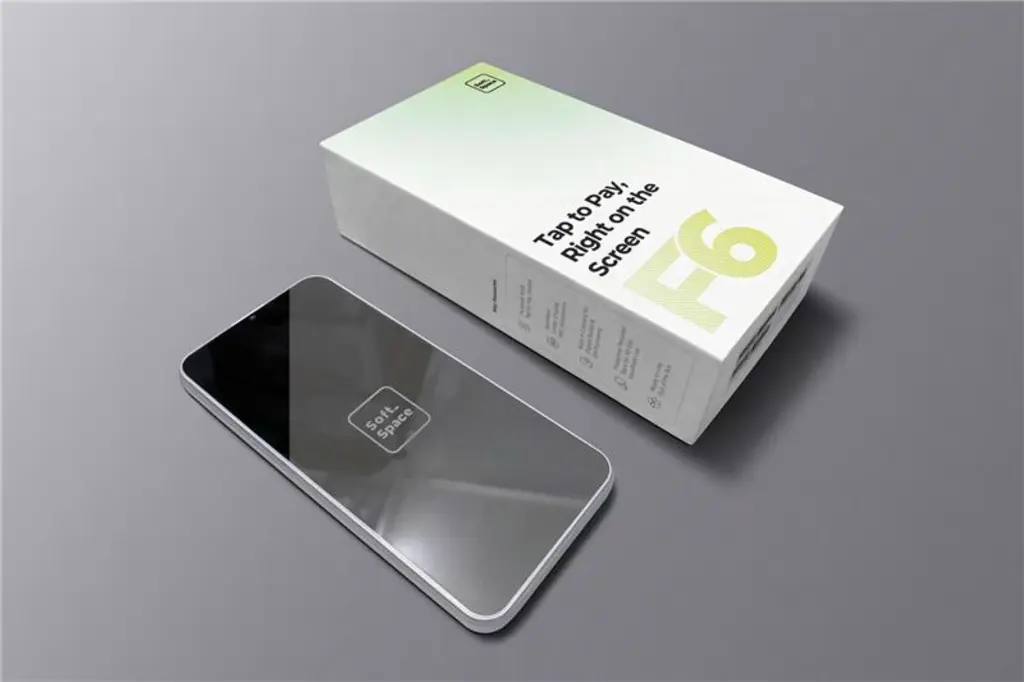
Soft Space’s F6, an affordable front-facing NFC device for small merchants / Photo credit: Soft Space
Additionally, Soft Space is addressing the complex setup processes that limit small merchants’ ability to accept cashless payments.
“Banks have to use new, innovative, and simpler ways of signing them up instead of traditional processes, which often create unnecessary hurdles for these merchants,” says Tay.
Traditionally, getting a POS system approved could take several days to weeks, involving paperwork, credit checks, and hardware positioning before a merchant could even start transacting. With Soft Space’s collaboration with Zettle, a POS solutions provider, small businesses can begin collecting payments almost right away, even as documents and approvals are still being processed.
“In one of our deployments in Japan, merchants could immediately start accepting contactless payments 15 minutes after submitting their application on the app itself,” Tay shares. “This really streamlines the process and removes that barrier to adoption.”
Learn more about Soft Space and its solutions
Soft Space is also offering a white-label platform to help financial institutions seamlessly integrate, test, and deploy SoftPOS as part of their broader digital ecosystems.
“Our focus is on making payment acceptance easy to embed, adapt, and scale,” says Tay. “By improving the developer experience and simplifying how systems interact, we allow financial institutions to move faster and collaborate more effectively across their ecosystems.”
This approach allows financial institutions to extend acceptance capabilities to underserved segments without introducing new hardware barriers. Indeed, it supports the transition away from cash while enabling more inclusive and sustainable participation in the digital economy.
“Ultimately, when payment acceptance is delivered as software, it becomes a natural building block within everyday applications and workflows,” Tay adds. “That is how we believe financial inclusion can be achieved at scale.”
SoftPOS could be the future
These initiatives have gained Soft Space global acclaim, with analyst firm Juniper Research recognizing it as a leader in SoftPOS innovation.
Soft Space sees tremendous opportunity in the SoftPOS sector in the years ahead. It’s confident that contactless payments will be a foundational layer of future commerce in Asia and beyond.
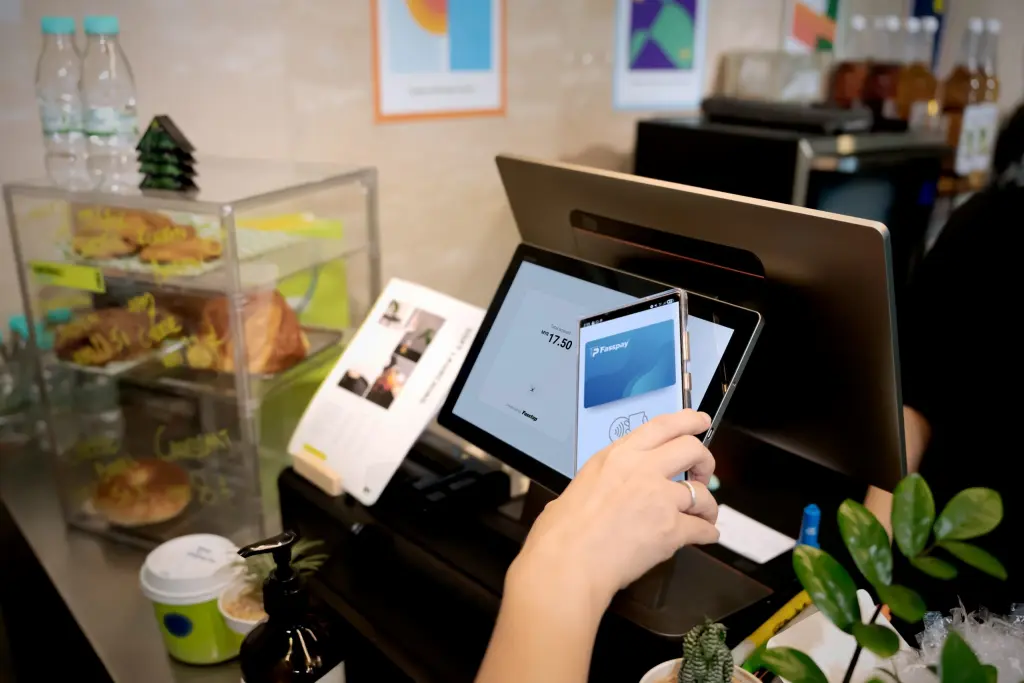
Tap-to-pay can be easily integrated into an SME’s POS system / Photo credit: Soft Space
“We do not see SoftPOS simply as a lower-cost alternative to traditional terminals, nor as a competitor to QR payments,” says Tay. “Its real value lies in the fact that payment acceptance becomes software. When acceptance is no longer bound by dedicated hardware, it can integrate seamlessly into broader digital ecosystems and interact naturally with other applications, platforms, and services.”
With this shift, payments can now move into the background of daily workflows, becoming an embedded capability rather than a standalone device and allowing payments to evolve alongside the wider ecosystem.
“We believe this is why Apple introduced Tap-to-Pay on iPhone in 2022, which unlocked a previously untapped market of 1.2 billion global iOS users to the SoftPOS market,” Tay explains. “We are also seeing strong interest from large merchants, including luxury and enterprise brands, as SoftPOS enables acceptance to be deployed at scale and integrated directly into existing systems.”
The global SoftPOS transaction value is expected to reach US$540 billion in 2030. Additionally, the number of devices using SoftPOS by that year is predicted to reach 61 million globally by 2028, a 683% increase from 2023.
Tay believes SoftPOS solutions that support all forms of contactless payment on a single device enable merchants to execute a true dual-payment strategy, expanding customer reach while maintaining flexibility across markets.
“When payment acceptance becomes free of hardware constraints and deeply integrated into software ecosystems, it becomes an integral part of everyday life,” he says. “Businesses, both large and small, in Asia Pacific must adopt SoftPOS into their upcoming payment ecosystem strategies or risk losing out on the breadth of advantage that the technology brings to the market.”
Soft Space is modernizing payment infrastructure and providing it as a service, as cloud providers do with software. It’s a leader in mobile contactless payments and SoftPOS, with the world’s largest SoftPOS deployment since pioneering a solution with PIN authentication in 2018.
Learn more about Soft Space and its solutions on its website.
This content was produced by Tech in Asia Studios, which connects brands with Asia’s tech community. Learn more about partnering with Tech in Asia Studios.
Stay updated on the go with our mobile app.
Get latest insights with smoother, more personalized experience through TIA mobile app.
Recommended reads
 Life’s a game, and AI agents are Animoca’s new play
 Indonesian AI startup goes global
 Forrest Li on scaling Sea, building smarter bots, and founder grit
 An AI assistant that joins sales calls and scores team skills
 Beyond the check: Why VCs need more than capital
 SGX’s CEO says it doesn’t need a unicorn to win
 SMEs want AI too, but not the kind Big Tech is selling
 Oatside’s alt-milk rise hits a profitable gear
 Alibaba’s financial health in 12 charts
 Asia’s telcos bundle AI into mobile plans. Will it pay off?





Editing by Winston Zhang and Mina Deocareza
(And yes, we’re serious about ethics and transparency. More information here.)