- Premium Content It takes our newsroom weeks - if not months - to investigate and produce stories for our premium content. You can’t find them anywhere else.
 Glenn Kaonang · · 4 min read
Indonesia’s banks are taking over BNPL. Can fintech firms survive?
Banks are rapidly reshaping Indonesia’s buy now, pay later (BNPL) landscape, overtaking players like multifinance companies and fintech lenders.
Case in point, bank-issued paylater credit in the country soared to 21.8 trillion rupiah (US$1.3 billion) as of November 2024, up nearly 43% year on year, according to the Financial Services Authority.
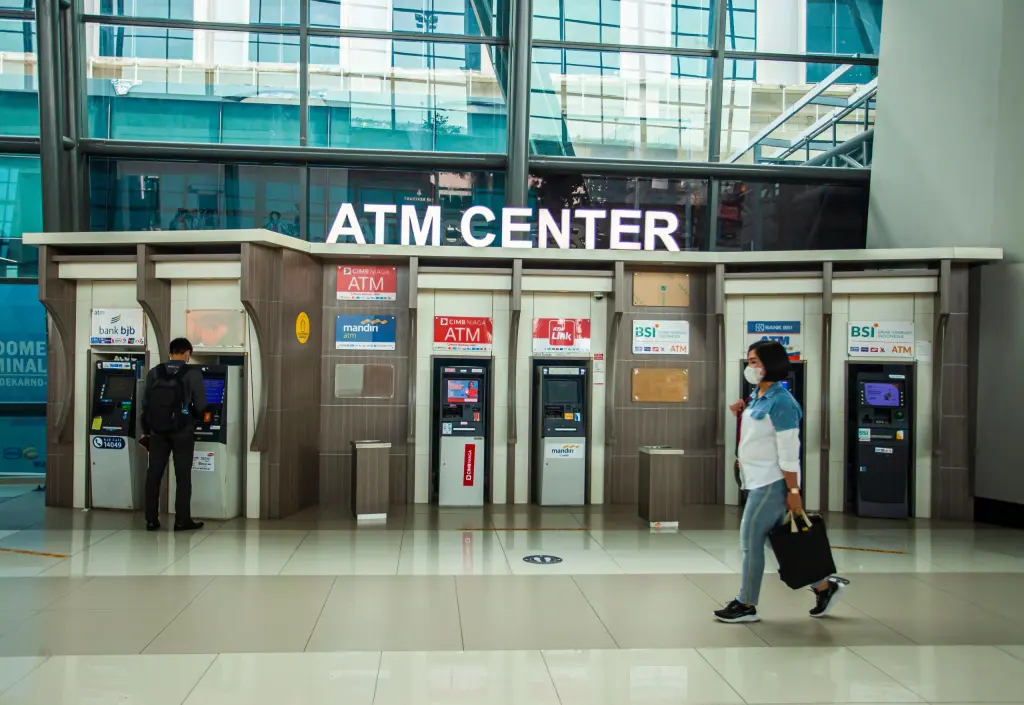
An ATM center at Soekarno-Hatta International Airport in Jakarta. / Photo: Shutterstock
In comparison, financing companies – non-bank financial institutions that offer lending services – posted a 62% growth in the same period. However, these companies – which include multifinance firms as well as fintech startups – only disbursed 8.6 trillion rupiah (US$527 million) in paylater credit.
The surge is surprising considering fintech firms like Akulaku or Kredivo had pioneered BNPL in Indonesia. Additionally, just six banks offer BNPL, making the numbers more striking.
Still, some say that fintech and multifinance companies already target customers that don’t make the cut at banks. Will that be enough to catch up?
Banking advantages
Per Tech in Asia’s observation, the six banks that offer BNPL are Bank Central Asia (BCA), Bank Mandiri, Bank Rakyat Indonesia (BRI), Bank SMBC Indonesia, Allo Bank, and DBS.
These banks’ BNPL services are relatively new. The longest-running one is BRI’s offering, which was launched in December 2019.
In contrast, fintech startups like Kredivo and Akulaku have operated BNPL since 2016.
Despite their late entry, banks have several key advantages. One of them is their more trustworthy reputations, says Permata Bank chief economist Josua Pardede.
By their very nature, banks leverage robust financial ecosystems. They have access to extensive customer data from savings accounts, credit cards, and digital transactions.
Meanwhile, non-bank institutions are often “limited to specific borrower data,” Pardede explains. This means banks can acquire BNPL customers more effectively.
Staying competitive
BNPL vs. credit cards
Stay ahead in Asia’s tech landscape
This is premium content. Subscribe to read the full story.
Just six banks offer BNPL in the country, but their volume is already 2.5x higher than those of fintech startups and others.
We know this is not ideal. ⌛ Sign up in 20 seconds. Cancel anytime.
Our subscriber community includes professionals from these companies:





Stay updated on the go with our mobile app.
Get latest insights with smoother, more personalized experience through TIA mobile app.