Celia Chen · · 5 min read
A ‘ghost market’ hangs on in the shadow of Shenzhen’s hi-tech ambitions
This article is co-written by Iris Deng.
Huaqiangbei is home to the world’s biggest electronics wholesale market. By day, the district is busy with buyers hunting for bargains in gigantic complexes that sell everything from cables to spy cameras.
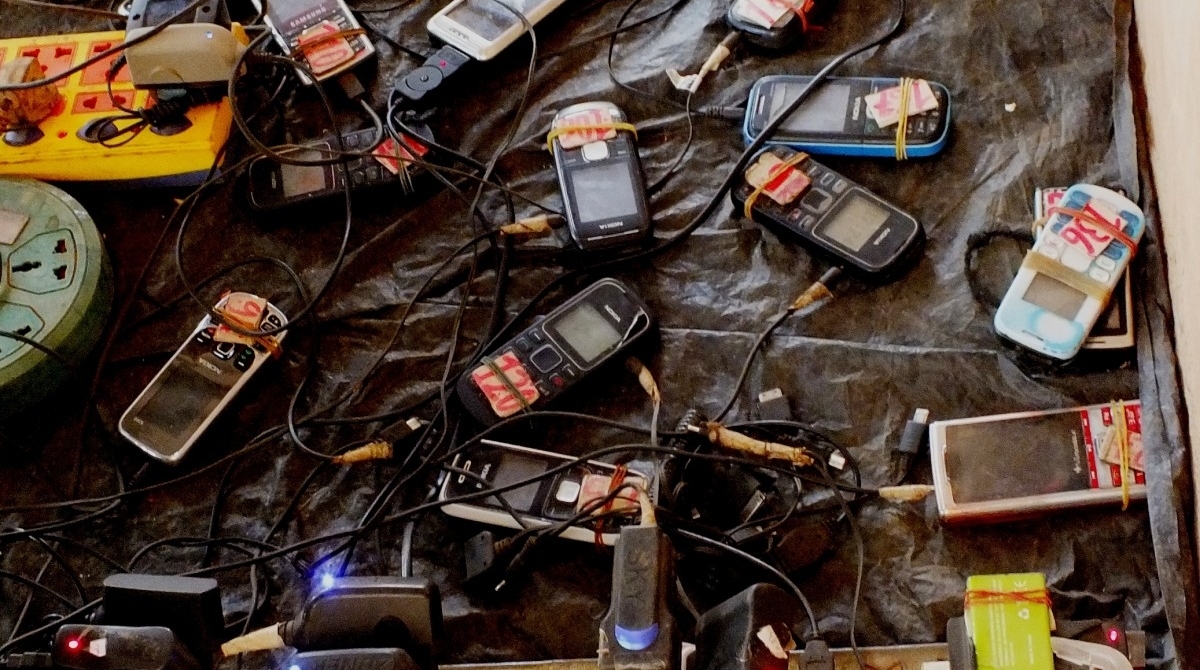
Photo credit: Pxhere
But close to midnight, not long after the hardiest stall owners have called it a day, another market emerges in the shadows of the mega electronics malls.
When the Post visited the market one recent weekday night, street vendors were out in force on Aihua Lu, fighting for the attention of passers-by. There were careless heaps of cables, old game consoles, transistor radios, smartphones, and feature phones on the road – most of it junk.
Known as a “ghost market” because it only operates at night and wraps up before dawn (the better to avoid the dreaded chengguan or street inspectors), this particular flea market convenes every night and has been going on for a number of years. There are three unspoken rules: No questioning the authenticity, no questioning the origin, and no refunds once sold.
It is the ultimate buyers’ beware bazaar. What you see is what you get.
“Why are you wandering outside so late?” one male trader wearing a gold necklace shouted cheerfully at us when we passed by his pile. “Please be careful. Go home now!”
That was when we noticed the buyers and sellers at the market were predominantly men. But we did not feel unsafe as it was crowded with shoppers and the vibe was friendly. Later, when the crowd dwindled around 2 am, it felt more desolate.
Huaqiangbei started off as a small electronics component market supporting the electronics manufacturing industry before flourishing when personal computers and, later, mobile phones became popular in China.
An hour’s drive from the market, one can find thousands of factories on the fringe of Shenzhen as well as in neighboring Dongguan and Huizhou, a reminder of the Pearl River Delta’s reputation as the “factory floor of the world.” The rise of ecommerce in recent years, though, has threatened physical marketplaces such as Huaqiangbei.
The area is also famous for being the birthplace of Tencent, the country’s biggest gaming and social media operator, which started off in an office nearby. Shenzhen’s progress over the years as a tech powerhouse can be seen by its roster of tech giants, which include multinational companies such as Huawei, the telecoms gear maker, and DJI, the world’s biggest consumer drone maker.
With Beijing’s plan to integrate Shenzhen and 10 other neighboring cities including Hong Kong and Macau into a regional innovation and financial hub, Shenzhen is set for its next phase of transformation since its beginnings as the original site for the country’s reform and opening-up experiment 40 years ago.
The city was also earmarked last month by the central government to undertake wide-ranging reforms to become a global “benchmark” for competitiveness, innovation, and influence by the middle of the century.





Stay updated on the go with our mobile app.
Get latest insights with smoother, more personalized experience through TIA mobile app.