Leighton Cosseboom · · 4 min read
Qerja, Indonesia’s version of Glassdoor, helps jobseekers make informed decisions
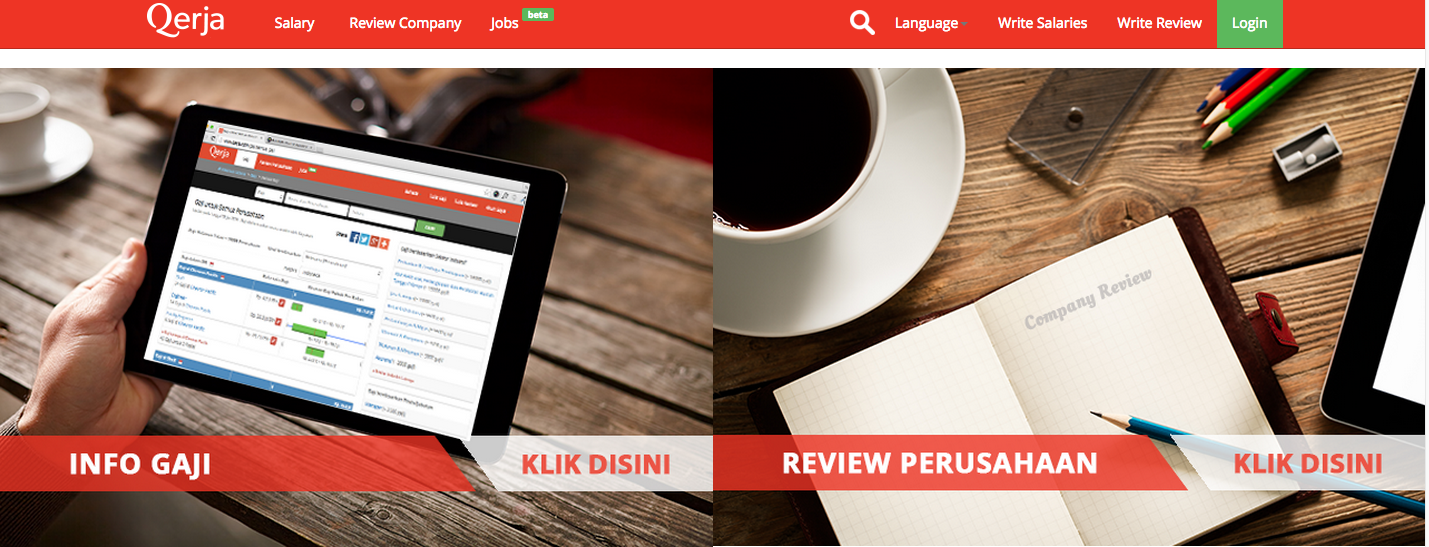
Oscar Wilde said that if you give a man a mask, he will tell you the truth – something reiterated recently by Julian Assange. This is a principle that sits at the foundation of America’s Glassdoor, a firm that lets anyone access salary information, company reviews, and information that might otherwise be considered secret or sensitive in the corporate world. Glassdoor is disruptive in the US, and in Indonesia its counterpart Qerja is doing the same.
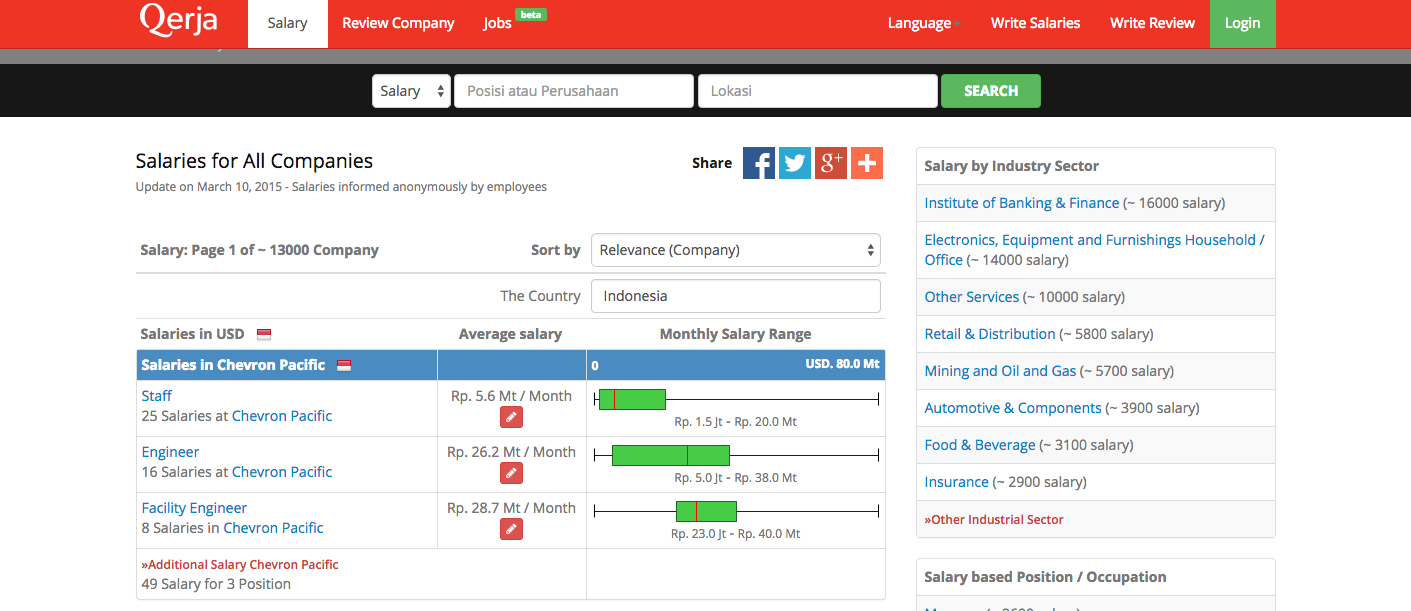
Qerja lets jobseekers – or just curious journalists – in Indonesia access user-generated salary information and overall reviews of companies in the archipelago. The site aims to empower job hunters, who might otherwise commit blindly to lower-than-average employment packages offered by some companies.
Essentially, Qerja is a tool to level the playing field for employee-employer negotiations. The site has been live in Jakarta since late last year, and last week, Qerja announced that it secured a series A round of funding from a US$50 million venture fund operated by SoftBank and local telco Indosat.
The public will clean up the mess
Indonesia’s business world is not well-known for its transparency. Qerja’s co-founder Veronika Linardi tells Tech in Asia that the Indonesian employment landscape is in fact pretty messy, and that her company hopes to change the way things work. She brings up a Gallup survey that says only eight percent of Indonesians are engaged at work, while 15 percent are actively disengaged. Linardi believes these stats reflect overall job satisfaction in Indonesia. “There are a lot of great employers doing fantastic things in Indonesia,” she says. “We want these companies to be recognized by the public.”
Linardi clarifies that Qerja’s goal is not to get people to quit their jobs. “We just want them to make informed decisions,” she says. Linardi adds that Qerja is also a useful tool for companies who need to benchmark, as owners and management can now know whether they’re pampering or overpaying their employees relative to the competition.
See: GetHunted is an auction block for Indonesian headhunters
No faces, no names
The way Qerja works is by providing a space where employees and management can anonymously submit company information – picture a masquerade party where everyone has had a couple of drinks and is now comfortable sharing secrets.
Linardi says that Qerja protects the identities of its users while simultaneously letting the public know that the information came from a reliable source. One example of this could be changing someone’s job title from “CEO” – which would reveal the person’s identity by process of elimination – to a more ambiguous rank like “director.”
As you may imagine, not everyone in Indonesia’s business scene sees Qerja as a noble Robin Hood figure. Without giving names, Linardi says that some tech companies have even expressed their discontent to her on more than one occasion.





Stay updated on the go with our mobile app.
Get latest insights with smoother, more personalized experience through TIA mobile app.