Jum Balea · · 3 min read
MaGIC accelerator program accepts 77 startups, becomes largest in region
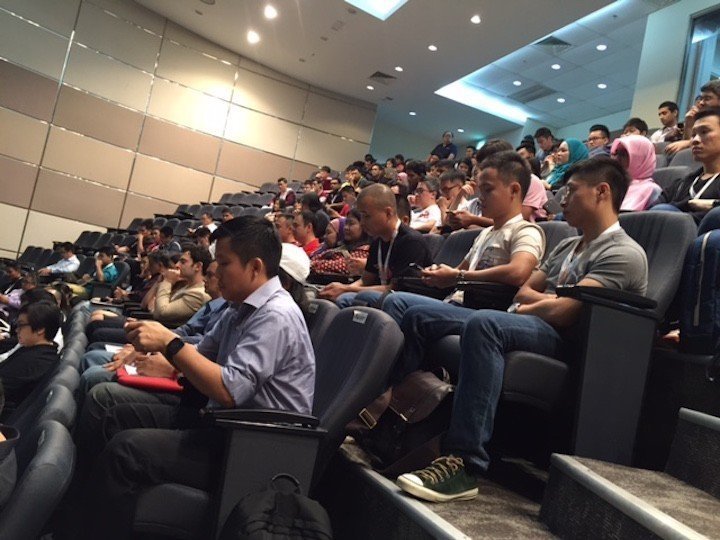
Participating startups gather for official launch of the MaGIC Accelerator Program in Cyberjaya, Malaysia.
The Malaysian government-funded MaGIC Accelerator Program (MAP) has kicked off with an inaugural batch of 77 startups.
Plucked out of a pool of over 1,000 applications, MAP’s “Cohort 1” is comprised of 52 startups focusing on ASEAN and 25 social enterprises that will build their businesses to become investment-ready at the MaGIC campus in Cyberjaya over the next four months.
“MAP is designed to build and grow an ASEAN community of startups that have the opportunity to foster relationships and achieve a regional outlook, access regional resources, and exchange knowledge with peers,” says Cheryl Yeoh, CEO of MaGIC, which stands for Malaysian Global Innovation & Creativity Center.
“The success of the program will be evident when these entrepreneurs are able to grow their startup or social enterprise, and raise funding from private investors or sustain their businesses after demo day,” she adds.
MAP’s ASEAN track will help the 52 selected startups scale their products, prepare them for early-stage funding and partnerships, and guide them on expansion into global markets. Sixty percent of the participants under this track come from Malaysia, while the rest are spread across Cambodia, Indonesia, Philippines, Singapore, Thailand, US, Uruguay, and Vietnam. They’re targeting a wide range of verticals such as agriculture, big data, clean tech, design, ecommerce, gaming, healthcare, media, security, and travel.
On the other hand, the Social Enterprise track – the first of its kind in Malaysia – aims to accelerate and develop 25 ideas from all over the country that address social and environmental issues. These startups hail from Kuala Lumpur, Sarawak, Johor, Selangor, Penang, Kedah, and Pahang.
“This is now the largest accelerator in Southeast Asia, if not Asia. I’ve actually not heard of anyone take in over 70 companies in one batch,” claims Yeoh.
Funding and other perks
The accelerator program will be made up of weekly “platoon” or small group sessions for peer-to-peer learning, social outreach activities, check-ins with mentors and investors, and business development opportunities with potential market partners.
“MAP is heavily supported by mentors who are either qualified entrepreneurs or experts in their own areas,” Yeoh notes.
For the ASEAN track, MaGIC will provide no seed funding but it has negotiated perks worth over US$400,000 per startup from corporations such as Google, Microsoft, Evernote, and Amazon. MaGIC also provides a strong link to market partners such as Axiata, Tune Talk, Accenture, Maybank, and Digi Macrokiosk.
The curriculum outlined in this track include various thematic and guided discussions, brainstorming sessions, and knowledge and experience sharing sessions that will culminate with a demo day to potentially 500 investors. These investors include Khailee Ng of 500 Startups, Erman Akinci of Catcha Group, Aziz Hussein of Cradle Seed Ventures, and Lim Kuo-Yi of Monk’s Hill.
While working on developing their businesses, the startups will also have access to mentors such as Jamaludin Bujang, CEO of MAVCAP; Joel Neoh, founder of KFit; Giulio Xiloyannis, managing director of Zalora; and Cheryl Goh, vice president of GrabTaxi.
Through the Social Enterprise track, selected participants will be able to build a sustainable business model while learning how to measure impact created. Each enterprise will receive seed funding of RM30,000 (nearly US$8,000) to pilot their ideas. And by the end of the program, they will pitch to impact investors and venture philanthropists at an event organized with AirAsia and Think City.
Takes after Startup Chile





Stay updated on the go with our mobile app.
Get latest insights with smoother, more personalized experience through TIA mobile app.