 Nathaniel Fetalvero · · 4 min read
Seeking a solution for blockchain to reach Visa’s scale

Are you done with your Christmas shopping? Picture the exact moment when you were at the checkout counter – or page, if you were online – with your holiday haul.
If you paid for your purchases using Visa, about 4,000 other people around the world also did the same thing at that very second.
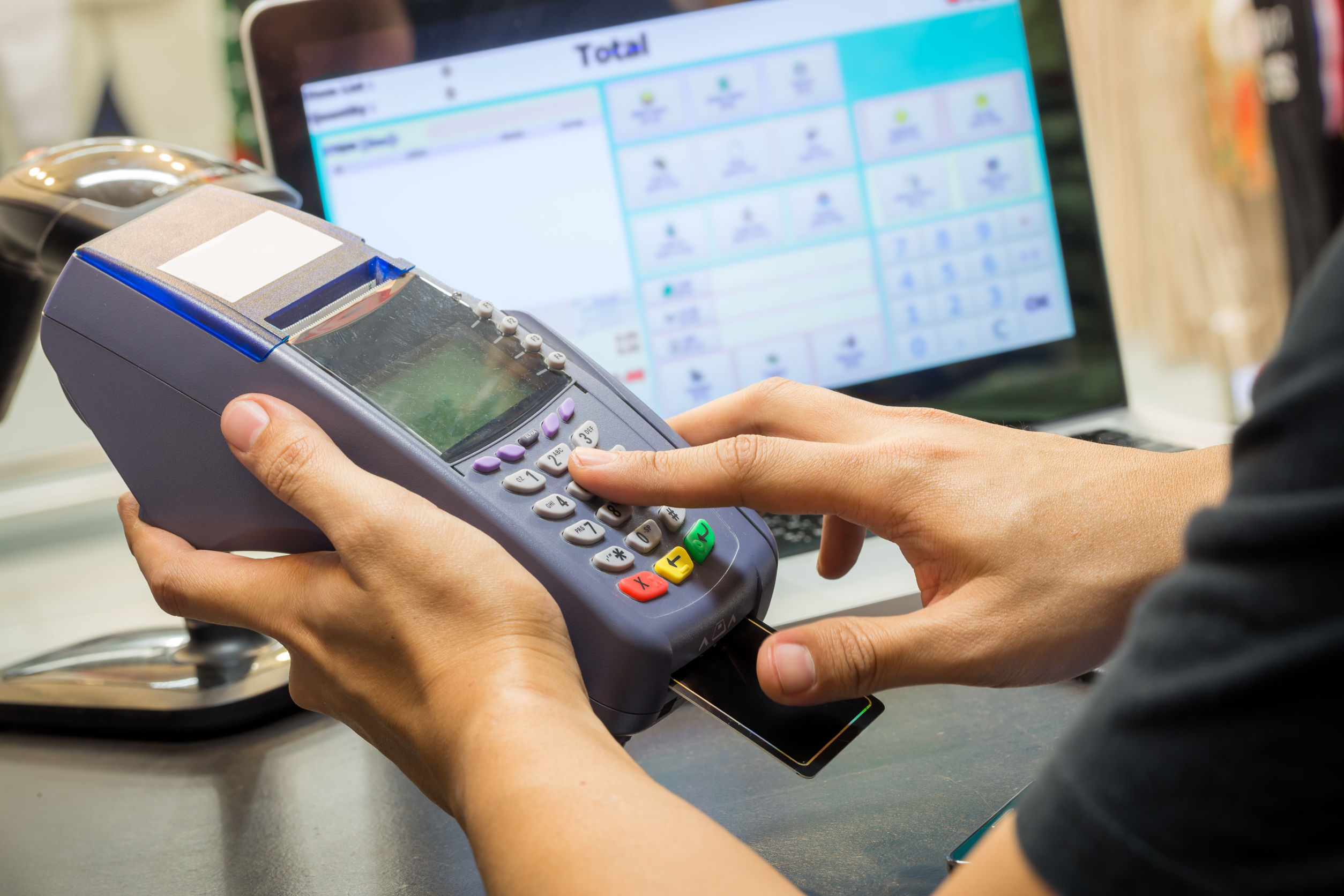
Photo credit: 123RF
Visa can manage so many simultaneous users without a hitch because the company has a processing capacity of over 56,000 transactions per second – an ability that partly explains why its payment method has been broadly accepted. In comparison, blockchain platforms like Bitcoin and Ethereum have considerably less processing power, so they haven’t achieved the same scale of adoption.
The block is the limit
So how do blockchain platforms handle transactions?
Ethereum operates on a proof-of-work consensus protocol, and miners on this platform compile transactions into a single block, which takes about 15 seconds to create. The number of transactions that can fit in a block depends on the type of transactions that the block contains.
Processing more complex transactions such as initial coin offerings would require more computing power compared to a simple ether transfer, meaning that fewer of them would fit in one block. Once a block is added to Ethereum’s chain, the transactions within it are carried out.
These limitations in the number of transactions a block can process, coupled with the time it takes to mine one block, mean that Ethereum caps out at around 15 transactions per second – a far cry from Visa’s daily average.
It’s not just about the money
This limited scalability is an obstacle that has effects far beyond cryptocurrency’s chances of becoming a mainstream mode of payment.
“Being able to process only 15 transactions per second restricts a lot of blockchain’s capabilities,” says Cam Pham, a researcher at blockchain company TomoChain. “We can’t deploy industrial applications on those limited platforms.”
In supply chain management, for example, using the technology means that every transaction is recorded on a block. As such, transparency about the origins of different goods is ensured.

Photo credit: 123RF
However, Pham warns that blockchain’s current capabilities may not be able to support such an application.
“Imagine if you have thousands of organizations participating in the supply chain,” he says. “The Ethereum network will be congested because it won’t be able to process more than 15 transactions per second.”
Finding a solution
To achieve mainstream success with blockchain, TomoChain has been working on a solution to the technology’s scalability issues.
“Our vision is to build a system everyone can use and a blockchain application that can process transactions instantly,” he says.
But the Vietnamese company isn’t the only player in the space working to solve blockchain’s problems. Other companies have also been experimenting with different ways to tackle scalability.
“Ethereum’s Plasma project aims to create multiple side chains that process transactions separately from the root chain. Bitcoin has the Lightning Network, a peer-to-peer payment network that processes transactions off-chain,” notes Pham. TomoChain is also looking into these solutions, he adds.
The future of blockchain
These projects, however, are still in the development stages. And because TomoChain leverages on the work of existing projects and innovates with different solutions, Pham is confident that it is one of the top contenders.
“We’ve proposed a proof-of-stake-voting consensus protocol and we’ve just launched our mainnet,” he says.
At launch, TomoChain will be able to process around 2,000 transactions per second. But with further development, Pham estimates that it could go through “around 25,000 to 30,000 transactions per second,” putting it in a position to potentially challenge Visa’s processing capabilities.
Once it hits this target, the company will deploy several applications on its platform in the hopes of obtaining widespread adoption.
“We are exploring applications in food traceability, for example,” says Pham. “Food is very important to our lives, so we want to ensure that any user can trace what they are eating and where it comes from, so that the quality and traceability of food can be better.”

Photo credit: 123RF
With several players in the blockchain scene racing to reach the scale of credit card companies like Visa, it’s not entirely unbelievable that more people could be paying for next year’s Christmas shopping in cryptocurrency. But Pham stresses that there’s more work to be done for blockchain to get there.
“To spread the applicability of blockchain, scalability needs to be solved first,” says Pham. “If we want people to use blockchain, it needs to be ready for them. Waiting for minutes or hours for a transaction to be confirmed is unacceptable for daily use of cryptocurrency.”
TomoChain is a public blockchain that allows developers to create decentralized applications on its platform for global adoption. At its mainnet launch on December 14, its processing capability was at around 2,000 transactions per second.
To find out more about TomoChain’s mainnet or get in touch for business partnerships, visit the TomoChain website.
Stay updated on the go with our mobile app.
Get latest insights with smoother, more personalized experience through TIA mobile app.
Recommended reads
 How AI agents could blindside the banking industry
 An audacious China-backed plan to reboot the internet with blockchain
 SG’s crypto brain drain and India’s new digital rupee
 How fintech firms can develop great products to stay ahead of the curve
 Binance names 27 projects in latest blockchain incubator cohort
 Australia to roll out trial program for CBDC
 How to protect yourself against crypto scams and hacks
 Crypto firm launches global research hub in Singapore
 Ethereum’s ‘The Merge’ will cause chaotic grab-and-dump campaign
 This Singapore company is turning the tide of plastic pollution at scale




Editing by Charmaine de Lazo, Eileen C. Ang, and Jack Ellis
(And yes, we’re serious about ethics and transparency. More information here.)






📅 Upcoming Events
22 October 2026
Payoneer x CSPN Summit 2026