Leighton Cosseboom · · 5 min read
Indonesian ecommerce enabler Paraplou Group diversifies. Is it stretching itself too thin?

If you follow Indonesian ecommerce, there’s a decent chance you’ve heard the name Vela Asia. Until recently, the company referred to itself as a fashion ecommerce enabler, providing website-building, logistics, digital marketing, and other services. Last February, it successfully bagged US$1.5 million from Singapore-based Majuven to scale up its operation. The idea was that Vela Asia would be a more niche-oriented ecommerce services provider than say aCommerce, for example. It would strictly focus on the fashion vertical, one of Indonesia’s most fruitful ecommerce categories to date.
In April, following the inception of their own ecommerce site Paraplou, co-founders Bede Moore and Susie Sugden rebranded Vela Asia as Paraplou Group. The switch, they claim, was an effort to keep all of their ecommerce activities under the same company umbrella. “We will still be operating our full range of mono-brand sites, but we wanted to consolidate our activities under a single brand name,” said Moore.
With all the media attention on Indonesia’s ecommerce market, Moore and Sugden have been secretive, and clearly have their work cut out for them. Neither have commented on what the name Paraplou means, and for a little while, the strange rebrand had our team scratching their heads. We looked at the Techlist data and tried to figure out if Majuven had invested twice, once in Vela Asia and once in Paraplou. We asked each other, “Does Vela belong to Moore and Paraplou belong to Sugden? Wait, are they actually the same?” We soon learned they were.
See: Zalora looks back on three years in Southeast Asia
A lot of moving parts
According to the firm, Paraplou Group provides end-to-end ecommerce support to premium fashion brands, from website to warehouse. Paraplou, the consumer-facing ecommerce site, is a bona fide fashion ecommerce itself. It features lesser-known brands for Indonesians like Playhound, but also mainstream ones like Nike, Adidas, and Bonds for men. For women, a few notable brands include Ciciero bags, EPA jewelry, and Kimihara shoes.
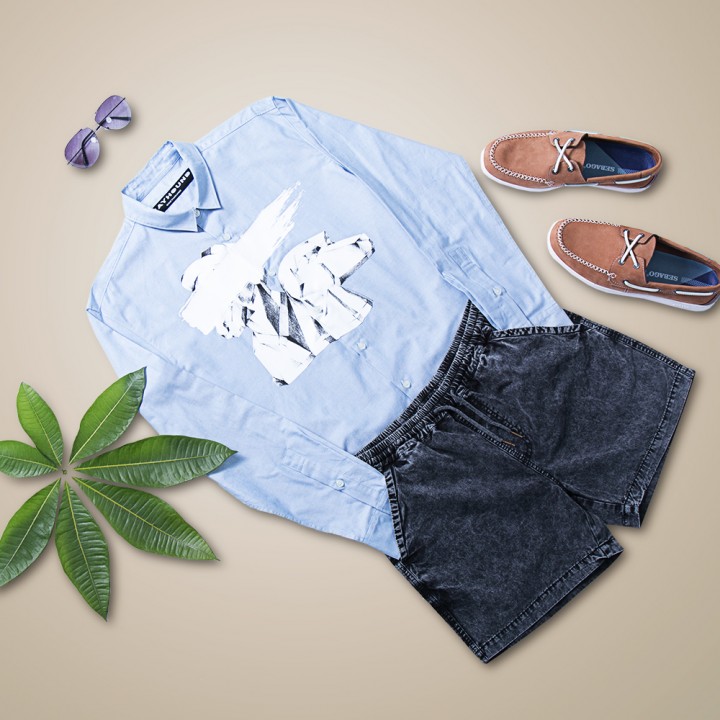
Moore and Sugden’s approach carries a two-pronged strategy that is also likely a way for the co-founders to hedge their bets on the Indonesian ecommerce playing field. It seems pretty smart; if fashion retailers want their own business-to-consumer ecommerce site, Paraplou Group will build it. If they want to simply sell on a marketplace platform, Paraplou provides it. Depending on which arm of Paraplou performs best in the early stages, the company could easily pivot if necessary. This could mean discontinuing one arm to focus on the other – kind of like how the Dark Knight’s bat mobile transforms into a motorcycle after it’s damaged.
Critics could argue that if a startup tries to be everything to everyone, in the end it will be nothing to no one. To some, Paraplou Group’s strategy of running enabler services while also building out its own estore might seem unwise, and with too many moving parts that need to be micro-managed. With only US$1.5 million and a lean team, there are questions that inevitably come up. An important one is how the startup will be able to manage ecommerce sites for a bunch of different firms while also ensuring its own is positioned as a market leader.
Trading in focus for a wide net
In terms of serving other ecommerce players, a great deal of Paraplou Group’s clients are brands from overseas that can’t easily be found in the archipelago. Paraplou Group has built ecommerce sites with local domains for several companies so far, including Lee Cooper from England, Universo from Brazil, Jack Nicklaus from the US, and G2000 from Hong Kong. In Indonesia, it serves refurbished goods ecommerce site Kukuruyuk, luxury estore Bobobobo, and muslim fashion portal Saquina.





Stay updated on the go with our mobile app.
Get latest insights with smoother, more personalized experience through TIA mobile app.