- Premium Content It takes our newsroom weeks - if not months - to investigate and produce stories for our premium content. You can’t find them anywhere else.
 Samreen Ahmad · · 6 min read
India’s spacetech startups take off, but will they reach orbit?
The Indian government’s recently announced US$118 million venture capital fund to boost the nation’s space sector over the next five years might seem like small potatoes compared to the estimated US$630 billion value of the global spacetech industry.
However, the launch – India’s first – also highlights the excitement around this niche industry in the country.
Previously, India’s space sector was synonymous with only the Indian Space Research Organization (ISRO). But the sector has seen a surge in private activity and innovation since 2020.
Image credit: Timmy Loen
Spacetech startups in India are not just emerging rapidly, they are also gaining global traction, with companies like Pixxel even securing a contract with NASA. The country is also on the cusp of launching the first privately built version of the Polar Satellite Launch Vehicle, which was previously only made by the ISRO.
This expansion of the Indian spacetech ecosystem has attracted significant attention from private investors, with startups in the sector securing over US$300 million in funding to date, data from Tracxn shows.
The government’s VC initiative aims to fuel this momentum to elevate India’s position in the global space industry. But what sparked this meteoric rise in the country’s space sector, and is it enough rocket fuel to go the distance?
The SpaceX factor
The success of Elon Musk’s SpaceX on the global stage was a major catalyst for India’s decision to open its space sector to private players, local spacetech startup founders tell Tech in Asia.
SpaceX was the first private entity to launch a spacecraft into Earth’s orbit and bring it back. This “showed that you could actually build a successful business,” says Pixxel co-founder Awais Ahmed.
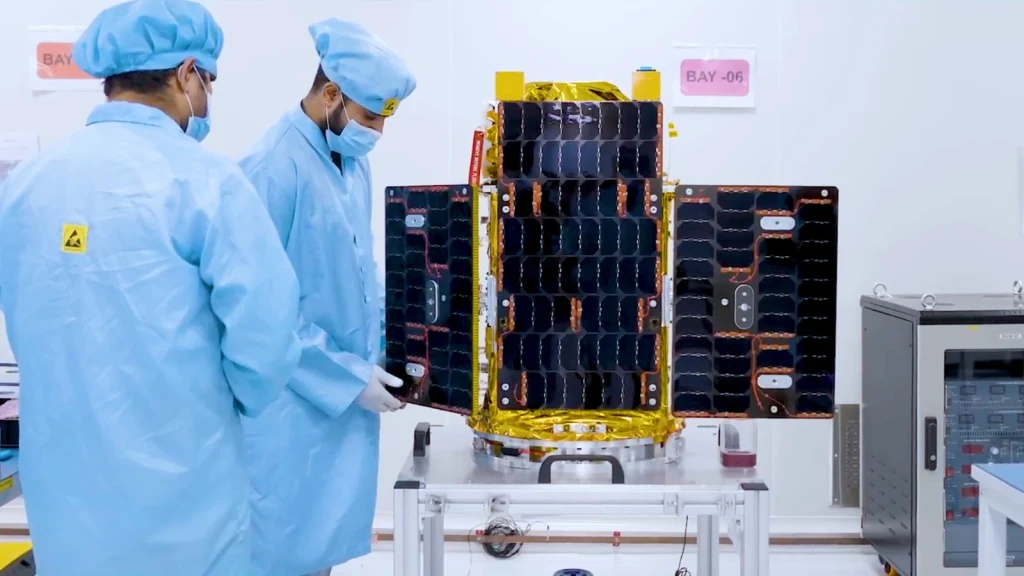
Fireflies 1, one of Pixxel’s satellites / Photo credit: Pixxel
According to Anil Kumar Bhatt, director general of the Indian Space Association (ISpA), the country already has the foundations – local talent and ISRO’s legacy – to drive growth into its space sector in the same way as IT and pharmaceuticals.
That said, India’s space industry accounted for only 2% of the US$630 billion global space economy in 2023.
By 2020, the government had recognized that India couldn’t afford to fall behind in the global spacetech race. In response, it launched the ISpA in 2021, which opened the Indian space industry to private companies and startups.
Token investment?
Watch this space for more
Stay ahead in Asia’s tech landscape
This is premium content. Subscribe to read the full story.
While many startups have launched, the VC scene for India’s private spacetech sector is still relatively lukewarm.
We know this is not ideal. ⌛ Sign up in 20 seconds. Cancel anytime.
Our subscriber community includes professionals from these companies:





Stay updated on the go with our mobile app.
Get latest insights with smoother, more personalized experience through TIA mobile app.










📅 Upcoming Events
22 October 2026
Payoneer x CSPN Summit 2026