- Premium Content It takes our newsroom weeks - if not months - to investigate and produce stories for our premium content. You can’t find them anywhere else.
 Ardi Wirdana · · 6 min read
Indian unicorns exit Indonesia, raising questions over expansion strategy
When news of Mobile Premier League’s (MPL) shuttering in Indonesia hit headlines two weeks ago, it came with an element of surprise but also a touch of deja vu.
The online gaming and esports startup was not the first heavily funded Indian unicorn to abruptly pull out of Southeast Asia’s largest market.

Image credit: Timmy Loen
The year before, as the pandemic began to take its toll on businesses globally, social commerce giant Meesho announced its exit from Indonesia. At the time, the Facebook-backed company was closing a new funding round worth US$570 million.
Before that, Indian food delivery major Zomato also announced its retreat from the archipelago as part of a “clean up drive,” which eventually saw the firm wind up its operations in all of its international markets.
The timing of these moves suggests that the broader economic backdrop may have contributed to these exits. But the fact that these cash-loaded companies did not hold out when the going got tough indicates that Indonesia may have turned out to be too much hassle for too little reward for these firms.
This was certainly true for MPL. In an email sent to its employees reviewed by Tech in Asia, the company’s co-founders said that despite investing “significant resources and capital” into the market, the “return profile of Indonesia is several multiples lower” than that of its India and US operations.
The trouble with copy and paste
While the retreat of MPL, Zomato, and Meesho grabbed headlines, the quickest U-turn by an Indian startup in Indonesia did not.
In 2020, Sequoia-backed digital ledger Khatabook quietly launched its app in the country and acquired some users. But with competition intensifying, it ceased all operations, packed its bags, and left in less than a year (though its co-founder subsequently invested in local counterpart BukuWarung).
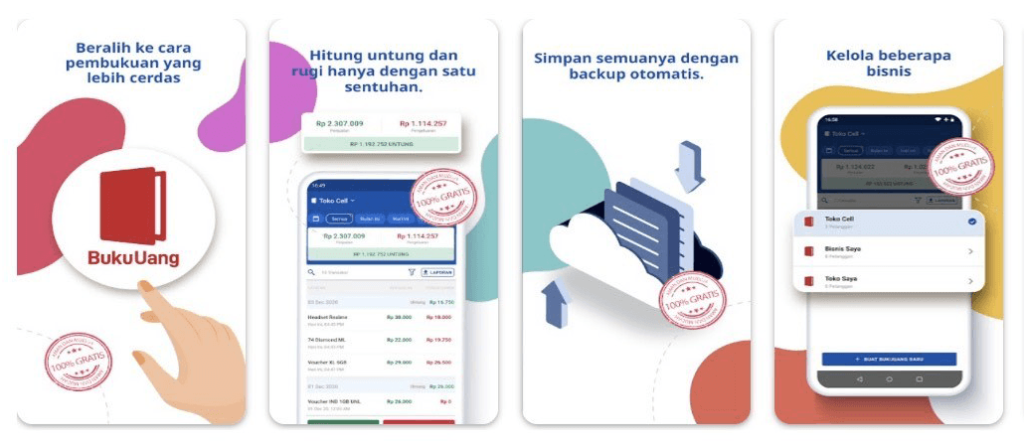
Khatabook’s BukuUang app on Google Play
Khatabook’s Indonesian app, named BukuUang, was very similar to the one that brought the company huge success in India. But this, some say, was why things didn’t work out.
“The credit behavior in India is pretty strong. Users would buy from a merchant and pay later. That use case is not as strong in Indonesia (people are less willing to take on credit). [Khatabook’s] product was catered to the market in India, and they tried to launch exactly the same thing in Indonesia,” says an industry source who requested to remain anonymous.
This resulted in “a half-baked effort” to tap into the market, the person says.
DIY won’t cut it
Newcomers remain undeterred
Stay ahead in Asia’s tech landscape
This is premium content. Subscribe to read the full story.
MPL’s recent retreat from Indonesia illustrates broader challenges that Indian startups face when expanding in Southeast Asia’s largest market.
We know this is not ideal. ⌛ Sign up in 20 seconds. Cancel anytime.
Our subscriber community includes professionals from these companies:





Stay updated on the go with our mobile app.
Get latest insights with smoother, more personalized experience through TIA mobile app.










📅 Upcoming Events
22 October 2026
Payoneer x CSPN Summit 2026