This article is co-written by Yingzhi Yang.
From a cramped room in a university dormitory in Hong Kong, SZ DJI Technology has grown to become the world largest drone maker, whose products are sold in more than 100 countries.
In recent years, however, DJI joined a growing number of major Chinese technology companies portrayed by the US government as security threats with potential ties to Beijing’s intelligence sector. The US Army banned the use of drones from DJI in 2017 because of security concerns.
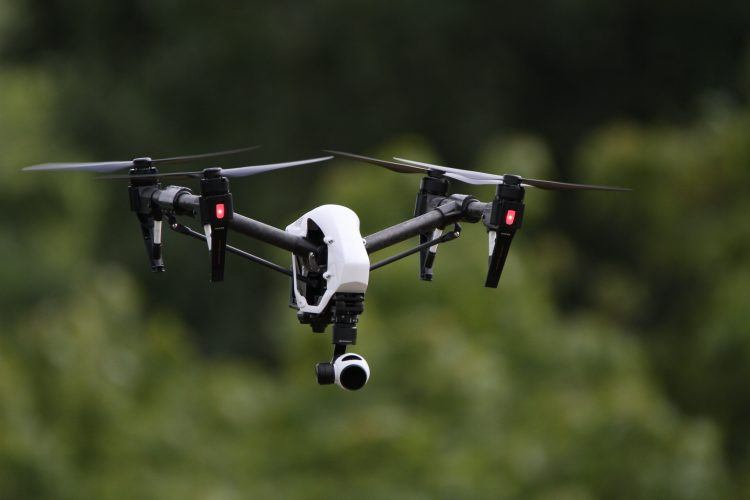
DJI Inspire 1 drone / Photo credit: DFSB SE
Earlier this week, the US Department of Homeland Security advised American companies about the inherent security risks associated with Chinese-made drones. Although the alert did not name a specific manufacturer, nearly 80% of the drones used in the US and Canada are estimated to come from Shenzhen-based DJI.
In a related development, the US government was also reportedly considering placing Chinese surveillance systems providers, including Hikvision Digital Technology and Dahua Technology, on a trade blacklist that would cut off their access to American hi-tech suppliers.
“We do not have magic [to predict the future],” a DJI spokesman said on Thursday. “Like everyone else, we are carefully monitoring the ongoing negotiations between China and the US.”
He said DJI’s business “has not been materially impacted” by the two countries’ trade dispute.
Still, the spokesman said it was difficult for DJI to speculate about what might happen next, adding that all it can do would be “to serve our customers well in the US and China, and bring them the best drone technologies.”
The Department of Homeland Security warning has added to the chorus of voices against the hi-tech ambitions of China and its biggest champions. This has led Chinese companies to examine whether they can survive without relying on US technology, a process that is expected to speed up an unwinding of the highly integrated global supply chain.
For decades, the conventional thinking was that lower-cost countries, such as China, would take up the bulk of manufacturing operations for richer economies like the US, whose consumers would enjoy cheaply produced goods from those places.
The US government last week placed Huawei Technologies, the world’s largest telecommunications equipment supplier, and its affiliates on a trade blacklist that restricts the group from buying hardware, software, and services from American hi-tech firms without Washington’s approval. That followed US President Donald Trump’s signing of an executive order that bans US companies from using telecoms gear made by firms that pose a national security risk.
In response to the US alert, DJI said its technology has been independently verified by the US government and leading US businesses. Its drones have a wide range of applications across the US, from local law enforcement and medical deliveries to infrastructure operations and aerial photography.
Plenty of the drones sold by DJI are used to take aerial videos and photos. These applications depend on sophisticated image-transmission chips that are mostly imported from the US, according to people familiar with the matter. Chinese chip providers cannot guarantee good image resolution using their products, so DJI has started to develop its own chips to be less reliant on external providers, the people said.





Stay updated on the go with our mobile app.
Get latest insights with smoother, more personalized experience through TIA mobile app.