Avanish Tiwary · · 4 min read
Cashfree is making life easier for online companies in India
In 2015, Reeju Datta and Akash Sinha, two techies who were at the time working for online furniture retailer Fabfurnish and Amazon India, were bouncing ideas around. They wondered if it was possible to start their own company. But before diving into entrepreneurship, they wanted to validate their idea.
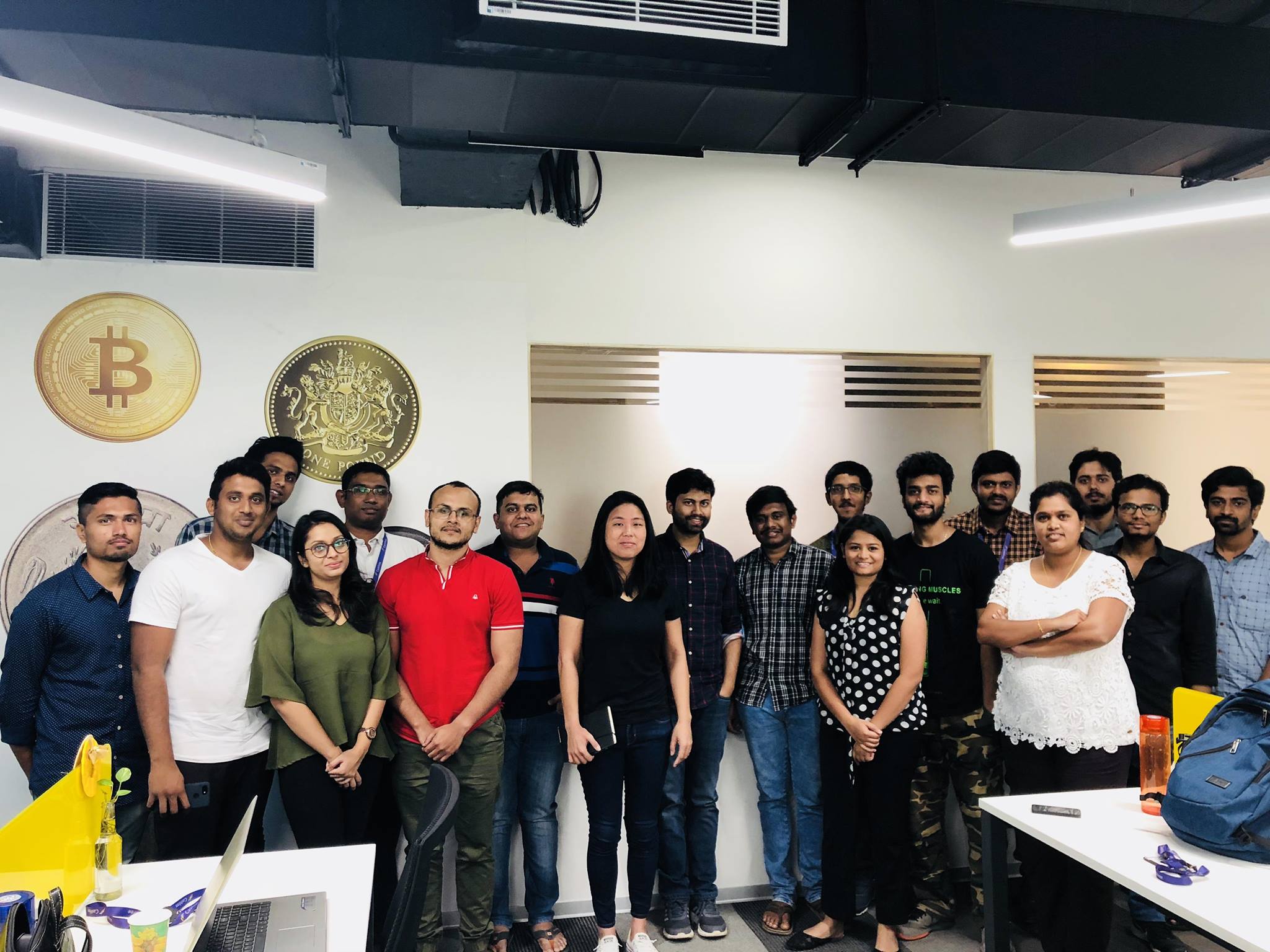
The Cashfree team with Y Combinator’s Adora Cheung / Photo credit: Cashfree
The duo stumbled upon a problem that online companies were facing – at the time, though people were doing a lot of online shopping, a large number of customers opted for cash on delivery. Courier agents had to carry plenty of spare change, or else they would have to spend time figuring out how to break big bills. In fact, because of this issue, ecommerce retailers had to handle many returns.
“We built a small prototype to digitize this doorstep payment process that allowed customers to pay digitally after they receive their product. Once the company receives the payment, the delivery person would get a real-time notification,” Akash Sinha, co-founder of Cashfree, told KrAsia.
Sinha said they convinced many food and grocery delivery companies to sign on in their initial days. Once they realized their idea was accepted, they quit their respective jobs and launched Cashfree in September 2015.
However, in the next six to seven months, they realized that their solution could be tweaked to solve a grander problem. The founders heard from merchants who were using online marketplaces, and learned that “they were facing issues around payment collection from e-commerce companies, as the payment gateways were not on par with the growing pace of the industry.”
“They were not pushing the bar. They had built a product which was modern compared to the 2011 to 2013 perspective, but after that, they failed to keep the pace going,” Sinha said.
An all-in-one payment channel
By April 2016, Cashfree had become a payment gateway company, which Sinha said was not their original plan, as there were many similar companies in existence.
The company went from offering a single payment disbursal service to providing eight features, including salary disbursal, instant refunds, subscription payments, marketplace commission settlement, and others.
Sinha said Cashfree automated their clients’ fee collection processes, in turn boosting conversion rates because checkouts took less time than before. “But a lot of these online companies in the gig economy had to make recurring disbursals to the delivery persons. We had digitized the collection part, but wage disbursement was completely manual. We started building the product to automate this as well,” he said.
Going forward, Sinha and Datta also noticed the delay in refunds to customers if they returned their purchases. The norm was a customer would receive their refund in five to seven days. Last year, Cashfree came up with a product that promised instant refunds. Sinha claimed the company makes the process seamless, and it takes less than ten seconds for customers to receive their money from the time of cancellation.
“We want to become a platform which online companies could use to automate their entire payment flow, be it payment collection, wage disbursal, or refunds, we wanted to provide a 360-degree solution,” he said.
This approach, Sinha claimed, broadened Cashfree’s scope in the market. They found clients from different sectors, such as ecommerce, medicine delivery, food delivery, and online gaming. Currently, Cashfree has over 50,000 customers that include big names such as Xiaomi, Tencent, Zomato, Cred, Club Factory, Shell, and Dunzo.
Chasing unit economics
Despite having built a good customer base and an array of products, with healthy expansions in their pipeline, Sinha said the company was in no rush to raise money as they “never felt the urgency.” In 2017, the five-member company raised funds in a seed round led by Y Combinator, with participation from a few other angels.





Stay updated on the go with our mobile app.
Get latest insights with smoother, more personalized experience through TIA mobile app.