
Welcome to The Offset! Delivered once a month via email and through the Tech in Asia website, this free newsletter breaks down the biggest stories and trends in greentech. If you’re not a subscriber, get access by registering here.
Hi there,
“Net zero” and “carbon neutral” are terms that get thrown around a lot, more so recently as the United Nations (UN) climate conference is getting underway. Big polluters are dialing up the volume on emission-cutting promises.
But how many of them will put their money where their mouth is?
The truth is, it’s difficult to tell. There is still a lack of global consensus regarding standards and regulations on tools like carbon pricing and offsetting. These unresolved issues are expected to take center stage at the summit. Are you tuning in?
Let’s take a look at the big headlines this month so you know what to expect.
— Nicole
DEEP READS
1️⃣ Tide turns for green funding in SEA, report says
Southeast Asia is one of the most at-risk regions to climate shocks.
The region has ramped up funding into green projects over the past three to five years, but a new report shows that it is not doing nearly enough to meet its targets. Moreover, the overall growth in Southeast Asia’s green investments is still slower than total fundraising.
The report says that heavy fossil fuel users in the region should explore low-carbon technologies like agritech and carbon capture. Countries also need to rethink how to meet their energy demands and collaborate on developing a more efficient regional grid.
The price tag isn’t going to be small. According to the report, Southeast Asia would need to pour US$2 trillion worth of investments over the next decade into infrastructures like renewable energy, electric vehicles (EVs), and waste management that can help cut emissions.
2️⃣ Big energy companies’ new pitch: ‘carbon-neutral’ oil and gas
Carbon neutral is the new black for the oil and gas industry. Big players like Royal Dutch Shell and Saudi Aramco were selling fossil fuels bundled with carbon offsets and branding them as “carbon neutral.”
Environmental advocates are criticizing the marketing strategy fearing the risks of exaggerating climate benefits.
This highlights a problem: Verifying climate benefits is challenging. The amount of carbon that so-called green projects can store can be overstated due to the lack of standardization and regulation. It also creates a loophole that allows companies to claim carbon neutrality while continuing to use fossil fuels.
Some oil-producing countries are employing a similar strategy. Big carbon states – Russia, Turkey, and the United Arab Emirates – signaled this month that they too could reach net zero within decades.
Although the UN scientific panel on climate change has acknowledged that offsetting and carbon capture might be necessary to meet the Paris Agreement’s climate goals, it has said that cutting emissions should come first.
3️⃣ Business leaders look to UN for deal toward carbon pricing

The Glasgow Science Centre / Photo credit: Unsplash
Putting a price on carbon is considered an effective incentive for countries and businesses to cut greenhouse gas emissions and transition to a low-carbon future. A major roadblock for getting this mechanism to work on a global scale is the lack of consensus on the pricing.
Businesses are looking to leaders at the UN climate summit in Glasgow this week to resolve these issues.
Other ongoing debates like the role of fossil fuels in the current economy will also likely take place during the summit. With mounting pressure, many banks and investor groups are starting to divest from fossil fuel projects. However, energy companies argue that fossil fuels, such as natural gas, still have an important role in the energy transition.
TRENDING NEWS
You can also check out Tech in Asia’s coverage of Asia’s greentech scene here.
Amazon’s Climate Pledge Fund has announced new investments in EV infrastructure company Resilient Power and packaging startup CMC Machinery. It’s also reinvesting into electro-fuel producer Infinium.
Why it matters:
Amazon established the US$2 billion fund in June as part of its plan to reach net zero by 2040. The fund incubates new climate tech and companies that can help Amazon cut emissions, focusing on areas like food production, EV, green hydrogen, energy storage, and waste reduction.

Amazon Return Center / Photo credit: Unsplash
2️⃣ Solar’s growth stumbles just as the world needs it most
The solar panel industry is undergoing supply chain disruptions amid strong demand for renewable energy. This caused panel prices to rise for the first time in years.
Part of the problem is that the supply of polysilicon, an ultra-conductive material commonly used in solar panels, could not meet demand.
The unresolved forced labor sanctions against Hoshine, a major Chinese panel material producer, has worsened the shortage. This led to the detention of Chinese-made solar panels at the US border since June.
Why it matters:
China is one of the world’s largest suppliers of solar panels. Some analysts say the setback will be temporary, and the delay in panel installation will most likely be resolved by the end of next year. However, uncertainties such as the rising tension in China-US trade loom on the horizon.
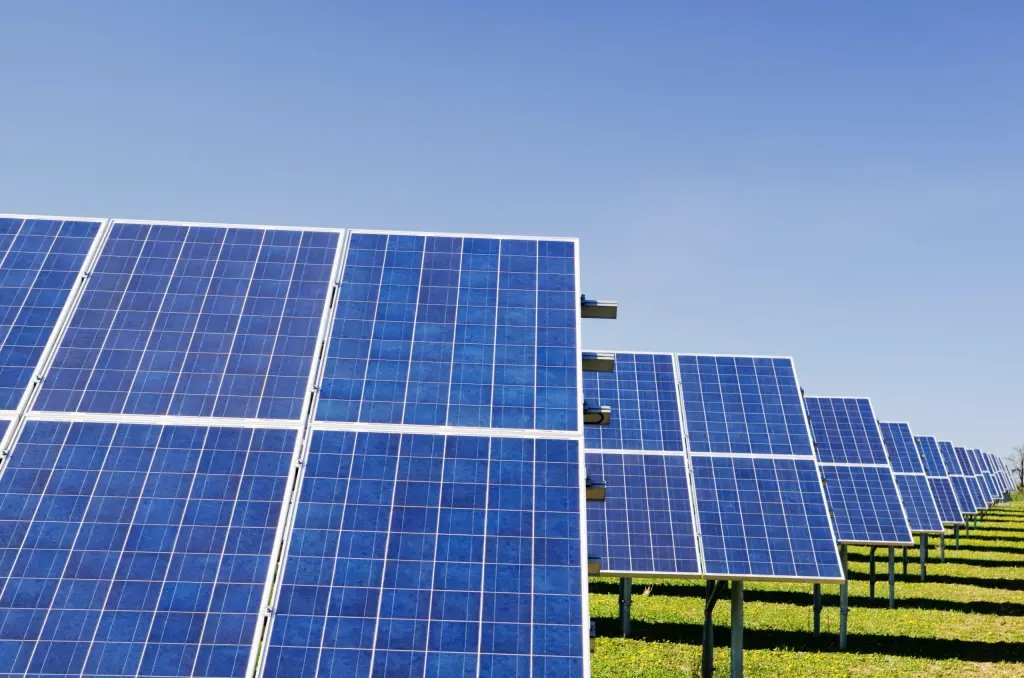
Solar power plant / Photo credit: Unsplash
3️⃣ China to cut fossil fuel use to below 20% by 2060
China has announced new details for how it plans to reach carbon neutrality by 2060. The plan includes reaching its carbon emissions peak before 2030 and aiming for 80% of its energy to come from non-fossil fuel sources by 2060. The government said it would promote low-carbon transportation, curb blind development, and limit coal-based fuel production.
Why it matters:
The Chinese government pledged to reach carbon neutrality last year but had offered almost no details about its plan. The country, like many others, is struggling with both meeting its energy demand and transitioning to non-coal sources. The announcement appears to contradict its recent decision to build more coal-fired power plants.
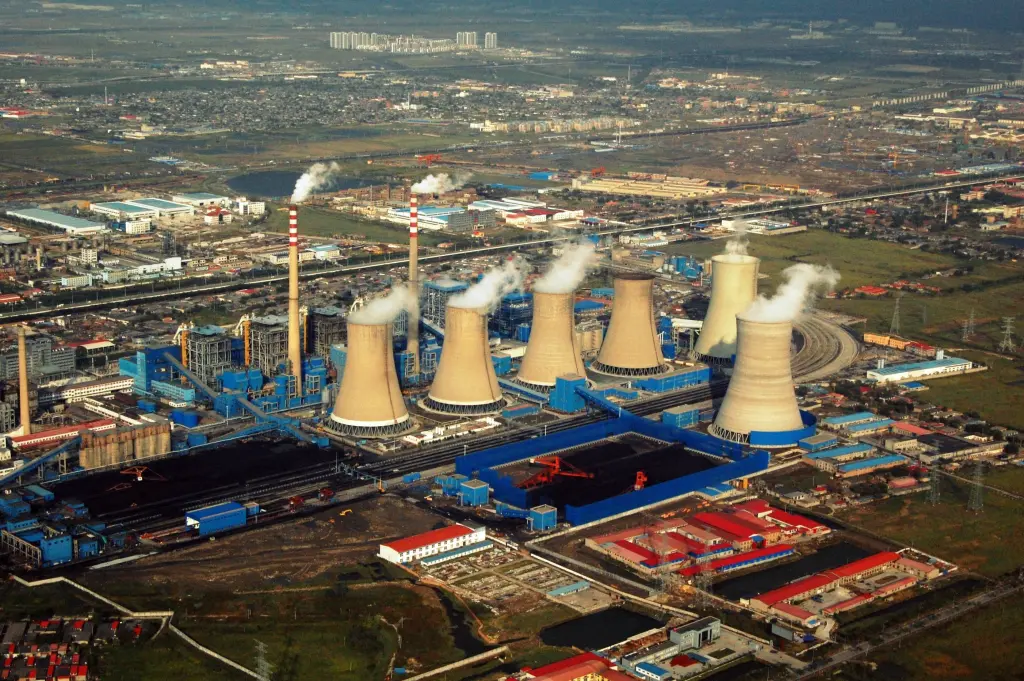
Power plant in Tianjin, China / Photo credit: Wikimedia Commons
4️⃣ Climate tech startups have raised a record $32 billion in 2021
Tech startups focusing on tackling climate change have raised US$32 billion so far this year – more than any other year prior, according to a new report. The Bay Area and London are driving much of the growth in this year’s investments.
Why it matters:
The tides are turning in favor of startups in the cleantech space as consumer and investor appetite grows. More funding and resources are also being made available for advancing climate tech.
STARTUP WATCH
1️⃣ Electric vehicle battery startup ONE backed by BMW, Gates-led firm
Michigan-based EV battery developer Our Next Energy (ONE) has raised a US$25 million series A round led by Bill Gates’ Breakthrough Energy Ventures, with participation from investors that include automaker BMW.
Founded in 2017, the Berlin-based company provides solar power for homeowners in a leasing model.
3️⃣ BP acquires renewable-energy technology company Blueprint Power
Oil giant BP has acquired Blueprint Power, a New York-based energy tech startup. Blueprint Power has developed software that turns commercial buildings into a power network that can generate, store, and trade renewable energy.

New York city / Photo credit: Unsplash
4️⃣ SoftBank co-leads $200m round of Ola Electric
India-based Ola Electric, the EV arm of ride-hailing firm Ola, has raised over US$200 million in a funding round led by Falcon Edge, SoftBank, and other investors. The new funds, which brings the company’s valuation to US$3 billion, will be used toward growing the company’s vehicle platforms, including electric motorbikes, scooters, and electric cars.
5️⃣ Wavemaker leads $1m round of Philippine environmental intelligence startup
Komunidad, an environmental intelligence provider based in the Philippines, has raised US$1 million in a seed round led by early-stage venture capital firm Wavemaker Partners, with participation from Asian Development Bank’s ADB Ventures. The company provides environmental and weather data to businesses and communities to help them plan and adapt to natural disasters.
Wavemaker Partners, the lead investor, has also launched a climate tech venture builder called Wavemaker Impact and is looking to raise US$25 million through the initiative.
That’s it for this edition – we hope you liked it! Do subscribe to continue receiving The Offset.
See you next month!
The Offset is made possible thanks to Taiwan Mobile.
It earned the best telco title in Global Views CSR Awards.
Taiwan Mobile is on a mission to transit to 100% green energy by 2040.
Stay updated on the go with our mobile app.
Get latest insights with smoother, more personalized experience through TIA mobile app.
Recommended reads
 Japanese 🍺 startup drinks to $615k seed funding
 Ex-Blackstone India head’s VC firm leads $20m round of drone startup
 The good and bad of Vietnam’s GameFi boom
 Amasia, Active Fund lead $9.6m round of greentech firm
 Ex-Googler’s prototyping startup raises $8m in series A money
 Telkom VC arm, state-owned pharma launch $20m fund in Indonesia
 Reddit co-founder’s VC firm eyes Japan for AI chip investments
 SG healthtech firm gets additional funding after $4.8m injection
 Nvidia, others inject $150m into enterprise AI firm
 Ex-Grab exec’s new climate tech venture lands seed funding





Editing by Terence Lee and Lorenzo Kyle Subido
(And yes, we’re serious about ethics and transparency. More information here.)