 Osman Husain · · 4 min read
Nearly run out of gas? FuelUp comes to the aid of Pakistan’s drivers
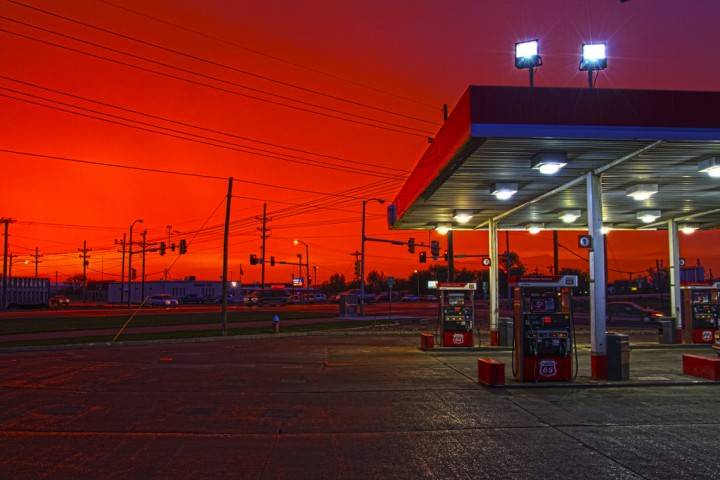
Compressed natural gas (CNG) has been heavily promoted as an alternative fuel for vehicles in Pakistan since the early 2000s. Eager to stem the worsening decline in balance of payments, the government sought to encourage people to switch away from expensive, imported petroleum products to natural gas, which was in abundant supply across the country. Drawn to prices that were 50 per cent lower than petrol, hundreds of thousands of people installed the necessary kits in their vehicles and made the switch.
Within a few years, there were over 1100 CNG filling stations across the country, and a cumulated investment of US$600 million had been made in the sector. Car manufacturers were now offering brand-new vehicles with pre-fitted CNG kits as demand reached stratospheric levels. In 2008, Pakistan had over a million vehicles running on CNG, placing it as the third-largest market in the world, behind Brazil and Argentina.
The Pakistani government continued to host events and tradeshows to attract further foreign investment, pointing to it as a “clean” energy source, and giving investors a variety of incentives, such as low duties and tax holidays. Unsurprisingly, millions of dollars continued to flow into the industry, with the number of vehicles operating on the fuel increasing at breakneck speed.
However, policy forecasters had not predicted this meteoric rate of growth. As demand for gas shot up, supply to other sectors such as households and electricity generation started to dwindle. Gas exploration companies were also unable to discover new reservoirs of the fuel, leaving supply at relatively consistent levels. As industry lobbyists started to actively campaign for their share in gas supplies, the government was left with a perplexing choice. Should it continue promoting a sector it could no longer afford, or let consumers suffer and divert gas supplies to industries such as power generation and manufacturing?
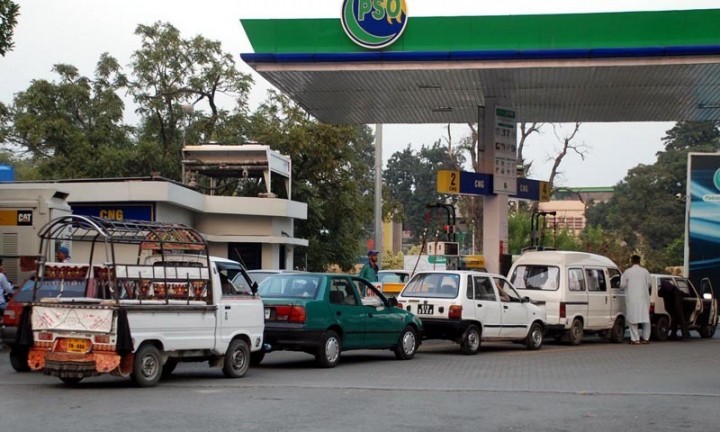
Motorists wait to fuel their cars in Pakistan
Overstretched demand
Today, it is estimated that Pakistan has over 2.5 million vehicles running on natural gas. However, filling stations are only allowed to open a few days per week, resulting in long wait times at the pump and a sense of frustration among drivers. The energy regulatory authority monitors gas supplies very carefully, and under a predetermined “sharing” mechanism, where the fuel is shared between private consumers and industry. Furthermore, schedules for filling stations are only released a few days apart, with little adherence to consistency, resulting in motorists checking arbitrarily whether CNG is available or not.
For Basit Saeed, the unavailability of CNG to fuel his car was a problem that he had to face on a daily basis. His commute to work would always involve a detour to check whether the closest station was open, resulting in delays and traffic gridlocks. His peers would also complain of similar issues, with many posting queries on social media inquiring about the current schedule.
Sensing an opportunity to solve a problem, Saeed started work on developing FuelUp – an app that monitors announcements from the government and regulatory bodies to determine the schedule of CNG availability. Through FuelUp, users could check whether local stations were open that day, negating the need to physically visit the premises, and saving precious time.
However, Saeed soon realized that the entire fuel industry itself was full of scams and that people were desperately searching for solutions. In Pakistan, it is not uncommon to see stations selling petroleum products at higher prices than those communicated by the government. Furthermore, stations create arbitrary shortages when they expect prices to increase, causing further distress for consumers. Saeed then introduced iterations in FuelUp, allowing users to check updated prices for all petroleum products, whilst also using your smartphone location feature to map out the station closest to you.
Saeed, who describes himself as a passionate entrepreneur, reveals that he has single-handedly designed, developed, and marketed the app so far. While currently it is restricted to Android only, it remains free-to-use, with a goal to get an increasing number of users. The entrepreneur also hopes to develop other products in the future as he “intends to solve problems with software.”





Stay updated on the go with our mobile app.
Get latest insights with smoother, more personalized experience through TIA mobile app.








📅 Upcoming Events
22 October 2026
Payoneer x CSPN Summit 2026