 Kylee McIntyre · · 8 min read
I was caught in the middle of India’s demonetization move. Here’s what I learned
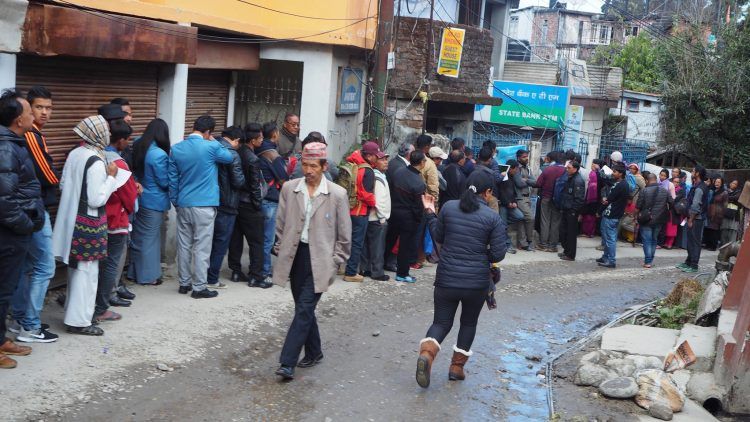
Lines at ATMs are common in India after PM Modi’s announcement. Depleted ATMs are often marked by signs saying “No Cash.” Photo credit: Monito.
On November 8, I was walking back from grocery shopping in the near-dark when I noticed something weird – people were queued up at every single ATM I passed. My spidey senses alerted – I had just used nearly the last of my cash – I checked my phone. I had three messages from different people warning me that come midnight, all INR 500 (US$8) and INR 1,000 (US$15) bills were going to be rendered useless. ATMs, which tended to spit out money in 500s and 1000s, weren’t going to work for the next 48 hours.
India’s cash-first economy had opened the door for corruption and black money – illegally obtained, untraceable, and therefore untaxable cash – said the country’s prime minister Narendra Modi. Taking this step would propel India forward into a digital economy and surprise those hoarding illegal bills. People had gotten, at most, four hours’ notice. I got two.
See: Why India’s demonetization is the biggest disruption for electronic payments in 2016
My friends assured me I should do nothing. Everything would be fine.
The next day, around noon, I tried and failed to pay my part of a group lunch bill (international cards were not accepted, I was to find out, at the majority of local shops and startups where I normally took my business – we’ll come back to this later). I realized things weren’t going to be fine. Over the next month, living in Bangalore took on an existential quality – endless lines at the ATMs and old notes being turned into paper sculptures, with no quick end in sight.
See: Why India took such a drastic step to go cashless
Beyond tech startups
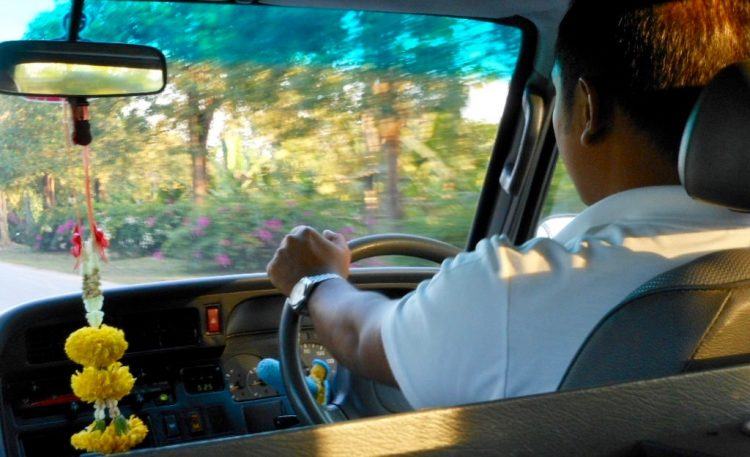
Photo credit: Michael Coghlan.
I don’t think people outside India fully understand the extent to which demonetization had on daily life in India, if at all. So the country got some new money – so what?
Tech in Asia’s first look, of course, was at Indian tech startups, which were thrilled. Fintech startups like Paytm all but danced on rooftops with the promise of new business. Even startups that relied on older methods of exchange like bartering saw a boost. But that’s only a small part of the picture.
‘Why don’t you just Paytm your maid?’ ‘My maid doesn’t have a smartphone.’
As the weeks went on, it became clear things weren’t going exactly as planned. The endless lines at the ATM didn’t dry up. A student, not able to withdraw cash payment for his exams, committed suicide. One friend lamented that he had to leave work early to stand in line at the ATM because he had to pay his maid.
“Why don’t you just Paytm your maid?” the person next to him asked.
What it was like
The cash crunch breakdown
Open to attack





Stay updated on the go with our mobile app.
Get latest insights with smoother, more personalized experience through TIA mobile app.









📅 Upcoming Events
22 October 2026
Payoneer x CSPN Summit 2026