Malavika Velayanikal · · 5 min read
Exclusive: How a medical device maker got $5 million seed funding
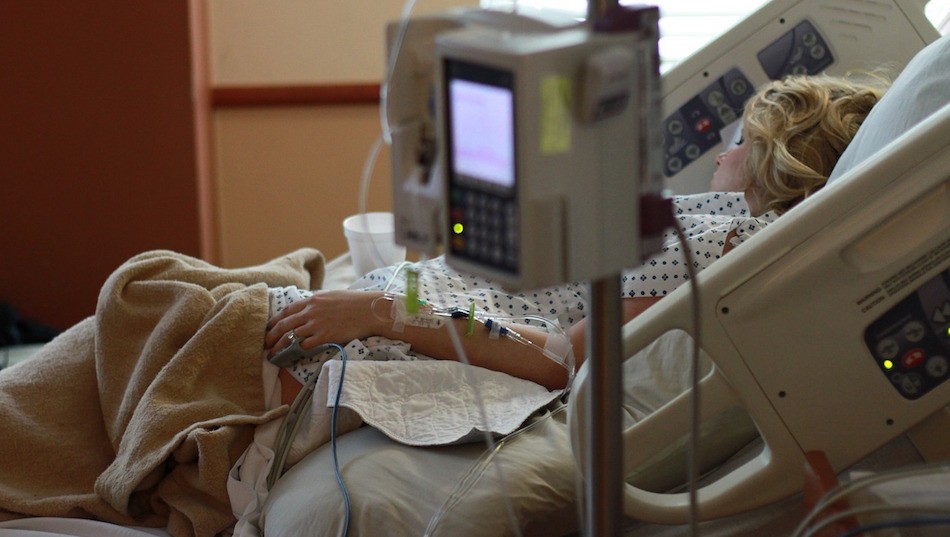
Photo credit: Pixabay.
In the last couple of years, I had the misfortune of spending more than a month at a stretch twice in hospitals. The recent one was a freak bike accident that left a lung punctured, knee ligaments torn, and ribs bruised. But the earlier one was much scarier: a nasty strain of dengue that had me partially blind all of a sudden.
The hospital I was admitted to discharged me immediately because they didn’t want the risk of a dead patient. Overnight, I was shifted to another hospital. Staring up from the hospital bed, life appeared in an altogether new angle.
Days were a study in helplessness, uncertainty, and dread. Mornings and evenings were measured only by the doctors’ visits; and nurses who dropped by twice a day to draw blood for my platelet count, pull out the needle feeding me medicines through painfully swollen veins, and find fresh spots to inject. Outside, a dengue epidemic season raged in coastal India, and almost every day, there was news about dengue deaths. My parents were at their wits’ end worrying if I might start bleeding internally without enough warning or if my platelets would crash before a blood transfusion could help.
I got the best treatment money could buy in Mangalore and recovered to tell this tale. But a very small percentage of Indians are as fortunate as I was to afford good healthcare. It’s for those who don’t get close, personal attention that Stasis Labs wants to help with its cloud-connected vitals monitoring system.
The Stasis Monitor sits at the bedside of the patient and monitors six different vital signs – heart rate, blood oxygen, 3-lead ECG, respiratory rate, blood pressure, and body temperature. “Instead of the numbers and waveforms that stress out patients and family members because they don’t understand them, we show icons and colors to represent the status (green = good, yellow = warning),” explains co-founder and COO of Stasis Labs Michael Maylahn.
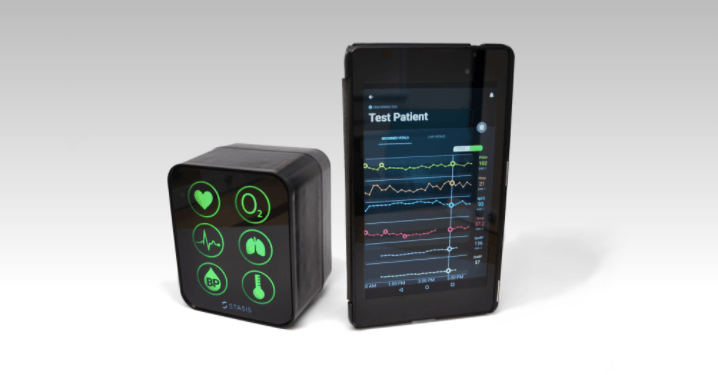
The Stasis Monitor.
“Our monitors wirelessly stream the vitals to our tablets. They also send the data up to our cloud for remote access by clinicians. The tablets automatically chart the data, showing patient trends. Everything is driven by software, removing as much as possible from the hardware. This makes it more cost-effective and easier to update – i.e. more future-proofed.”
The Stasis Monitor is currently live in a few hospitals in Bangalore. The startup is preparing for a large scale pilot in the prestigious Narayana Health hospital chain.
Stasis is preparing to deploy its device across India as well as other countries. To do that, the startup has raised a seed funding round of US$5 million led by RTP-Healthcare Ventures. Wonder Ventures, Techstars Ventures, and others participated in the round.
The trauma that spurred innovation
According to Stasis Labs, 75 percent of injuries and deaths in hospitals happen to vulnerable patients who lack basic medical supervision. It estimates that most hospitals have nurses monitoring patients only once every six hours.
Currently, hospitals use vitals monitors only in their intensive care units (ICU) due to the high cost and complexity of existing devices, which are built like desktop computers.
Stasis co-founder and CEO Dinesh Seemakurty paid a heavy price four years ago when his grandfather died due to medical negligence. The doctors at the Indian hospital he was admitted in missed a deterioration in his vital signs because of inadequate monitoring. “As a trained emergency medical technician, I knew the technology existed, and yet, hospitals weren’t buying it,” Dinesh says.
The less than $5 vitals monitor





Stay updated on the go with our mobile app.
Get latest insights with smoother, more personalized experience through TIA mobile app.