 Osman Husain · · 5 min read
This incubator is attached to Pakistan’s most prestigious university. Now it wants to show what it’s really capable of.
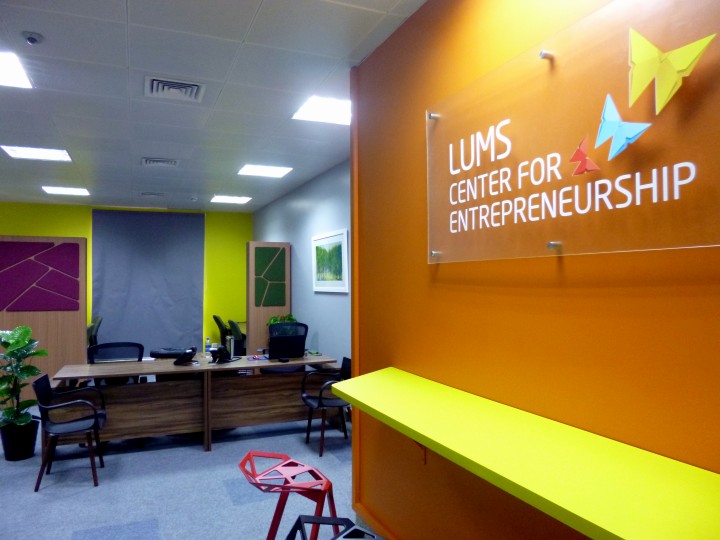
Located on the campus of Pakistan’s most prestigious management school, the Lahore University of Management Sciences (LUMS), is the LUMS Center for Entrepreneurship (LCE), an incubator that’s only been around for about a year. But despite its relative youth, LCE is already attracting some of the most exciting startups in the country. Local founders seem eager for mentorship and resources offered by this particular incubator.
The association with LUMS is one of the strongest selling points of the LCE. Ever since it began operations in 1989, LUMS has established itself as a university housing some of the most brilliant minds in the country. Its graduates are eagerly sought after by top local and regional corporates and past alumni have gone on to have successful careers. LUMS maintains close institutional links with industry heavyweights, and has built a wide repertoire of networks across several verticals. Even a short, fleeting association with the institution is guaranteed to open doors.
The current batch of startups incubated at the LCE is a vast, diverse lot, with ideas that aim to disrupt consumer retail, beauty, and smartphone repair industries. Founders are fervently working towards building teams, perfecting their business models, and developing their products. An air of infectious energy and optimism exudes throughout the center with execution plans, marketing strategies, and launch timelines being debated and discussed.
Some startups in the LCE have already gone on to receive further funding, whilst others are in advanced negotiations with investors. Informal labor startup H&O Services received investment from expatriate Pakistanis based in the Middle East, and others such as Savaree and InterActa are in the negotiation stages.
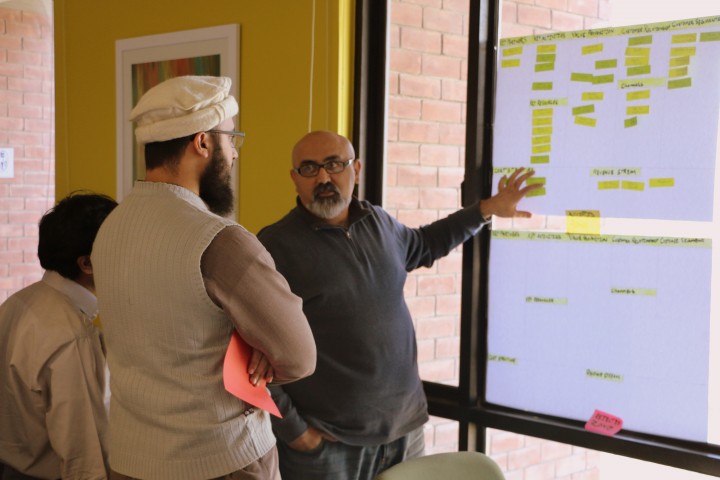
LCE Director Khurram Zafar mentoring entrepreneurs
Leading from the front
The director of LCE, Khurram Zafar, has a long history of establishing tech-based disruptive companies and consulting with various others, an association that will undoubtedly be of immense help for startups incubated here. After co-founding two software product startups in Silicon Valley, Zafar went on to consult for tech giants such as Visa, AT&T, Sony, and other Fortune 500 companies. Upon his return to Pakistan, he played an active role in establishing incubator Plan9, as well as teaching entrepreneurship at Information Technology University. Zafar remains an angel investor, with interest in the agriculture and technology sectors, and also advises VC firms in the US with their South Asian strategies.
“The brand of LUMS has been a huge factor in our success,” says Zafar. “If we were starting off anywhere else, with the same amount of resources that we have at our disposal, it would have taken us a lot longer to be where we are right now,” he adds.
There are a couple of features of the LCE that make it stand out from similar incubators in Pakistan. Firstly, a select number of startups are given a monthly stipend, to assist with personal and travel expenses. Secondly, the center also has an entrepreneur-in-residence for startups to engage with and benefit from. The entrepreneur, Ahmed Khan, was formerly a managing director for Rocket Internet in Pakistan, and therefore has significant experience in execution and scaling ideas. For all this, the center takes a small percentage of equity for each startup it accepts into its incubation program, but that is a model that Zafar believes is crucial as it allows a closer alignment of strategy between the two entities.
Zafar explains that the initial projected size of each batch was estimated to be in the region of five to six teams, with an application process as well as a competition to determine the finalists. However, due to overwhelming interest and demand, they were forced to increase this number to 16, as judges found it impossible to eliminate ideas. “While this does place strain on our resources, we are glad to accommodate more entrepreneurs,” he adds.
The LCE, which is currently mentoring its third batch of startups, has a more active role when it comes to inviting applications for incubation. Instead of simply advertising each application cycle and promoting it on social media feeds, the management team regularly visits civic hackathons, college societies, and other incubation centers to solicit applications and spread the word.
Furthermore, the LCE has now established a regular, structured curriculum that is taught to all incubated startups. Sessions are structured on a weekly basis, and the center maintains a Vimeo page where startups can access lectures if they need further consultation. The academic contents of the curriculum have also been developed in close collaboration with LUMS faculty members, entrepreneurs, and trending scholarly debate in the field.





Stay updated on the go with our mobile app.
Get latest insights with smoother, more personalized experience through TIA mobile app.











📅 Upcoming Events
22 October 2026
Payoneer x CSPN Summit 2026