Josh Horwitz · · 7 min read
A cross-straits acquisition highlights the difference between startups in Beijing and Taipei
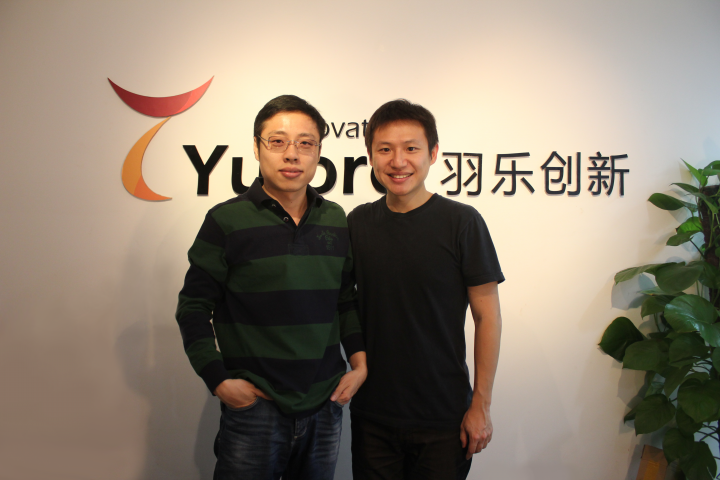
Dianhuabang founder Mao Yujian, left, with StorySense founder Edward Shen, right
On Friday, Chinese state media disclosed news that Dianhuabang, a Beijing-based startup that builds software for default dialer apps, acquired Taiwan’s StorySense for US$10 million.
The news of the purchase comes at a timely moment. For one thing, it marks the latest in a steady stream of small wins for Taiwan’s startup ecosystem, which is rebounding from a quiet year in 2014. More importantly though, it arrives as internet entrepreneurs are reviving a debate once thought to be dead – how might mainland and Taiwanese startups work together?
Navel-gazy debates aside, mainland and Taiwanese teams will only work together when it makes sense to do so. StorySense’s acquisition marks a rare cross-straits deal, wherein each company could provide the other with a key missing piece. The deal won’t serve as a model for Taiwan startups to follow, but it nevertheless shows how Beijing and Taipei teams can compensate for each others weaknesses.
Writing the story
It’s tough to find an entrepreneur in Taiwan with a pedigree more promising than Edward Shen’s. After finishing a Master’s degree at The MIT Media Lab, Shen turned down an offer from Google to return to Taiwan and start StorySense. He envisioned the company as a firm that would offer several apps, each centered around AI and natural language processing. With co-founders Victor Lin and Dan Huang, the Storysense team built an app they felt needed a fresh take – the default dialer.
WhatsTheNumber, the company’s first and only app, is an ultra-quick search engine for phone numbers. After downloading it, users can input the name of a restaurant – say, KFC – and a list of numbers for nearby locations will appear. Users can then dial out through a single tap. Inputting “steak” or “haircut” also draws up results.
“Photo apps have been replaced by Instagram, text messages have been replaced by WhatsApp, and the note apps have been replaced by Evernote. But the dialing app remains the same, and it’s outdated,” explains Shen. “We thought that if we could revolutionize that, we could create something new.”
Using proprietary technology, Shen and his teammates built a web-crawler that sits atop search engines – Google, namely – to draw up phone numbers and addresses from all corners of the internet. In theory, the number for the hole-in-the-wall bar on a dated Blogspot post should be just as searchable as the number for KFC.
After releasing WhatsTheNumber to app stores, StorySense scored US$450,000 in funding from angels and friends. Download numbers hit the millions worldwide, and the team became one of the best-known startups in Taipei.
But despite a solid start, WhatsTheNumber lacked a viable business model. Shen originally intended to monetize through advertising. Given that the app would in theory collect data about countless local institutions, along with the users that search for them, Google-esque “top of the listings” promotions seemed like a natural fit. But usage wasn’t strong enough to drive scale – which posed problems as Shen began raising a series A.
“People used WhatsTheNumber about twice a week. The stickiness was low and the DAUs and MAUs were not as high as we expected,” says Shen. “There was a chicken and egg problem for funding and users – we needed money to either buy the users via advertising, or we had to grow our user base before getting funding.”

A search for “steak” on WhatsTheNumber retrieves a list of nearby restaurants





Stay updated on the go with our mobile app.
Get latest insights with smoother, more personalized experience through TIA mobile app.