Jack Ellis · · 3 min read
Grab and Uber fined $9.5m by Singapore competition regulator
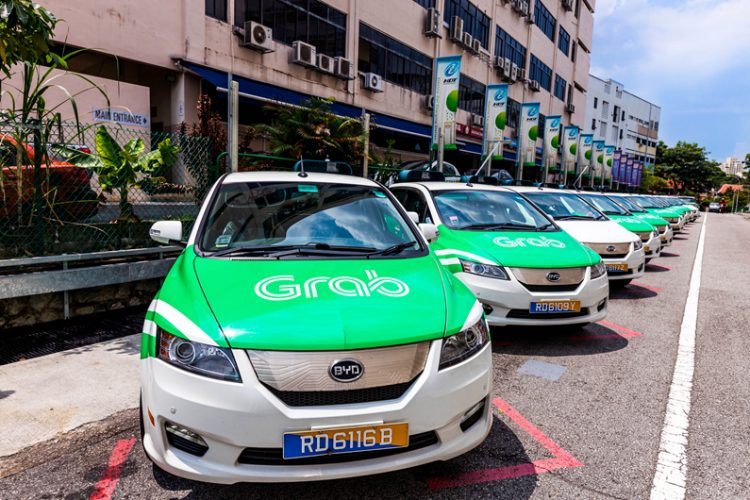
Photo credit: BYD
The Competition and Consumer Commission of Singapore (CCCS) has fined Grab and Uber a combined US$9.52 million after it found that their merger earlier this year had infringed the city-state’s antitrust regulations.
Uber was fined US$4.82 million, while Grab will have to pay out US$4.7 million. The watchdog said the penalties were calculated according to the two companies’ respective turnovers and other factors including “the nature, duration, and seriousness of the infringement, [and] aggravating and mitigating factors such as whether the parties were cooperative.”
The CCCS also said that part of its justification for the fines is “to deter completed, irreversible mergers that harm competition.” Grab has claimed that it notified the CCCS of its intention to acquire Uber’s regional business. Such notice is voluntary under Singapore’s competition regime.
However, the CCCS today stated that Grab and Uber had “proceeded to complete the transaction […] and began the transfer of the acquired assets immediately, thus rendering it practically impossible to restore the status quo. CCCS’s investigations also revealed that the parties had provided for a mechanism to apportion competition law penalties.”
In a statement issued today, Daren Shiau, a partner at Allen & Gledhill representing Grab, said that the company had “made a notification to the CCCS for the transaction following its completion, in order to proactively correct any misconceptions and address any potential CCCS concerns arising from such misconceptions.
He continued, “The fact of parties proceeding to complete the transaction after receiving a letter from the CCCS explaining Singapore’s merger notification regime and powers to investigate also does not suggest that there is any intentional or negligent breach of competition laws.”
In addition to fines, the CCCS also directed the two firms to make a number of changes to their merger agreement and operations.
Grab has to ensure its drivers are not exclusively tied to it, and are free to work with any other ride-hailing platform. It similarly has to remove any exclusivity agreements with taxi companies, and must also maintain pre-merger pricing algorithms and driver commission rates.
The regulator has directed Uber to try to sell vehicles owned by Lion City Rentals – its local rental unit that was taken over by Grab as part of their deal – to any third-party competitor who makes a reasonable offer. Uber cannot sell the Lion City Rentals fleet to Grab without the CCCS’s approval.
Lim Kell Jay, head of Grab Singapore, said in a statement that the company is “glad that the CCCS has completed its investigations on the Grab-Uber transaction and did not require the transaction to be unwound.” Grab “maintains we did not intentionally or negligently breach competition laws,” he added.
Indonesia’s Go-Jek – which has indicated it will launch in Singapore this year – welcomed the CCCS action.
“We’re encouraged to see the measures being taken to level the playing field,” said a Go-Jek spokesperson in a written statement. “It will have a significant effect on our strategy and timeline. We are now confident that Singapore will have a robust, efficient and competitive market, and that our arrival will have a significantly positive impact.”
Currency converted from Singapore dollars. Rate: US$1 = S$1.37





Stay updated on the go with our mobile app.
Get latest insights with smoother, more personalized experience through TIA mobile app.