 Betty Chum · · 3 min read
Pivots, layoffs and post-Covid plans from Grain and Chope’s founders
Tech in Asia’s No BS series is a lineup of straightforward conversations with founders, investors, and makers. In each live session, which is moderated by Tech in Asia founder Willis Wee, we talk about the hard things about our guests’ journeys and experiences.
We kicked off the first session of the series last week with Arrif Ziaudeen and Yi Sung Yong, the founders of restaurant reservation app Chope and food delivery startup Grain, respectively.
With the food and beverage sector being one of the hardest hit industries during Covid-19, particularly for F&B startups in the business-to-business space, we wanted to know how Ziaudeen and Sung were coping with the ongoing crisis and how they’re moving away from the B2B market.
The pivots
When Singapore imposed the circuit breaker — a two-month long period that effectively ended all dine-in activity amid the pandemic – Chope saw a large impact on its business. As a startup that focuses on restaurant reservations, it had to switch gears quickly. A few days after the measures were announced, it was able to launch its online delivery services working with medium to high-end restaurants.
This was largely the same experience for Grain. While the startup handles food deliveries, it mainly caters to corporations, and Covid-19 ended 95% of this business. To recuperate, the company focused more resources on its business-to-consumer segment and grew it by 10x to 12x in the past couple of months. Although it still saw a net drop in overall sales, the result is much better than having all of its revenue evaporate, said Sung.
The bad: Pay cuts and layoffs
Chope carried out pay cuts and furloughs in April, which Ziaudeen said was already a slow reaction.
The decision to do so wasn’t easy, either. There were a lot of uncertainties: Was management being too severe? Were they not as prudent? Was the decision correct? What would be the emotional impact on the employees? But what the founder learned overall was to make the decision fast and not look back.
Grain, on the other hand, reacted swiftly, cutting 10% of its workforce and removing all other additional staff-related costs like pay for part-timers, contractors, and staff benefits in February. Three weeks later, however, Sung realized that the company needed to do a bigger layoff exercise. “In hindsight, one cut is better than two cuts,” said Sung.
The good: Opportunities
Pre-Covid-19, Chope would have never thought about going into the food delivery business. But with the pivot comes a new host of opportunities. The startup has managed to onboard restaurants that it didn’t even expect would allow food deliveries – Michelin star restaurants among them.
It’s also found itself in a niche space. A survey Chope carried out in May found that 42% of restaurants in Singapore do not currently have delivery options. So Chope, having already built existing relationships with several restaurant partners, had a leg up.
While the startup’s focus after the pandemic is still going to be on its dine-in services, Ziaudeen sees having a delivery option as a great add-on to its business, allowing users a choice to eat in or dine out and enabling the company to own the food category for diners.
Meanwhile, Sung sees the pandemic as an opportunity for Grain to focus on its B2C business, which it had started years ago. Over time, however, the company gradually moved into the B2B space, as there were less competitors and the average order value was a lot higher than in B2C.
With Covid-19, Sung wants to relaunch Grain’s B2C segment, partnering with popular companies like bubble tea chain Koi and juice and smoothie brand Boost.
Moving forward, Grain wants to balance both the B2B and B2C sides of its business. And similar to Chope, Sung wants to provide a better user experience by giving customers freedom of choice: Users can order their own meals if they’re eating alone and call for catering when they have a gathering.
Upcoming events
Join us at our first-ever virtual product development conference this July 1 and 2 for the Indonesian series and July 8 and 9 for the Regional series. With over 30 hours of practical and applicable content, the conference will reveal how startups can scale and grow their products during critical times like a pandemic. Get 40% off your ticket from our limited-time special offer when you use the code ”special4flash” here.
We’ll also be organizing another virtual event next month. More information will be released soon, so be sure to keep a lookout for it! You can find out more here or sign up for our newsletter for updates.
Stay updated on the go with our mobile app.
Get latest insights with smoother, more personalized experience through TIA mobile app.
Recommended reads
 Zimplistic flips to a profit in 2021 after troubles
 SoftBank-backed Swiggy to shed 380 employees
 Recession Run: Wavemaker’s Santos sees a crisis as a flight to quality
 Vietnamese B2B platform bags $1m in Touchstone-led seed round
 Exclusive: Init6, East Ventures back Indonesian rental firm from ex-Listee execs
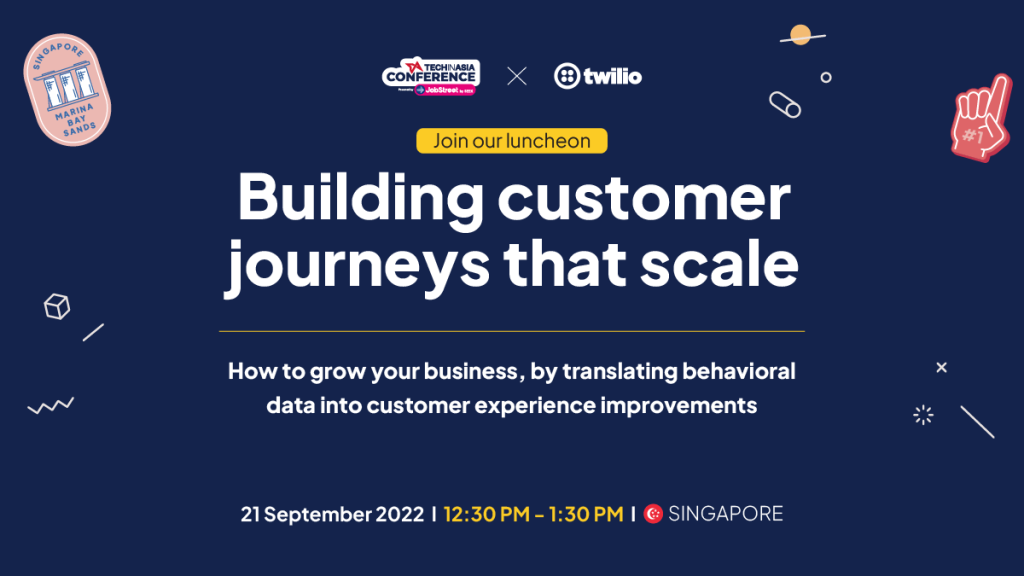 [TIA Conference Luncheon] Building customer journeys that scale
 Oddle built a profitable food delivery business. Here’s how
 How real-world validation helped this digibank launch its unique services with confidence
 As inflation bites, Indonesia’s warungs and low-income workers may have most to lose
 East Ventures pours seed funding into Indonesian online kitchen startup





Editing by Jaclyn Teng
(And yes, we’re serious about ethics and transparency. More information here.)






📅 Upcoming Events
22 October 2026
Payoneer x CSPN Summit 2026