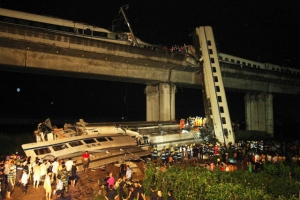
 Last week’s horrific high-speed rail accident in Wenzhou, China, has serious political implications for the future of that country’s high-speed rail lines. But in the aftermath of the accident, it appears that perhaps the larger issue is what, if any, implications the accident has for Sina Weibo’s future.
Weibo is Sina’s answer to Twitter, based on the same idea but arguably better executed, and every bit as addictive. It is the largest of several Twitter-like services in China. They broke 100 million users early this year, and according to research firm iResearch, they held 56 percent of China’s microblogging market in 2010, with a long lead over second-place Tencent.
The company has brought a lot of attention to China’s tech sector, and its service has evolved into an elegant hybrid of traditional microblogging and social networking platforms. But it has also become increasingly political as news, rumors, and opinions that aren’t permissible in China’s restrictive media environment increasingly find their way onto Weibo.
Weibo in the Wake of the Crash
The train crash, in particular, has felt something like a tipping point. Within hours of the first report of the crash, comments and criticism were piling up, and over a week later, the flow has barely slowed. There are already over ten million comments about the accident, nearly all of them angry, and in user-created polls, netizens have again and again showed that they’re angry with how the crash was handled; “very dissatisfied” has won with overwhelming numbers in every poll I’ve seen, and most of the polls have accrued tens and even hundreds of thousands of votes.

One example of a Weibo poll about the crash
Sina, like all domestic companies, is required to censor content on its site, but the train crash has proved too big for them to censor. It would be too obvious and dangerous to delete all 10,000,000+ messages about the accident, but deleting individual messages rarely works, as by the time a censor finds them they’ve been re-tweeted by dozens, hundreds, or thousands of others.
More concerning from an official perspective is that on Weibo, the government seems to leak like a sinking ship. Directives to the media attempting to control reporting on the story were leaked onto Weibo by reporters themselves. The bizarrely-missing driver of one of the trains (the other driver was killed in the accident) hasn’t been seen or heard from, but a conversation attributed to him was leaked to Weibo. Most recently, a confirmed CCTV Weibo account leaked that a former railway official who had been in charge of the high speed rail project until he was suspended in February on corruption charges has apparently amassed $2.8 billion in overseas accounts. That’s US dollars, not RMB, and no, “billion” is not a typo.
These sorts of leaks, combined with the amplification of anger that comes when it’s easily shared with millions of like-minded net users, have led to some serious questions about the sustainability of Weibo in its current form. How long can the government continue to allow such widespread, open criticism without threatening its own legitimacy? It’s clear from Weibo posts that trust is already at an all time low:
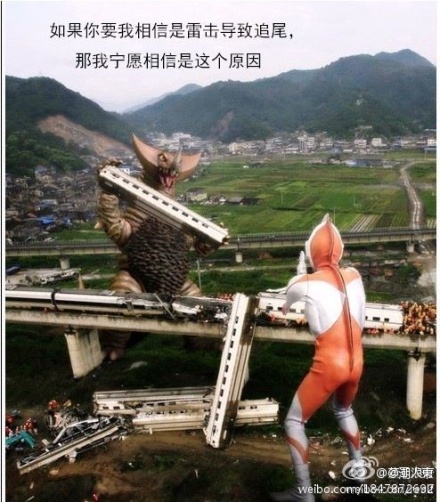
Translation: I'd rather believe this than the official explanation for the train crash
What Does the Future Hold?
Shuttering Weibo entirely would risk shunting some of the anger and frustration that’s being expressed there now into the streets, which would likely be worse. A showdown is coming. But does it have to be a zero-sum game?





Stay updated on the go with our mobile app.
Get latest insights with smoother, more personalized experience through TIA mobile app.