 Terence Lee · · 4 min read
Ask Wildby uses voice recognition to make Wikipedia accessible and safe for kids
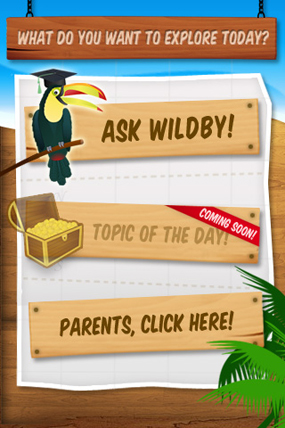
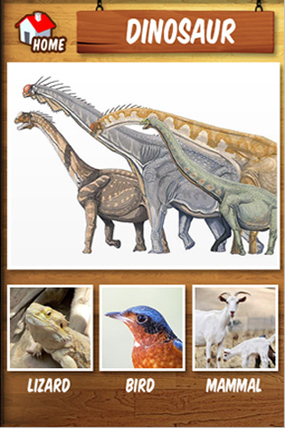 While adults have a multitude of ways to find information these days using Google, Wikipedia, Siri, and many other new-fangled services, kids are left out in the loop.
They are still stuck with asking their parents about such questions as “Why is the earth round?” and “What are dinosaurs?”
And here’s the reason why: Much of the Internet isn’t designed with young kids in mind. Many websites and apps have interfaces that are too complex, require advanced language skills to navigate, and they overwhelm children with too much information.
This is where Ask Wildby comes in. It is a mobile encyclopedia app that is specifically designed for kids four to seven years old. Children can speak a word into the app, after which they will be brought to a page with a slideshow and a voice narration.
They can then browse related topics by pressing on the corresponding pictures. The data is obtained from Wikipedia. For now, kids can only input single words, but they’re working on the ability to include phrases.
The mobile app, which just launched in five languages (English, French, German, Spanish and Italian) and is now available on Android, is the brainchild of Thomas Tan and Huang Yanying, who are incubatees at the JFDI-Innov8 2012 Bootcamp.
According to the co-founders, designing an app for children is very different from creating apps for adults.
Besides needing to be colorful and lively, sound effects like applause and cheers are used as positive reinforcement for children. The app must also be simple and not cram too many features onto the screen at once. Otherwise, they’d risk confusing the kids.
Another challenge lies in using social media virality to spread the word about Ask Wildby. Since kids are not on social networks like Facebook and Twitter, Thomas and Yanying have to design a way to incorporate parents into the sharing process.
Whenever a child views an entry, they can also send the pictures to their parents — by getting another adult to key in their mum or dad’s email address. The parent will then receive a link that allows them to share the pictures on Facebook.
Having appropriate content is another design issue Wildby has to face, since parents fear that they children might access unsuitable and mature content. Wildby deals with this by redirecting words like “sex” to “clown” instead.
While the app is a great idea, it still has some polishing to do. It has some ways to go before realizing the heaps of potential it possesses.
For some strange reason, my version of the app seems to be missing the voice narration feature. There’s also the issue of relevancy: Simply reciting and grabbing pictures off Wikipedia isn’t a long-term solution.





Stay updated on the go with our mobile app.
Get latest insights with smoother, more personalized experience through TIA mobile app.













📅 Upcoming Events
22 October 2026
Payoneer x CSPN Summit 2026