- Insights This article was written by a TIA community member. Insights pieces undergo the same rigorous editorial process that newsroom-produced articles have.
 Kai Yong Kang · · 4 min read
How a food delivery startup expanded to a highly competitive market
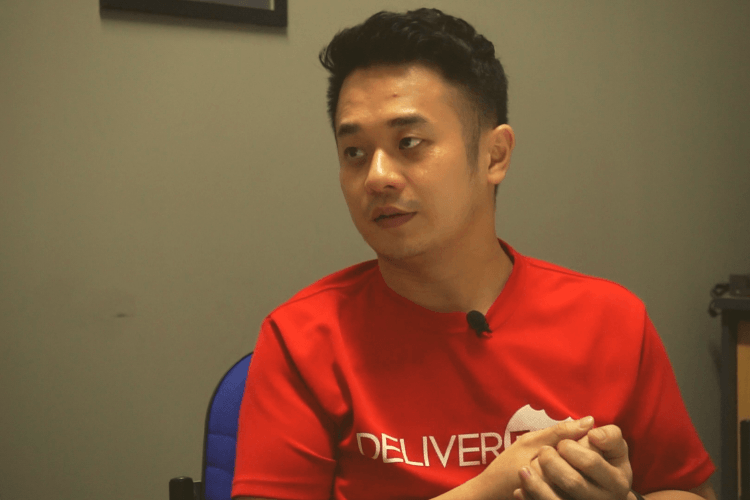
Suan Sear Tan, co-founder of DeliverEat
This article is part of Tech in Asia’s partnership with 米雷牛 Millennials where we publish the revised transcripts from their interviews with millennial entrepreneurs. This is heavily revised from the original transcript of the interview. For the full interview, go here.
DeliverEat is a Malaysia-based online food ordering platform which has expanded to non-food delivery. I got the chance to interview its co-founder, Suan Sear Tan, at their headquarters in Penang. In our conversation, Tan shares how they carried out their decision to build DeliverLah and expand into Kuala Lumpur.
Tell us about DeliverEat’s business model.
When we first started, we delivered food by partnering with different restaurants. Then, we built our own platform for our customers to place their orders. We also have our own system for restaurant partners and riders to check the orders.
We have been in Penang for five years. When our startup was two years old, we realized that a lot of restaurants were looking beyond food delivery. They were requesting a delivery service for ingredients from their central kitchens to other outlets in Penang.
So, we thought that we can use our own riders to provide services not just for customers but also for our partners. At that time, we developed another website, DeliverLah, which offers non-food delivery service. Our key differentiator is same-day delivery (or within three hours). Other logistics companies would arrange next-day delivery.
You have expanded to Kuala Lumpur. How did you decide on that?
After spending four years in Penang, we’ve realized that we’ve become the market leader in the state. We have also proven our business model and are profitable now. With this success, we decided to expand our services to other locations.
I think that if you don’t do well in your hometown, you won’t do well in other locations too. There’s no magic formula.
We used those four years to select our business model and salary scheme. We also made sure that our operational costs were minimized to make our business profitable.
After we successfully raised funds, we expanded into Kuala Lumpur. We chose that city because it is a highly competitive market. And since it is the capital, it has a bigger population. Also, most of our restaurant partners are located in Kuala Lumpur and they requested that we provide our service in their area.
How did the competition factor affect your operational costs?
In Penang, our costs were very high because we had to educate the public on online food delivery service. Some people were worried about whether their food would actually get delivered. Others wondered whether they could order non-fast food items. That process was tough.
In Kuala Lumpur, the public has already been educated by the competitors, giving us a clearer path. In terms of restaurant acquisition, it took us only a short time. They do not limit themselves to using only one delivery service. They are more than happy when a delivery service gives them sales.
However, some popular and bigger restaurants are wary as they’re worried about overwhelming volumes of orders. They would only use up to two or three delivery services.
Business model, market share, and profitability: which of these is most important when expanding a business?
Business model is the most important to me. I think market share can easily fluctuate as it always depends on customer behavior, competitors’ offerings, etc. The market will not belong to you forever.
There are companies like Uber that raise funds to expand. What do you think of this method?
What percentage of profitability is considered healthy? How would you know the right time to expand?





Stay updated on the go with our mobile app.
Get latest insights with smoother, more personalized experience through TIA mobile app.