Mary-Anne Lee · · 7 min read
How Ubisoft Shanghai went from porting games to pretty damn awesome in less than a decade
Corinne Le Roy had just come back from the south of Russia when Ubisoft CEO Yves Guillemot asked if she wanted to go to China. An ex-nurse who had worked in hospitals as well as in charity organizations, Le Roy had travelled extensively for work and even managed teams in four different countries before. Guillemot felt that Le Roy might be a good fit to go to China, since she had had experience working in a former Communist country.
She took a while to take him up on his offer. “I love reading books and I love watching movies,” she said. “I was not playing games because it was not my generation, but I like what’s new, what’s moving the trend on.”
Eventually, Le Roy found herself telling Guillemot: “Wow, in this part of the world, you have all the ingredients to make incredible games.” And it was this realization that took her to Shanghai, China.
The trip was supposed to be just a year-long posting that would give Le Roy enough time to see if China was suitable for a Ubisoft studio. But the people she met, who were “very young and very passionate” as well as a heady atmosphere of “creation, story, technology, energy” kept her in the country.

The exterior of Ubisoft Shanghai in 2014.
One year turned into another. Ubisoft Shanghai was established in December 1996. Developers were recruited in May 1997. The studio proper opened in July 1997.
Ubisoft Shanghai started porting IPs first. Games like Rainbow Six started pouring out of the Shanghai studio. This went on until 2003, when the studio completed its port of Tom Clancy’s Splinter Cell for the Xbox, GameCube and PlayStation 2. The following year, Ubisoft Shanghai was given full reign to develop Splinter Cell: Pandora Tomorrow. Its blinders had been taken off. It was ready to race.
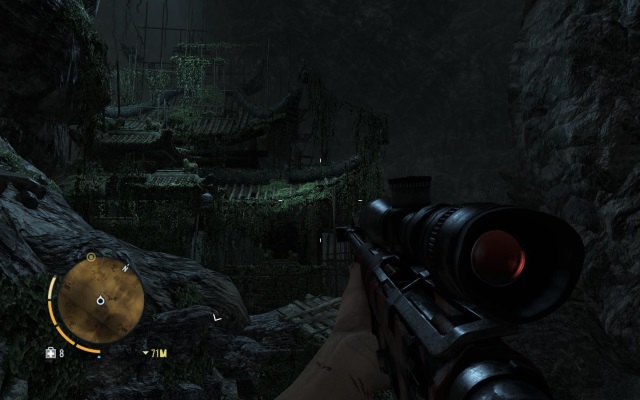
Today Ubisoft Shanghai has 40 international titles under its belt, not to mention several more titles developed for the local market. It has the IP rights to Tom Clancy’s EndWar series as well as to 2012’s survival horror game I Am Alive. Ubisoft Shanghai fully developed Tom Clancy’s Splinter Cell: Pandora Tomorrow and Tom Clancy’s Splinter Cell: Double Agent, and has co-developed Far Cry 3, Far Cry 3 Blood Dragon, Tom Clancy’s Splinter Cell Blacklist, as well as Trials Fusion, Trials Frontier and Trials Evolution. It also has a big hand in the upcoming racer, The Crew. And let’s not forget its two free-to-play titles: Football City Stars, which has so far only had Asian releases, as well as the upcoming EndWar Online. The studio has come a long, long way since Le Roy first arrived in 1996.
Today, Ubisoft Shanghai had 367 employees at the time we visited, and hosts between twelve to fourteen different nationalities in its staff. Although it is a very diverse staff, 90 percent of its hires are local, and this has come with its own challenges.
Le Roy said a large majority of the obstacles the studio faced while finding its feet were due to human resources. Although China is a big country and the local hires back then were willing to work in the industry driven by passion alone, initial hires were “not as well trained as now”, especially in important skills such as 3DS Max, a 3D modelling and animation software. However Le Roy also noted that local hires are “extremely hardworking” owing to how difficult it is just to qualify to study in a Chinese university. This results in them working very hard in order to remain competitive in all areas of their lives.
The Ubisoft Shanghai team has now grown into what Le Roy calls “a versatile one”. “It was more difficult [back then] but the experiences trained us to establish a company that stimulates dynamic knowledge sharing,” Le Roy said.

Ubisoft Shanghai today.





Stay updated on the go with our mobile app.
Get latest insights with smoother, more personalized experience through TIA mobile app.