Michael Tegos · · 4 min read
A death in the family inspired an iPhone case that monitors your blood pressure
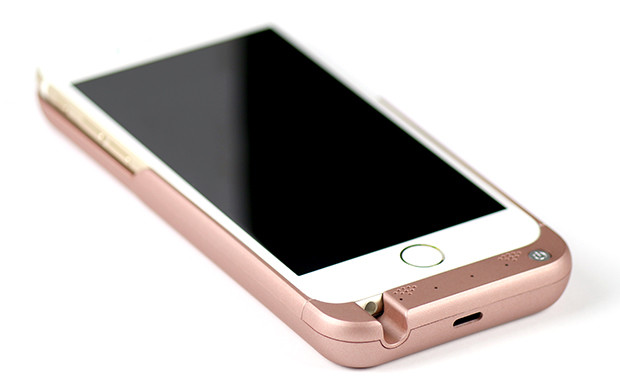
Photo credit: Lumio Labs.
Stanley Wang’s mother passed away four years ago. The impact of the loss made Stanley wonder what he could have done to help prevent it. “I thought to myself, what if I could build a product to help others?” he tells Tech in Asia.
To answer that question, Stanley co-founded Lumio Labs in Taiwan to come up with solutions for patients suffering from blood pressure-related conditions like his mother did.
AccuRate promises to measure your blood pressure by just resting on your wrist for 30 seconds.
Stanley’s background involves managing clients, manufacturing, and logistics for mobile phone and tablet original equipment manufacturers (OEMs). Together with co-founder Jimmy Huang, a specialist in mobile development and radio frequency signal processing, they looked into tracking Pulse Wave Velocity (PWV) through a radar sensor.
PWV is used clinically to measure arterial stiffness, or the hardening of our arteries as we age. Monitoring PWV helps detect things like cardiovascular diseases and strokes.
“We wanted to give people the power to measure and track blood pressure anywhere, so why not embed the sensor in an ultra slim iPhone case, so it can be with you everyday,” Stanley says. The result is AccuRate, an iPhone case that promises to measure your blood pressure, well, accurately by just resting on your wrist for 30 seconds.
Case study
The case sports two radar sensors that detect tissue movement and blood flow. The data they capture is processed by Lumio Labs’ algorithms. The accompanying app records the information and provides a history of your pressure and heart rate readings down to the day. It also allows your family members to keep an eye on your stats, which makes it useful for people with elderly relatives.
The case itself doesn’t look very remarkable, with the team clearly going for functionality over aesthetics. It adds a little bit of bulk to your iPhone but it’s very lightweight, so it shouldn’t get in your way too much.
I wondered why Lumio decided to go with a phone case instead of building a wearable or developing software to work with existing wearables. Stanley explains that a phone case is an easier product for users to adopt.
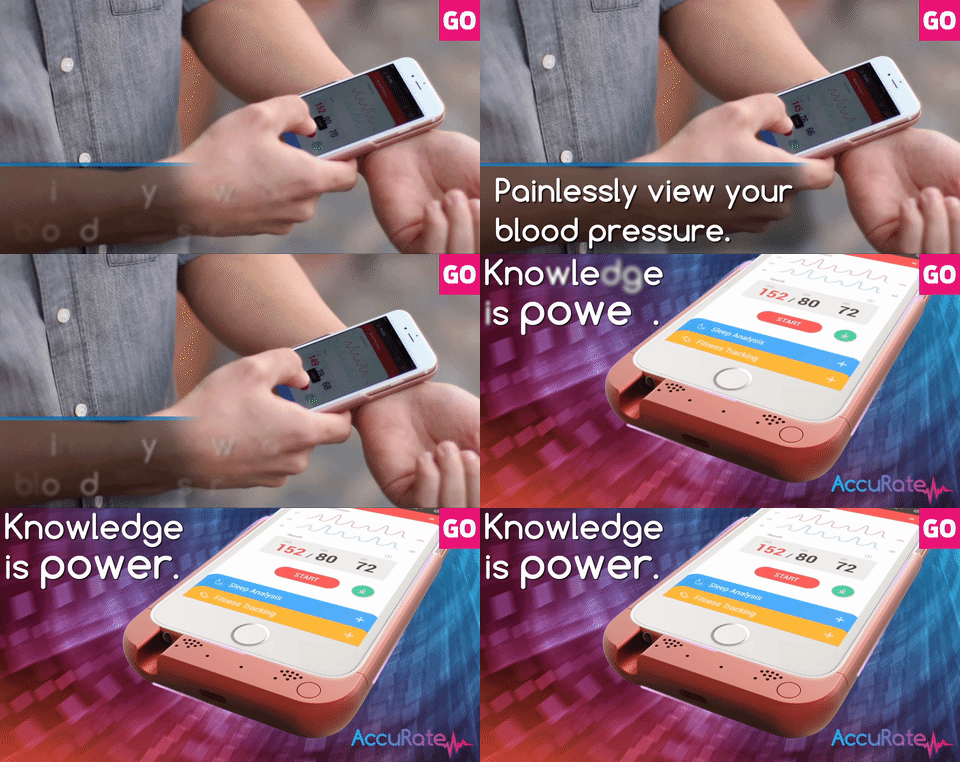
At this point, people carry a phone with them almost everywhere they go. It’s always on, connected, and available, so it’s ideal for what the startup wants to achieve. “When you drive away from home and realize five minutes later that you left your phone at home, over 90 percent [of people] will turn around to get it, but most won’t turn around for their Apple Watch or Fitbit,” he says.
Moreover, the team’s target market – people aged 40 and above – is one that’s harder to convince about getting a new wearable than about just changing phone cases.
Getting the word out





Stay updated on the go with our mobile app.
Get latest insights with smoother, more personalized experience through TIA mobile app.