
Welcome to The Offset! Delivered once a month via email and through the Tech in Asia website, this free newsletter breaks down the biggest stories and trends in greentech. Get it in your email inbox by registering here.
Hello readers,
Many parts of the world are sweltering through the hottest summers on record. The heat is hitting even the iciest places on Earth, which could speed up irreversible glacier melting.
Concerned scientists are experimenting on new ways to slow glaciers from disappearing, including laying a thin sheet of reflective material to bounce the sunlight back into the atmosphere.
THE BIG STORIES

Image credit: Timmy Loen
Mapping SEA’s electric vehicle players
Southeast Asia’s electric vehicle market is getting crowded. In recent years, the region saw not only established players from overseas but also up-and-comers born from the region vying for a piece of the market pie. The ecosystem is expanding, with startups filling gaps in the industry – from operation support to charging infrastructure and battery recycling.
The brow-raising $150m valuation of SGX-listed firm’s EV brand
Singapore’s Scorpio Electric is thrilled to finally bring customers its flagship motorcycle, the X1. The SGX-listed company’s road to launch its first e-bike has been rocky. Moreover, industry watchers are questioning the firm’s ambitious road map and its overly optimistic valuation.
DEEP READS
Chinese scientists are trying to shield melting glaciers from the sun
A group of Chinese scientists is testing a new way to stop the Dagu Glacier from melting away. Their plan is to spread a sheet of white fabric across more than 4,300 square feet of the mountain. The film was designed for a very specific purpose: reflecting the sunlight back into the atmosphere. Theoretically, it will help shield the glacier from the heat and prevent it from melting away too fast.
The Dagu Glacier, located in northwest Tibet, has supported the livelihood of those living around it for decades. The meltwater not only provides drinking water but is also a source of hydropower for the region. The glaciers have lost more than 70% of their ice over the past century, largely due to global warming.
Glaciers in other parts of Central Asia including those in the Hindu Kush Himalayan mountain ranges are also seeing snow melting at unprecedented rates.
Covering glaciers with white blankets made of reflective material isn’t a new idea. European ski resorts have been using the method to preserve snow for two decades. But in recent years, scientists have begun testing it with the goal of saving disappearing glaciers.
Experiments are being conducted in vulnerable regions including the Morteratsch Glacier in the Swiss Alps, where temperatures are rising more quickly than the average in the Northern Hemisphere.
“All the human intervention methods that we’re working on, even if they prove effective, are only going to slow down” the melting, says Zhu Bin, the associate professor at Nanjing University who is leading the expedition in the Dagu Glacier. “If the Earth keeps getting warmer, in the end, there is no way to protect the glaciers forever.”
SYNC 2023: Climate Tech
Unveiling the future of sustainable innovation
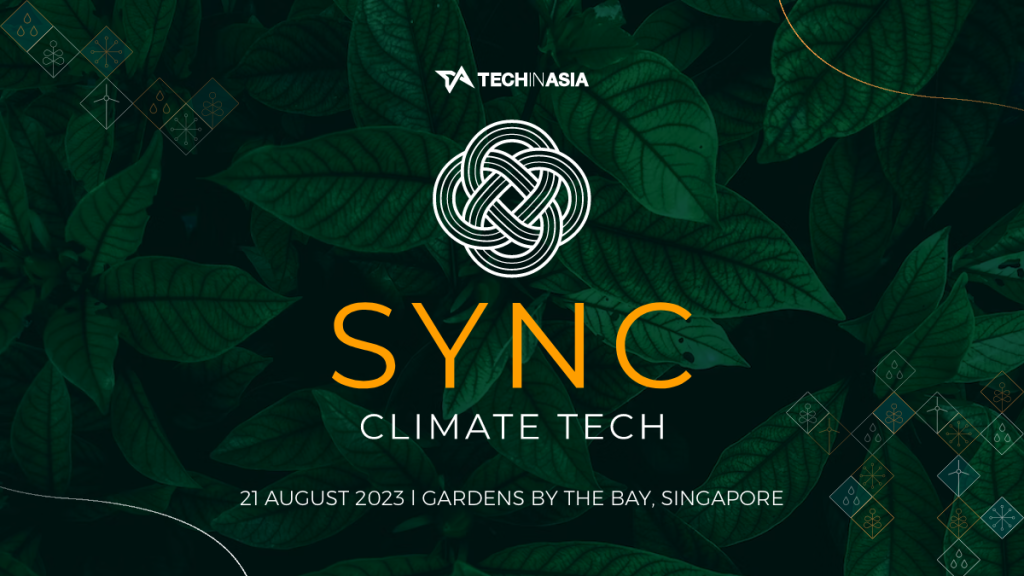
Get ready to SYNC with us at our annual climate tech summit on August 21, 2023! This year at Singapore’s iconic Gardens by the Bay, we’re bringing back the first-of-its-kind gathering of top climate tech leaders in Asia.
Catch Jonah Goldman (one of the original architects behind Bill Gates’ Breakthrough Energy) and seasoned entrepreneur Pandu Sjahrir, along with other inspiring industry leaders, on our main stage as they uncover tangible solutions and opportunities in the climate tech scene.
One ticket also unlocks full access to our high-touch program, curated to give you the ultimate SYNC experience. Engage in expert roundtable discussions, participate in one-on-one business matchmaking, attend exhibition and site visits, and get an opportunity to network with top industry players to forge strategic partnerships.
Click here to get the full scoop on our agenda and attendee lineup and apply for an invitation to be part of this exclusive event. Hurry, seats are limited – submit your entry for a golden ticket today!
TRENDING NEWS
You can also check out Tech in Asia’s coverage of Asia’s greentech scene here.
1️⃣ Paris climate finance summit delivers momentum but few results
Nations gathered in Paris at the Summit for a New Global Financing Pact in June to establish a global financing architecture to address the climate crisis. However, the two-day summit resulted only in incremental progress and barely addressed the fundamental problem: the crushing debt levels of developing countries.
Why it matters:
In recent years, climate finance has been a point of contention between wealthy and developing nations, holding up progress at climate summits.

2️⃣ US approves chicken made from cultivated cells, the nation’s first ‘lab-grown’ meat
Regulators in the US gave the green light to the sale of lab-grown meat. Two California-based companies, Upside Foods and Good Meat, are the first to receive approval.
Why it matters:
The traditional method of raising animals for slaughter contributes significantly to overall food production’s greenhouse gas emissions. Plant-based and cultivated meats claim to have a much lower carbon footprint than conventional meat production.
3️⃣ Germany overtakes China as second most attractive country for renewables investment
Germany has overtaken China to become the second most attractive renewable energy market in the world, behind only the US, new research conducted by EY shows.
Why it matters:
Germany climbed to second place for the first time in a decade thanks to its recent efforts to speed up energy market reform and move away from fossil fuels. The country was once one of Europe’s biggest buyers of Russian gas until the war in Ukraine. In April, it shut down its remaining three nuclear power stations.
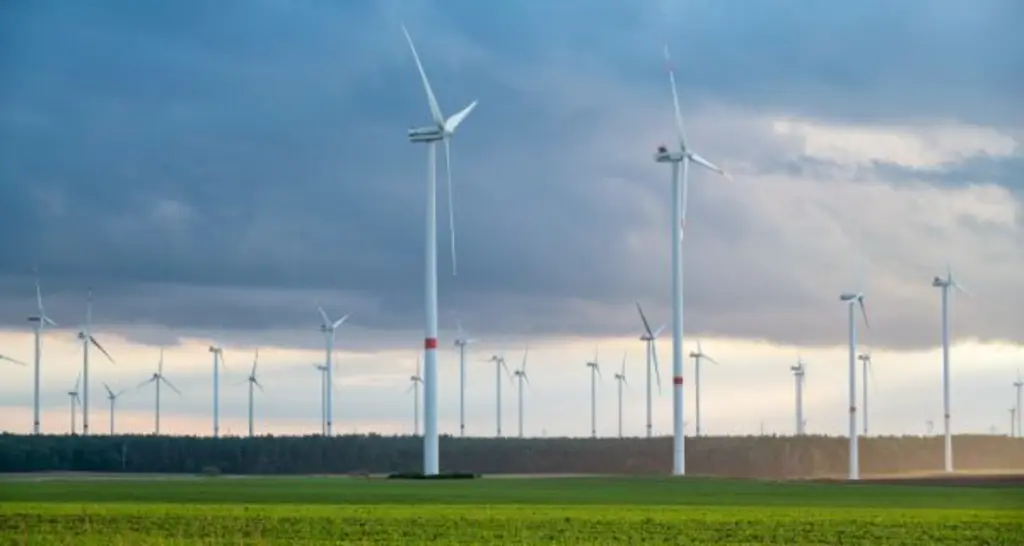
4️⃣ Global economy loses trillions of dollars in years following El Niño
Researchers project that global economic losses for this century will amount to US$84 trillion as global warming amplifies the frequency and strength of El Niño. They estimate that the El Niño event predicted for 2023 alone could hold the global economy back by as much as US$3 trillion by 2029.
Why it matters:
El Niño triggers changes in weather that are contributing to devastating floods, droughts, plummeting fish populations, and an uptick in tropical diseases.
5️⃣ India in talks to supply green hydrogen to EU, Singapore
India has discussed a possible deal to supply more than 11 million metric tons a year of green hydrogen to the European Union and Singapore, who in turn would invest in the Indian clean energy projects involved, three government officials and one industry source said.
Why it matters:
Countries around the globe are turning to hydrogen to drive a transition away from fossil fuels to address global warming. India last year sought to further its ambitions to become a major green hydrogen exporter through the approval of a multibillion-dollar incentive plan and a target to produce 5 million tons of green hydrogen by 2030.
STARTUP WATCH
1️⃣ Hamburg’s 1Komma5° has raised 430 million euros and became a unicorn at just 23 months old
The Hamburg-based solar system startup has raised a 430 million euros in its series B round, which catapulted the firm to unicorn status. The round was led by VC firm G2VP. The new funding will go to enhancing the company’s energy management technology that allows homeowners to optimize their energy demand.
2️⃣ Indonesian agritech firm eFishery confirms raising $200m series D
Indonesian aquatech firm eFishery has raised a total of US$200 million in series D funding, bringing its valuation to over US$1 billion. The round was led by 42XFund, with participation from Kumpulan Wang Persaraan, responsAbility, 500 Global, Northstar, Temasek, and SoftBank.

3️⃣ Charm Industrial raises $100M in series B financing
The San Francisco and California-based carbon removal company has closed US$100 million in series B funding. The round was led by General Catalyst with participation from Lowercarbon, Exor Ventures, Kinnevik, Thrive Capital, and Elad Gil.
The new funds will be used to expand engineering and bio oil R&D efforts, scale operations, and improve transportation capacity.

4️⃣ Tomorrow.io raises $87m for weather satellite constellation
The Boston-based weather intelligence startup has raised US$87 million in a series E funding round. The company announced the raise on June 14, after launching its second satellite, R-2, on the SpaceX Transporter-8 rideshare flight.
The investment was led by Activate Capital, with participation from RTX Ventures, Seraphim Space, and Chemonics as well as existing investors SquarePeg Capital, Canaan, ClearVision, JetBlue Ventures, and Pitango.
That’s it for this edition – we hope you liked it! Do subscribe to continue receiving The Offset.
See you next month!
The Offset is made possible thanks to Taiwan Mobile.
The company earned the best telco title in the Global Views CSR Awards.
Taiwan Mobile is on a mission to transition to 100% green energy by 2040.
Stay updated on the go with our mobile app.
Get latest insights with smoother, more personalized experience through TIA mobile app.
Recommended reads
 Indonesian AI startup goes global
 Forrest Li on scaling Sea, building smarter bots, and founder grit
 An AI assistant that joins sales calls and scores team skills
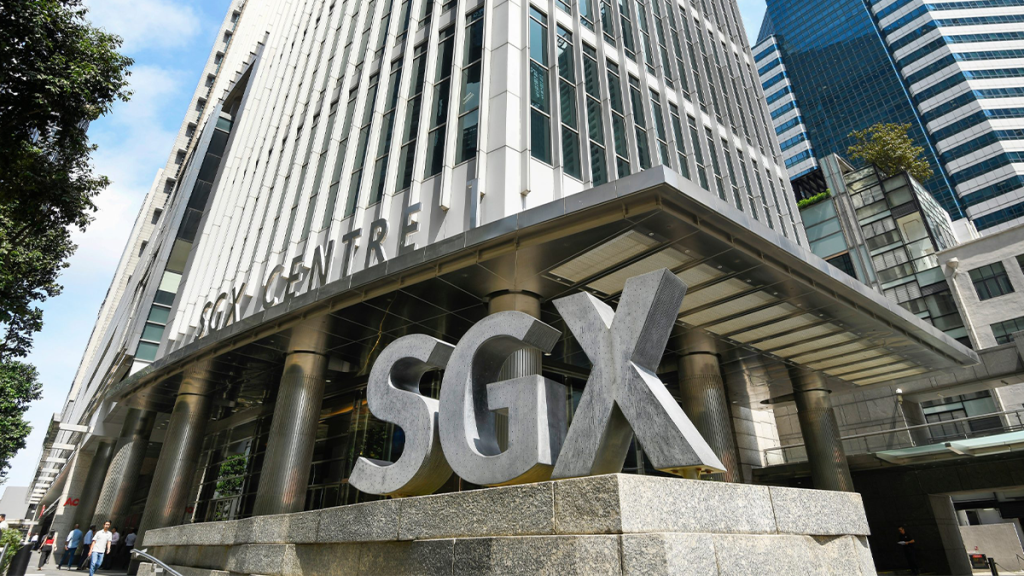 SGX’s CEO says it doesn’t need a unicorn to win
 SMEs want AI too, but not the kind Big Tech is selling
 Oatside’s alt-milk rise hits a profitable gear
 Alibaba’s financial health in 12 charts
 Asia’s telcos bundle AI into mobile plans. Will it pay off?
 M-Daq chases bigger clients as revenue falls, losses grow
 VC tracker: Accel raises US$3.5b, including US$550m for India





Editing by Jaclyn Tiu
(And yes, we’re serious about ethics and transparency. More information here.)