 Winston Zhang · · 5 min read
Pushing the tech envelope to nurture ecommerce for a post-Covid-19 world

The global spread of Covid-19 is changing the world into one that is increasingly reliant on technology. More people are staying indoors and working from home to help curb the pandemic, and this has accelerated the digital economy, especially in Southeast Asia, which is expected to be the fourth-largest economy in the world by 2030.
The region’s flourishing digital economy reached a gross merchandise value (GMV) of US$100 billion in 2019 and is projected to hit the US$300 billion mark by 2025, according to a report by Google, Bain & Company, and Singapore’s Temasek Holdings.
The study also found that the biggest driver of this progress has been the ecommerce industry, which grew over seven times from a GMV value of US$5.5 billion in 2015 to US$38 billion in 2019. The sector is on track to exceed US$150 billion in GMV by 2025.
Technology is fueling a chunk of its growth, with factors such as improved internet penetration and mobile connectivity underpinning enhanced, personalized, and seamless shopping experiences online. With more people tapping into ecommerce to meet their daily needs, it’s critical to see how the industry prepares everyone for a post-Covid-19 world.
By leveraging technology to build and enable an ecosystem that includes payments and logistics, ecommerce players like Lazada have helped in accelerating progress for the digital economy.
“We look at what we need to do today to capture opportunities in the region five to 10 years down the line. That’s why we are building the world’s most scalable technologies for ecommerce, backed by Alibaba’s ecosystem,” says Carlos Barrera, Lazada Philippines’ chief operating officer. “We are building and expanding our logistics network and payment infrastructure to meet consumers’ demands and help our sellers do the same so they can do business easily anywhere.”

Carlos Barrera, Lazada Philippines’ chief operating officer / Photo credit: Lazada
“At this point, ecommerce penetration is at 3% to 5% of the retail sector in Southeast Asia, compared with China’s 20%. Just imagine the immense potential that is yet untapped.”
The Southeast Asia ecommerce story
Ecommerce in the region has evolved from its early days. In the 2010s, the nascent industry faced many hurdles such as low internet penetration, a significant unbanked population, and fragmented logistics services. This was especially true in markets with large rural populations, such as Indonesia and the Philippines.
Some of these challenges still remain today, but to a lesser degree. Recognizing this from the beginning, Lazada introduced solutions such as cash-on-delivery payment options and building its own logistics network.
As the number of internet users in the region ballooned from 260 million in 2015 to 360 million in 2019, and become more digitally engaged, Lazada was able to drive more innovation, such as introducing the e-wallet option on its platform and building more interactive features to engage its consumers.
Beyond transactions
Since integrating with Alibaba, Lazada has capitalized on the Chinese giant’s technology resources to transform shopping from a transactional experience to a social one, including pioneering the concept of “shoppertainment” and bringing mega shopping festivals such as 11.11 and 12.12 to Southeast Asia.
“Shoppertainment and shopping festivals have changed the way ecommerce platforms, brands, and sellers engage with and interact with consumers – from merely a click-and-buy experience to one that’s more about watching, playing, and shopping,” says Barrera. “It’s also an opportunity for brands and businesses, especially small and-medium-sized enterprises (SMEs), to reach and acquire more customers, build brand awareness and loyalty, and boost sales and grow.”
Shoppertainment uses technology such as augmented reality that lets people try on a shade of lipstick or a dress, interactive content via livestreaming that allows sellers to promote their wares, and gamification of in-app features that converts users’ winnings into vouchers and discounts.
Lazada’s 11.11 sale last year was the first to include its gaming arcade. Launched in March 2019. LazGame allows shoppers to play on the app to earn discounts.
The event also featured interactive livestream content such as gameshows. “Over 1.1 million viewers across the region tuned in during the four-hour Guess It! session, making it one of the most watched in-app livestreams,” says Barrera, referring to one of the programs.
These features were built in-house, with Lazada developers working closely with their Alibaba counterparts.
This social approach also comes with tailored recommendations and chatbot support services as well as greater localization and personalization of the shopping experience, powered by Alibaba’s technology.
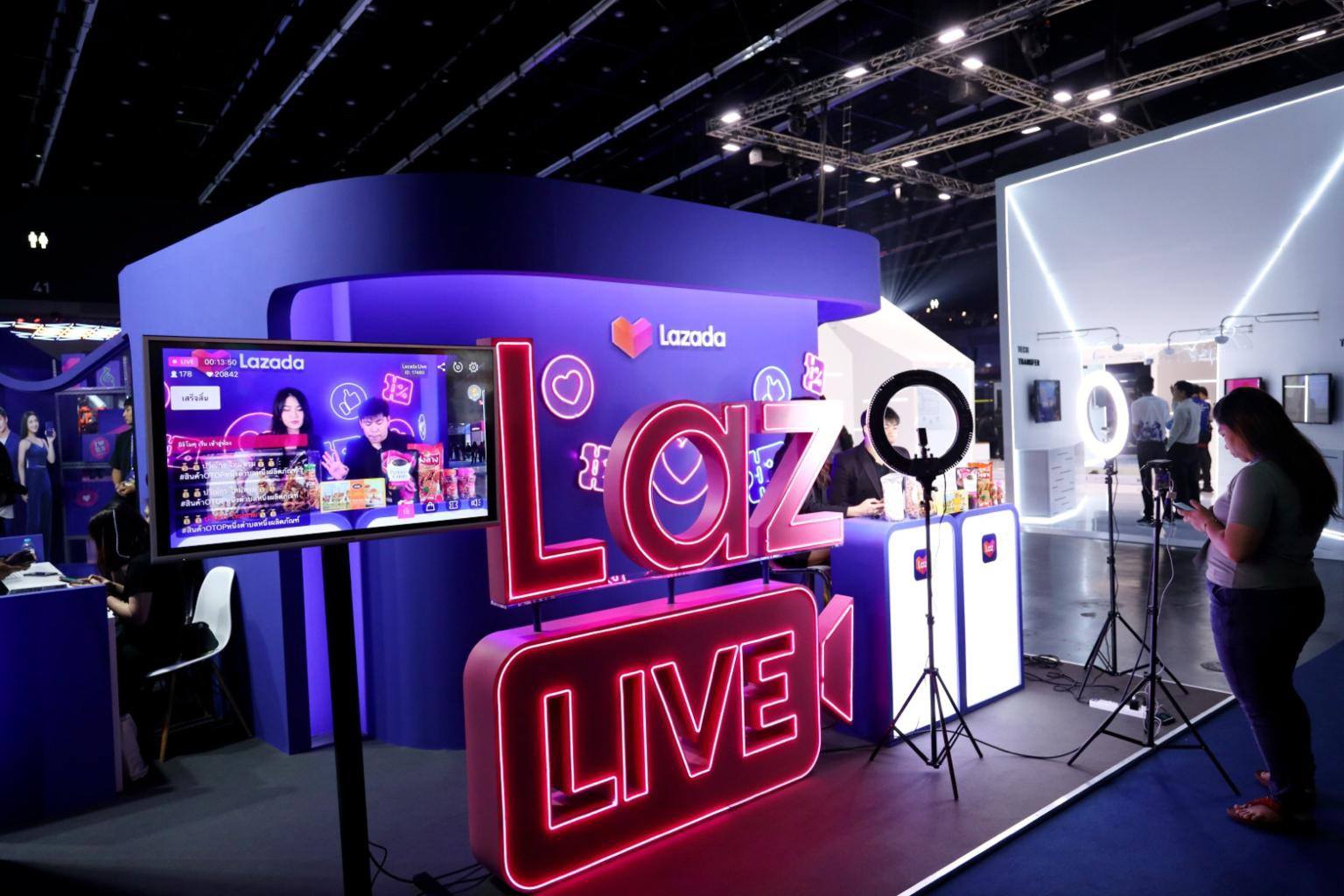
Photo credit: Lazada
Supporting the sellers
Lazada has a suite of technology tools designed to improve the selling experience for online merchants. For instance, the data portal it offers via its grocery arm Redmart helps sellers make informed business decisions.
“We can assess which product categories are performing well and which aren’t, as well as which promotion activities are doing well, so that we can tweak it accordingly,” says Alan Siek, co-founder of Prestigio Delights, a company that sells niche and novelty food products on Redmart and Lazada. No personal information of customers is available on these portals.
“It’s a kind of data analysis, and they also share best practices,” he observes. “This helps us achieve consistent sales increments.”
Having used the livestream feature as a seller, Siek lauds the end-to-end nature of Lazada’s solution. “We just need to book a timeslot and provide information such as a storyboard and digital assets that we will use, such as banners and feeds,” he says. His company was able to achieve five-figure sales during the two-hour long livestream – an impressive achievement, considering Prestigio deals in small-ticket items.
With a majority of its sellers using mobile to manage their business, Lazada optimizes its seller app to make it easy for them to work from anywhere, including proactively sending messages to engage with buyers.
“Ecommerce and the digital economy empower Southeast Asia’s SMEs and enable them to scale,” says Barrera. “And shopping festivals such as 11.11 offer them opportunities to reach markets they never would have if they only sold offline.”
What lies in store
Moving forward, Lazada sees continued engagement with consumers and empowerment of sellers as key to ecommerce’s future in the region.
“It’s important to drive brand engagement and provide touchpoints for customers both online and offline,” explains Barrera. “It’s also about redefining the in-app experience, creating the same offline social atmosphere you get with friends and family within an online context.”
To this end, the company is looking to use AI to further streamline and personalize the shopping experience, among other options. This also enhances the ecosystem by creating more jobs, such as algorithm engineers for content and promotion, and AI trainers to improve the chatbot experience.
Going back to the basics, it’s also about supporting sellers, especially local SMEs, so they can scale domestically and sell internationally. During this period, ecommerce has become a lifeline for many offline sellers looking to continue their business.
“Innovation and an entrepreneurial spirit have always been a part of Lazada’s DNA,” says Barrera. “We have spent the last decade building this, and we will continue to do so for the next.”
Find out more about Lazada efforts to provide a top ecommerce experience on its corporate website.
Stay updated on the go with our mobile app.
Get latest insights with smoother, more personalized experience through TIA mobile app.
Recommended reads
 Fave names ex-Touch ‘n Go exec as chief product officer
 Pinduoduo-like platform in the Philippines bags $1m in seed round
 Decoding the rising retail opportunities and pitfalls for ecommerce businesses
 With regulations sharply rising, Ant Group’s Asia investees are more important than ever
 How Shopee’s sleeping giant struck while its rivals fought fire
 Can Xendit shrug off growing competition in digital payments?
 Mortgage fintech: Indonesia’s next big consumer lending space
 Jakartanotebook is 6 years older than Tokopedia – and still standing without VC funds
- Chinese regulator asks Ant Group to return to payment services roots
 Indonesia’s iSeller bags series A round from Openspace Ventures, Mandiri Capital





Editing by Nathaniel Fetalvero and Eileen C. Ang
(And yes, we’re serious about ethics and transparency. More information here.)






📅 Upcoming Events
22 October 2026
Payoneer x CSPN Summit 2026