 Jonathan Chew · · 6 min read
How holistic identity puts the power of data back in the hands of consumers

Have you ever gotten creeped out by personalized ads?
Perhaps you were talking about a new bag with your friend. Or you sent your partner a link on WhatsApp to some new gadget you were thinking of buying. Next thing you know, your social media feed is filled with recommendations of similar products or sometimes, even the exact thing you wanted.
While this may be a good thing for advertisers, some regions in the world – especially the European Union (EU) – are looking to better protect consumer data privacy.
“Much of the recent waves of regulations were kickstarted in the EU with the GDPR [General Data Protection Regulation]” says Glenn Gore, CEO of Affinidi, which offers data privacy and data ownership solutions.

Glenn Gore, CEO of Affinidi / Photo credit: Affinidi
After that development in 2018, other jurisdictions followed suit. The California Consumer Privacy Act added new protections – which have taken effect since January this year – while Australia is looking at changes to its own regulations too.
Ultimately, what do all these changes spell out for today’s consumers and their data privacy?
Fight the friction
There’s no one-size-fits-all solution to customer privacy, but there are some common traits that most people want.
“Almost everyone wants to have freedom of choice, as well as portability and convenience when it comes to their identity and related information and data,” says Gore.
However, while increasing consumer data privacy regulations is a good thing overall, it can add some friction to end-user experiences and work counter to what the users want, he adds.
Let’s say a consumer provides their information to a company in a certain country. However, data privacy laws may forbid that company to share the information across different business units or branches. If that same consumer moves overseas or wants to use the same company’s product or service in another country, they may have to provide the same information yet again, which can be a “frustrating experience,” says Gore.

Photo credit: Shutterstock
The solution to this problem? Put the power in the hands of consumers, not just regulators and companies, says Gore.
Instead of companies having the information already on hand and seeking permission from consumers to use it, why not let the consumers store and manage all their data, with full autonomy over what they want to share?
This, in short, is a concept that Affinidi has been working on for some time: holistic identity.
Getting down with the details
By improving the way access to this data is allowed and how it’s shared, businesses can unlock a wealth of valuable information and drive innovation. In simpler terms, if consumers have greater control over what they choose to disclose to companies, it could encourage even more sharing of pertinent data with businesses, says Gore.
“Over the last 30 years of the internet being mainstream, every time we make data more accessible, it creates trillion-dollar waves of innovation,” he points out.
He gives a scenario where a consumer is visiting an online clothing store and the business has no data on them. Trying to provide tailored suggestions to this consumer would essentially be a guessing game.
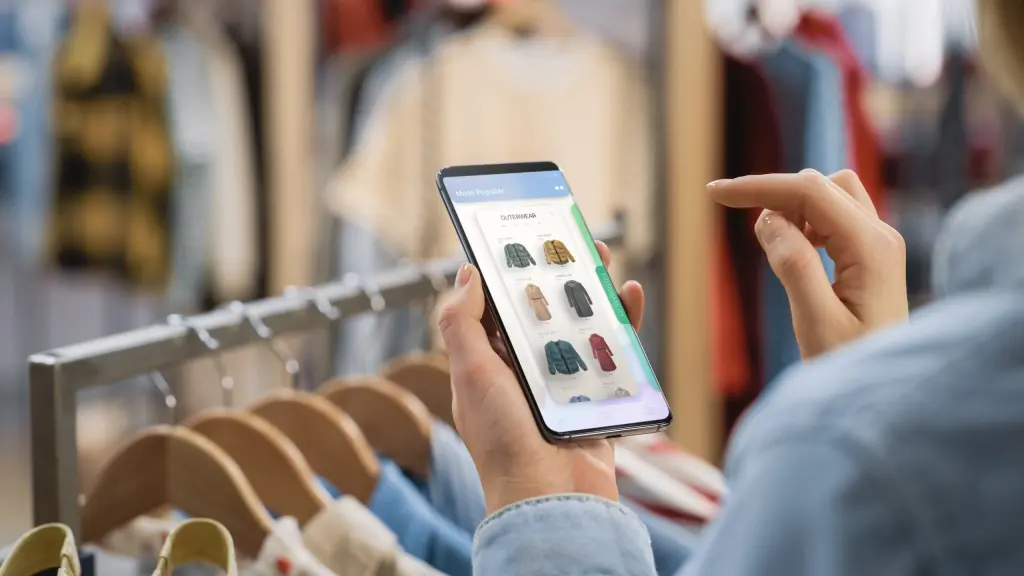
Photo credit: Shutterstock
But with holistic identity solutions, the clothing shop can simply indicate to the consumer what characteristics it wants to know, and then the shopper can pick and choose what they want to share.
“Just imagine that with one click, you can share your favorite brands, what size you are, and your favorite colors,” says Gore.
The best part is that all of this can be done anonymously, making it “far safer.”
Add on some zero-knowledge proof tech to ensure that this arrangement isn’t compromised and can be transferred within the same company, and voila. Now, the clothing store can offer a highly personalized shopping experience for the consumer without actually knowing who that person is.
“This is basically like the holy grail – if I can know more about you by establishing more trust, I can give you a much more customized experience while removing any frictions that might come along with that,” says the CEO.
All-new possibilities
While the concept does appear rather straightforward at first glance, things could shake out in many different ways.
Ultimately, it’s up to developers and solutions providers such as Affinidi to decide how they want to tackle it.
“We realized that not only do we have to have a value proposition for businesses, but you also need to solve for the individual’s needs, so it’s solving two problems at once,” says Gore.
With this in mind, the firm offers the Affinidi Trust Network: an umbrella of solutions to help developers integrate data from multiple authoritative sources, ensure the integrity of data custody, and enable individuals to provide consent for data sharing while verifying identities of all parties involved.
One of the network’s capabilities is known as the Affinidi Vault. The Vault allows users to store all aspects of their identity on a single platform, and this can even be broken down into different “identities.”
For example, some users may only want certain information to be associated with their gaming habits – such as how often they game, what titles they play, or even what rank they are in certain games. If the user is accessing a gaming website or service, they could choose to only allow this information to be shared under their “gaming identity,” with all other data kept separate and inaccessible by the business.

Photo credit: Shutterstock
Holistic identity needs to take developers into consideration as well. Most, if not all, developers want to give their own end users a good experience, but sometimes the privacy and security apparatus that comes along with their innovative solution or service can be “complicated,” says Gore.
“If you get it wrong, there’s so many bad things that could happen,” he says. “How do you make it safer? Provide better forms of authentication and authorization, and that should be at the heart of any digital business.”
Solutions providers like Affinidi can help developers hop on board the holistic identity train easily. For instance, providers can allow developers to interface with holistic identity solutions through open betas to let them experiment with the solutions for themselves, something that Affinidi is currently doing.
Quid pro quo
Holistic identity is a powerful concept, but there’s still a ton of future challenges in the data privacy landscape.
“I expect to see higher fines and more sophisticated attacks – it’s almost a guarantee that we’ll see attacks run by AI bots,” Gore shares.
If you get it wrong, there’s so many bad things that could happen
However, the key is to keep holistic identity in mind, and eventually the growth of solutions in this area will be led by whoever is “bold enough to go first.”
He believes that in the future, giving consumers control over their own data will even lead to entirely new scenarios.
“I expect that around 20% of businesses will successfully create incentives for customers to share data,” he says.
“It won’t take long before people come up with crazy ideas that we never envisioned. Eventually, there’s nothing that your digital identity won’t touch, and nowhere this won’t go.”
Affinidi is a technology company dedicated to changing data ownership for good. It’s guided by a “privacy by design” philosophy, meaning that customer data isn’t simply a priority – it has to be something that’s inherently built into its tech stack. To find out more, visit its website here.
This content was produced by Tech in Asia Studios, which connects brands with Asia’s tech community. Learn more about partnering with Tech in Asia Studios.
Stay updated on the go with our mobile app.
Get latest insights with smoother, more personalized experience through TIA mobile app.
Recommended reads
 SEA financials tracker: Moladin’s revenue rises 6% in 2025
 Flipkart’s costly late push into quick commerce and food delivery
 Inside Singapore’s government team that kills its own products
 Once an IPO hopeful, SCI Ecommerce nears collapse
 Who’s betting big on ChatGPT ads? Not Asian brands
 VC tracker: Granite Asia launches US$50 million fund
 GCash trims IPO ambitions to meet market realities
 Igloo CEO eyes global M&A: ‘We have an appetite to grow more’
 Why SBI paid a premium for Ajaib amid a tough market
 OpenAI warns building for today will cause technical debt





Editing by Winston Zhang and Dhania Putri Sarahtika
(And yes, we’re serious about ethics and transparency. More information here.)



📅 Upcoming Events
22 October 2026
Payoneer x CSPN Summit 2026