- Insights This article was written by a TIA community member. Insights pieces undergo the same rigorous editorial process that newsroom-produced articles have.
 Lace Nguyen · · 4 min read
Road to profitability: Insights into Southeast Asia’s VC investments
At the recent demo day for Mobile Only Accelerator (MOX), managing partner William Bao Bean moderated a panel discussion with Kuo-Yi Lim, co-founder and managing partner at Monk’s Hill Ventures, and Sachin Bhanot, a principal at B Capital Group. MOX is a mobile-first, mobile-only program under venture capital firm SOSV, where Bao Bean is a general partner.
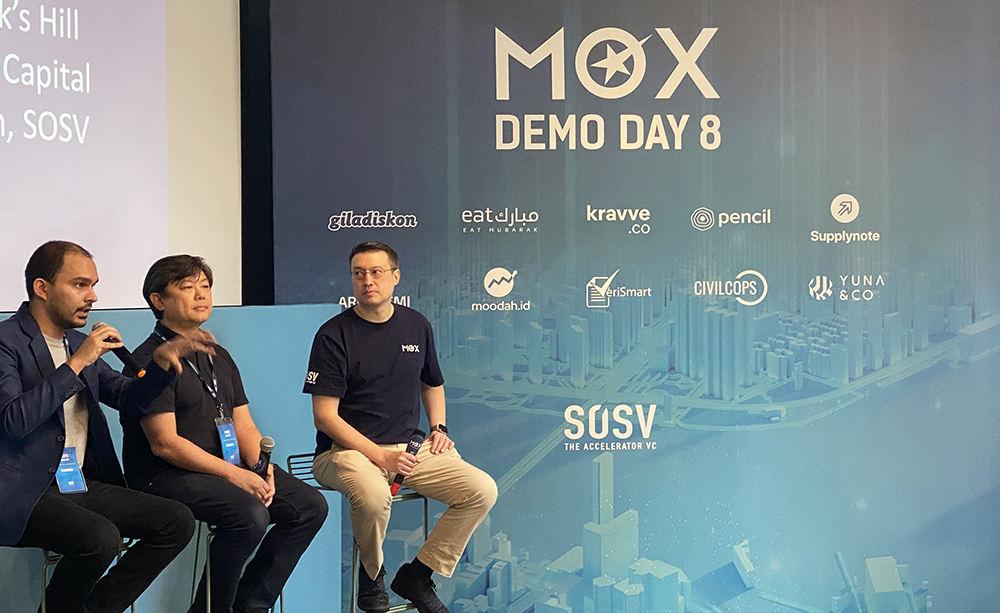
The panelists spoke about VC investment trends in Southeast Asia, fundraising advice, and lessons learned from their investing careers. Following SoftBank’s day of reckoning, investors are now becoming bullish on positive unit economics.
Here’s their advice for achieving profitability and surviving challenging times.
Study India and China for hybrid models
“One benefit of Southeast Asia is really the benefit of hindsight,” Bhanot said, observing that startups in the region have been fast in learning from other markets and aggressive in reiterating on their experiments.
While Southeast Asia has long been known for “copycat” business models, recent years have seen the emergence of “mutant” models that are imported but highly customized to local markets.
“We’re seeing interesting hybrid models in India and China now playing out in markets such as Indonesia and Vietnam,” Bhanot explained. Similarities between mobile-first and mobile-only markets in India, China, and Southeast Asia are also conducive to cross-border opportunities.
“Seeing interesting models that emerged in India and China, we can then conduct lots of pattern-matching to see what could potentially work here and what couldn’t,” he said. For example, while business-to-consumer ecommerce is very well-defined in ares with large populations, the firm has seen an uptake in interest in business-to-business ecommerce.
As markets such as Indonesia and Vietnam are still fragmented and disorganized, the pain points are very real. People in the city don’t have access to goods and struggle with financing, suppliers, and logistics. These challenges are being solved in India and China, which might hold the answer for Southeast Asia.
Provide cross-border solutions
Bao Bean himself has been investing in Southeast Asia, China, and India for nearly two decades – first with SoftBank China & India Holdings, then with Singapore-based SingTel Innov8, and now with SOSV. Managing two accelerators that together sustain a global cross-border ecosystem, he’s seen his fair share of hybrid successes and failures.
“If you look at sectors such as fintech, media, ecommerce, social commerce, healthtech, and education, people across markets tend to have similar types of problems – especially when they are on US$50 to US$200 Android phones, getting online for the first time,” said Bao Bean.
According to the executive, consumer mobile startups in India, Indonesia, and the rest of Southeast Asia and South Asia can take advantage of the massive opportunities created by cheap internet and smartphones.
Brace for capital winter
With the emergence of series B to C funds in Southeast Asia, Monk’s Hill Ventures’ Lim advised startups to be cautious.
WeWork’s botched initial public offering has had an impact on what venture capital firms are looking for. While the VC industry is spreading cautionary tales about the downfall of growth-at-any-cost companies, founders must have a sobering look at their scaling strategy.
“It’s quite clear now that investors are looking for solid, core fundamentals in the businesses,” he emphasized. “Don’t take the capital available for granted. Series Cs and Ds are going to be a lot harder in the next three years.”
Look for the margins, grow the margins
Embed your product into existing value chains
Capitalize on inefficiency and unreasonable margins





Stay updated on the go with our mobile app.
Get latest insights with smoother, more personalized experience through TIA mobile app.











📅 Upcoming Events
22 October 2026
Payoneer x CSPN Summit 2026