Terence Lee · · 5 min read
Spire wants to fight sea pirates from space – using nanosatellites

Satellites in space are getting smaller, but they’re getting increasingly useful. Much like how mainframe-sized computers have shrunk to become handheld gadgets thanks to Moore’s law, the same trend is playing out in space.
One startup benefiting from this is Spire (formerly NanoSatisfi), a company founded and headquartered in San Francisco two years ago that recently opened an office in Singapore. The firm plans to launch at least 20 satellites in the next year, each small enough to hold in one’s palms and weighing no more than a bottle of wine.
But Spire isn’t just a space company. It’s in fact a big data analytics firm. The satellites are its eyes and ears, capturing radio frequency data and photos of the earth from above. Data from the sensors then feeds into a software platform, which parses the data and presents it to Spire’s clients.
“We are like ears in the sky. We listen to data from large assets like ships, airplanes, and track them on an almost minute-by-minute basis […] we collect weather information at about 100 times the frequency and accuracy than what’s available today,” says Peter Platzer, CEO and co-founder of Spire, a former investment banker and consultant who happens to be a physics enthusiast.
While providing raw data is valuable, the market for interpreting the data is even larger. So how can clients put Spire’s almost real-time tracking to good use?
The company listens to the three-quarters of the earth that isn’t well-covered by satellites: oceans and remote places like the Arctic. Ships going from shore to shore effectively enter a fog in the middle. The curvature of the earth means that land-based radar systems have limited range. Spire claims it can fix these problems.
One of its customers, a major commodity shipping company, plans to use the service to track two-thirds of its fleet that isn’t detectable using present technology at any one time. Ports can use the data to better manage traffic. This results in better route management and cost savings for the entire supply chain.
Piracy is another problem that Spire can tackle. Many ships carry beacons which broadcast their whereabouts, destinations, and other information. After pirates board a vessel, they usually turn off the beacon – an immediate warning sign. While no one would listen in the past, Spire can now be that constant watcher.
This trait is valuable in emergencies like plane crashes – the system can more immediately pinpoint the location of the impact site if it’s in the ocean, drastically shortening the search radius.
Why smaller is better
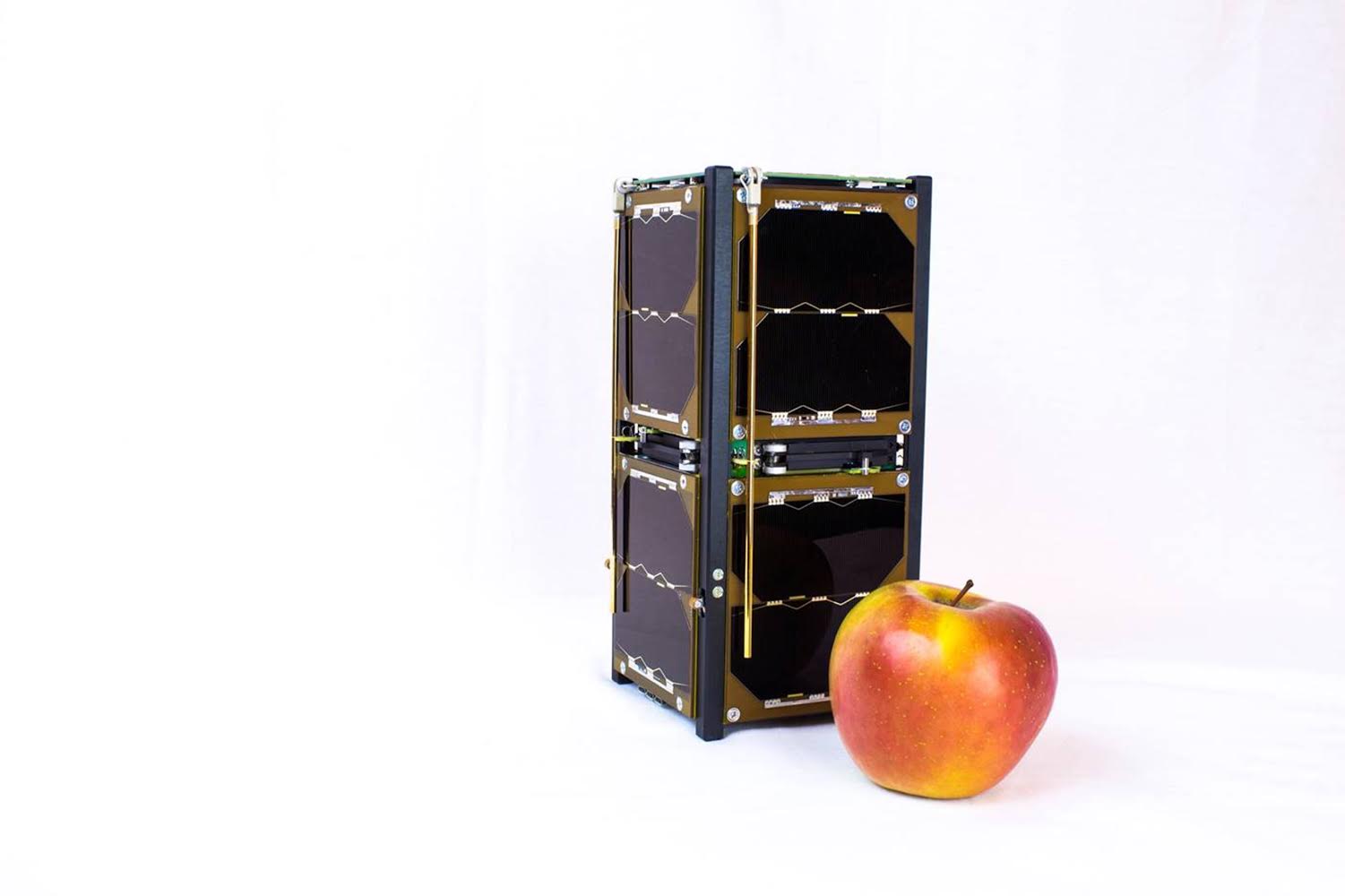
Spire is small enough to be held in your hands.
Having an eye-in-the-sky isn’t novel – satellites have been capturing troop movement data for spy agencies for ages. But nanosatellites are changing the game. Because of their tiny size, they can piggyback on smaller rockets. The same launch can also pack more satellites. Because of that, each launch can cost up to a hundred times less, says Platzer.
Having a constellation of satellites rather than a single one in orbit gives Spire better data. While one spacecraft has a limited time window to capture information for an area before it moves out of range, a pack of satellites can give constant coverage, promises Platzer. In other words, Spire provides better “temporal resolution.”





Stay updated on the go with our mobile app.
Get latest insights with smoother, more personalized experience through TIA mobile app.