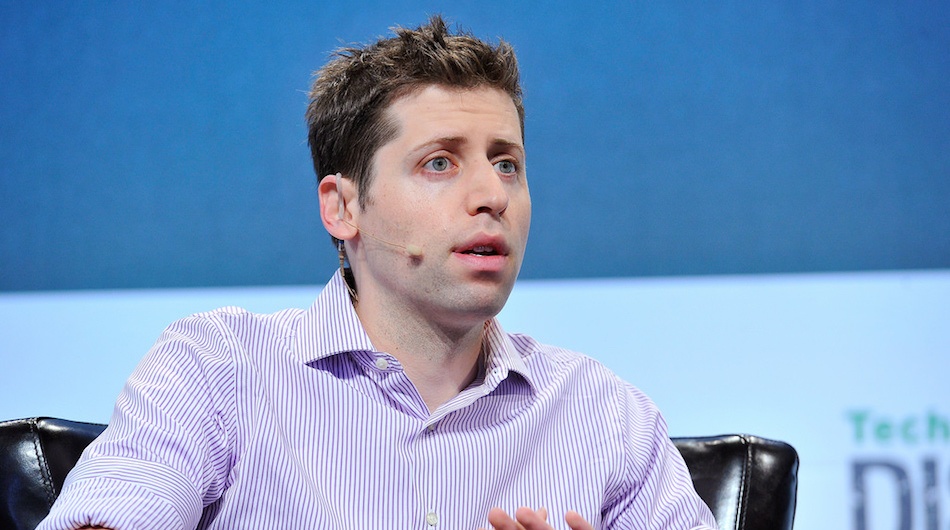
Sam Altman / Photo credit: TechCrunch
The following is an edited excerpt from Elad Gil’s High Growth Handbook published by Stripe Press. You can buy a copy here.
Since Sam Altman took over as president of Y Combinator in 2014, it had launched a growth-stage fund, expanded the type of companies it invests in, and established a nonprofit research lab. Sam and I discussed an area he has thought deeply about: the role of the CEO, and the hurdles that most often trip up leaders at high-growth startups.
Elad Gil: What do you see as the role of the CEO, and what are some common mistakes you’re noticing?
Sam Altman: The role of the CEO is basically to figure out and decide what the company should do and then make sure it does that. Many CEOs try to outsource those things. Sometimes they want to hire a VP of product or hire a COO and make him or her do everything. But really the CEO has to drive the company’s overall direction.
There are a few other things that only the CEO can do, or that the CEO at least has to be heavily involved in, like recruiting and evangelizing the company to new hires, major customers, investors, whatever. And there are some jobs where people only want to talk to the CEO; fundraising is a great example. But really the only universal job description of CEO is making sure the company wins. And so deciding what the company is going to do and making sure the company gets that done – that’s the most critical part of the job.
Gil: And that statement, if you unpack it, contains a lot of the subpieces you hear a lot: Make sure you don’t run out of money, make sure that you’re allocating resources to the right spots, make sure you’re all moving in the right direction.
Altman: The hard part is that most people want to just do the first part, which is figure out what the company should do. In practice, time-wise, I think the job is 5% that and 95% making sure that it happens. And the annoying thing to many CEOs is that the way you make it happen is incredibly repetitive. It’s a lot of the same conversation again and again with employees or press or customers.
You just have to relentlessly say, “This is what we’re doing, this is why, and this is how we’re going to do it.” And that part—the communication and the evangelizing of the company vision and goals – is time-wise by far the biggest part of the job.
Gil: As companies scale, I’ve seen people run into the fact that they end up with a lot of overhead. Are there key approaches to avoiding that trap, where CEOs end up on all the tactical stuff and forget to pull back out?
Altman: Everyone wants an answer like, “Well, you should not do any of the tactical stuff,” but actually a lot of it is really critical. The hard part – and this takes most first-time CEOs a while to figure out – is determining which is which. What is the tactical stuff that seems like a waste of time but is important, and what seems important but is a waste of time? For example, I do think figuring out compensation structures is really important and something the CEO should spend time on. And it’s something that most CEOs don’t.
You’re building what the company measures and what salespeople get paid for, and that’s one of those counterintuitive areas that I do think is really important. The trick to being effective at this is that you have to get really good at saying no and just not doing things. There are a lot of things that are urgent but not important. The hard part of being a good CEO is that you have to be willing to let some things fall apart. You don’t have enough time to do everything well. And in practice, what that means is that there are some urgent things that you just don’t do. Getting comfortable with that takes a long time. It’s hard. “You have to get really good at saying no.”
Gil: What are some examples of things you think are often urgent but don’t necessarily merit time if you’re scaling like crazy and just trying to keep up with everything else?
Altman: I saw one kind of crazy example recently, a founder from a company that YC is an investor in that is not doing particularly well. I was talking to him about how things aren’t going that well, and he said that one of the mistakes he made is that he has 74 investors. But he was really proud, because for those 74 investors, he responded to every annual audit request. They told him that he was one of the only CEOs that responded right away. He was really proud of this.





Stay updated on the go with our mobile app.
Get latest insights with smoother, more personalized experience through TIA mobile app.