- Premium Content It takes our newsroom weeks - if not months - to investigate and produce stories for our premium content. You can’t find them anywhere else.
 Apoorva Dutt · · 6 min read
‘He loves computers like I do’: The story of how Paul Allen and Bill Gates became friends
One day early that fall, I saw a gangly, freckle-faced eighth grader edging his way into the crowd around the Teletype, all arms and legs and nervous energy.
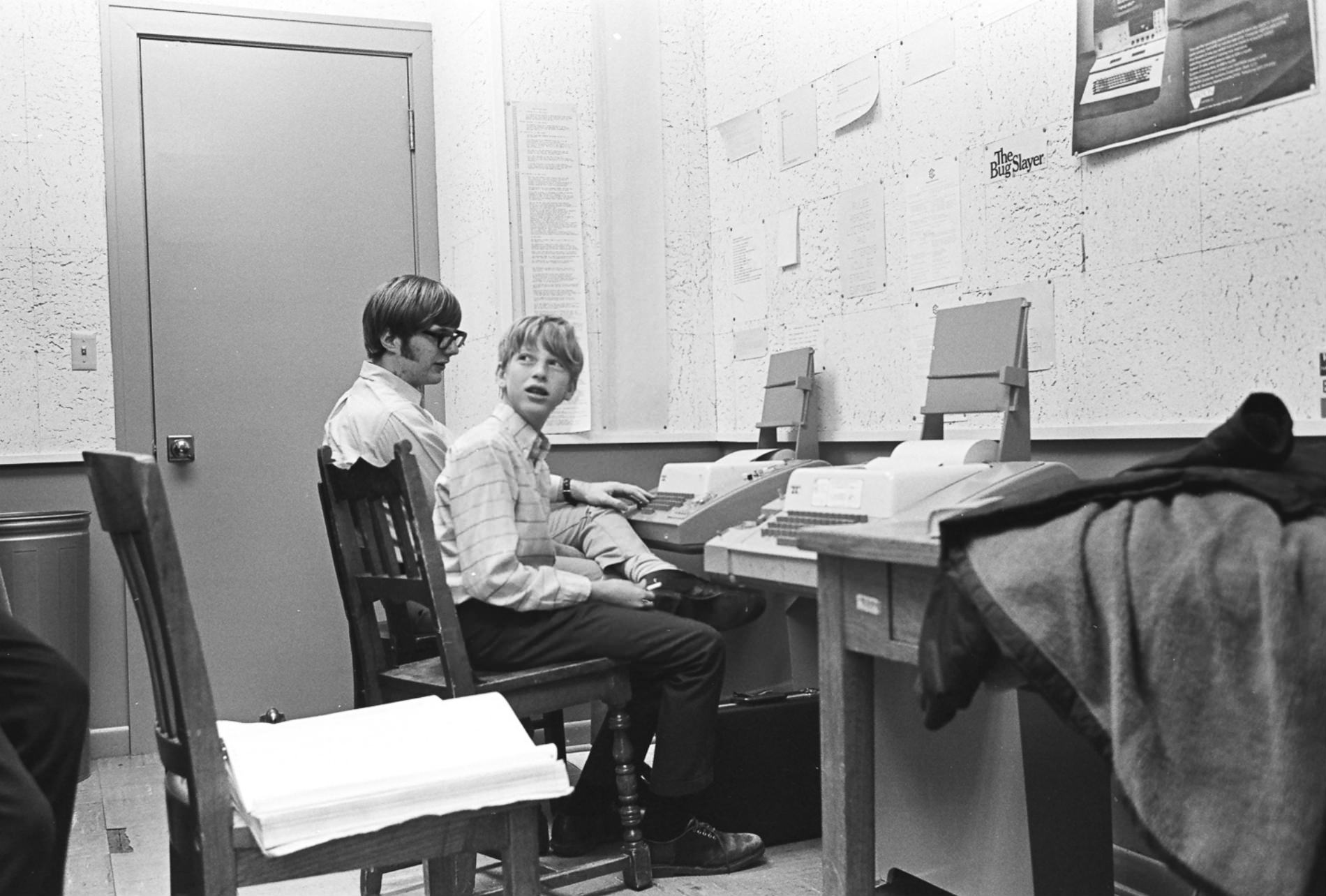
Image courtesy of Paul Allen
The following is an edited excerpt from Idea Man: A Memoir by the Cofounder of Microsoft by Paul Allen. The excerpt is provided by Portfolio Publishing. You can buy a copy here.
Rather than make programming a formal part of the math curriculum, Lakeside school offered it as an independent study option. We were lightly supervised by Fred Wright, a young math teacher who’d taken a summer course in punch card programming at Stanford. Mr. Wright gave us a BASIC manual and a few starter problems to whet our appetites, and then he let us loose. Because we didn’t know the “correct” way of doing things, we devised our own techniques. We became resourceful of necessity.
Twenty or so students dropped into the computer room from time to time, but only half a dozen made it the hub of their universe. Although programming at its heart is a solitary venture, we became a nascent brotherhood. With no teachers to guide us, we traded commands and tricks of the trade. While a few of the acolytes were older students like Robert McCaw and Harvey Motulsky, I was one of four younger ones who formed the core. Ric Weiland, the son of a Boeing engineer, resembled Spock in Star Trek without the pointy ears: quiet, kind, meticulous. Ric built his own tic-tac-toe relay computer in the ninth grade, but never sought attention; he was happier in the background. Kent Evans, a minister’s son two years younger than Ric and I, had frizzy hair, an intricate set of braces, and unflagging intensity. He was game for anything.
One day early that fall, I saw a gangly, freckle-faced eighth grader edging his way into the crowd around the Teletype, all arms and legs and nervous energy. He had a scruffy-preppy look: pullover sweater, tan slacks, enormous saddle shoes. His blond hair went all over the place. You could tell three things about Bill Gates pretty quickly. He was really smart. He was really competitive; he wanted to show you how smart he was. And he was really, really persistent. After that first time, he kept coming back. Many times he and I would be the only ones there.
Bill came from a family that was prominent even by Lakeside standards; his father later served as president of the state bar association. I remember the first time I went to Bill’s big house a block or so above Lake Washington, feeling a little awed. His parents subscribed to Fortune and Bill read it religiously. One day he showed me the magazine’s special annual issue and asked me, “What do you think it’s like to run a Fortune 500 company?” I said I had no idea. And Bill said, “Maybe we’ll have our own company someday.” He was 13 years old and already a budding entrepreneur.
Where I was curious to study everything in sight, Bill would focus on one task at a time with total discipline. You could see it when he programmed – he’d sit with a marker clenched in his mouth, tapping his feet and rocking, impervious to distraction. He had a unique way of typing, sort of a six-finger, sideways scrabble. There’s a famous photograph of Bill and me in the computer room not long after we first met. I’m seated in a hardback chair at the teleprinter in my dapper green corduroy jacket and turtleneck. Bill is standing to my side in a plaid shirt, his head cocked attentively, eyes trained on the printer as I typed. He looks even younger than he actually was. I look like an older brother, which was something Bill didn’t have.
As winter wore on, Bill and I exhibited the most stamina among the Lakesiders at C-Cubed. Typically, my father would drive by to drag me home for dinner. I’d beg to stay—and won some and lost some. My parents worried that I was falling behind in school. Some of my grades were slipping, and my teachers seemed ambivalent about my new passion. In computer programming, Mr. Maestretti wrote, “Paul has been doing outstanding work on the computer. He has become tremendously interested in its workings, and has reached a sophistication far beyond… the average student.”
But in physics, where he gave me a midterm C+ (though I’d pull out an A in the spring), he bemoaned “the channeling of [my] efforts into work with the computer at the expense of other academic areas.” My English teacher, Mr. Tyler, dismayed by my chronic diffidence to homework, turned philosophical: “Paul is an ‘enthusiast’ (in the old religious sense) and when in the grip of an enthusiasm is almost totally irresponsible in other areas. How can one help such a student to see the error of his ways? I don’t know. He could even be more right than we, who knows?” In fact, I was thriving in a professional environment, working hard at something I took joy in. What better experience could there be for a 16-year-old?
Left to ourselves, Bill and I would program until we were starving and then walk across the street to a hippie enterprise called Morningtown Pizza. Next door was a convenience store with police cars out front and cops playing cards in the back room. We’d either wolf down our pizza at Morningtown or bring it back to C-Cubed and try to keep it from dripping oil onto our Teletypes. We’d keep at it until everyone but the night operator had left. Once, I was on my own and lost track of time. The buses had stopped running and it was way too late to call my dad for a ride, leaving me an hour’s walk home. A stray dog followed me all the way; my parents had to find it a home with friends of ours.
Three decades after teaching Bill and me at Lakeside, Fred Wright was asked what he’d thought about our success with Microsoft. His reply: “It was neat that they got along well enough that the company didn’t explode in the first year or two.” There was always a push-and-pull with us. It manifested itself at Lakeside in the rivalry between Ric and me, on one side, and Bill and Kent on the other; they were two years behind us and had something to prove. At bottom, the Lakeside Programming Group was a boys club, with lots of one-upmanship and testosterone in the air. And while we were all bent on showing our stuff, Bill was the most driven and competitive, hands down.
We were friends from the day we met, but there was an underlying tension, too. Midway through 12th grade, I was minding my own business in the school’s computer room when Bill began taunting me: “Paul, there’s something hidden here that you should know about, but I bet you can’t guess what it is.” I said, “Oh, really, Bill? What would that be?” And he said, “I can’t tell you, but it’s something you wish you had.” Bill being Bill, this went on for a while. Unbeknownst to him, however, I knew his secret. Some weeks earlier, an auction had sold off C-Cubed’s remaining assets, including dozens of DECtapes. Bill and Kent snapped them up for a few pennies on the dollar and never breathed a word of it. But Ric had spotted them hiding their booty in the Teletype’s pedestal base, and passed the intelligence on to me. Later that day, after the others left, I scooped up the tapes, carried them home in a box, and hid them under my bed.
The next day, the worm turned. Bill was furious. “You knew those DECtapes were there the whole time,” he said. “What did you do with them?” “Really, Bill?” I said. “You had some DECtapes? Where did you get them?” Bill was beside himself. Kent called me a thief and threatened to sue. It got loud enough that Fred Wright came in and took me aside, and I agreed to return the tapes. That kind of conflict, though, was rare for Bill and me. In a series of senior-year essays about those near and dear to me, here is what I wrote about him:
Stay ahead in Asia’s tech landscape
This is premium content. Subscribe to read the full story.
“One day early that fall, I saw a gangly, freckle-faced eighth-grader edging his way into the crowd around the Teletype, all arms and legs and nervous energy.”
We know this is not ideal. ⌛ Sign up in 20 seconds. Cancel anytime.
Our subscriber community includes professionals from these companies:





Stay updated on the go with our mobile app.
Get latest insights with smoother, more personalized experience through TIA mobile app.