Mary-Anne Lee · · 4 min read
Can a hardware startup find success if it focuses only on providing a service?
Starting out on your own is never easy, especially without a physical product to define your company. Taking this approach is particularly arduous in the tech hardware space, where many startups are defined by deep research and development of unique products. Yet a lack of specific products is exactly the angle one startup is making its own.
Long live the gaming PC
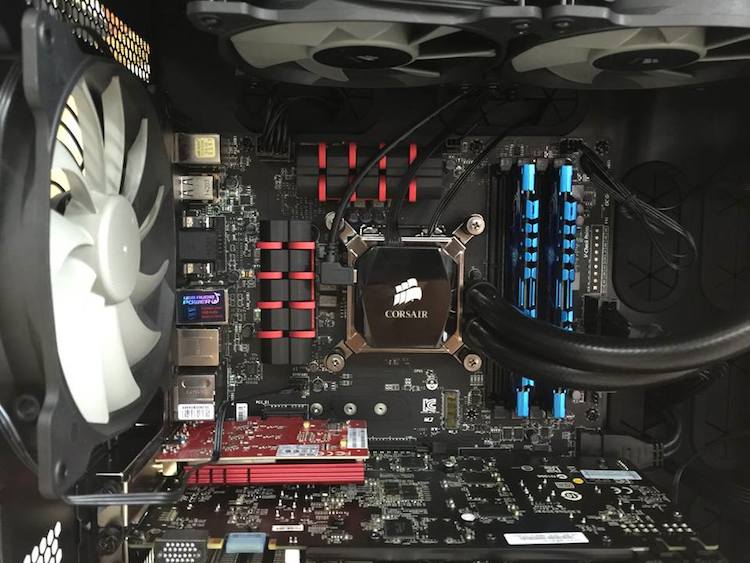
Eugene Cheo and Gabriel Lee, both 24-year-olds, recently started a company called TechGnome Asia. A self-described hybrid between a service provider and a hardware provider, the duo cater mainly to PC gaming enthusiasts with very niche requirements. TechGnome functions as a one-stop shop for customers looking to build custom gaming rigs, and who are too lazy or perhaps too inexperienced to do so on their own.
Cheo says the company mantra is “building what’s yours,” but that Lee and him work to build customers what they really want, as opposed to showing them an array of ready-made products. “You may realize that with big brands, customization options are open but are still limited to within a certain range,” Cheo explains. He adds that a very recent niche market has popped up, where customers seek exotic PC builds such as those with multiple graphics card setups, colored themed builds, and water-cooling setups.
You might wonder how a business that focuses on the home desktop PC does in a country like Singapore, where there are LAN cafes in abundance. Cheo says the availability of LAN shops has actually spurred an interest in custom gaming computers. Customers typically come to TechGnome looking for computers that perform better visually compared to those they have used at these LAN cafes.

“I think we speak for a lot of gamers when we say that many gaming PCs in LAN shops are not up to their ideal standards,” Cheo adds.
Cheo and his partner both started off playing games in LAN shops. It wasn’t a particularly pleasant experience most of the time, with players lagging out or computers jamming halfway because the computers weren’t functioning at their top standards. “It was very frustrating for us gamers,” Cheo explains.
“What we try to help customers do is to find a great balance between value and aesthetically-pleasing setups while not compromising on performance,” he says.
But in an age where laptops are getting more and more powerful, is the gaming desktop PC still relevant? “Nothing truly beats a gaming PC,” Cheo replies. “They are customizable and future-proof to a certain extent. There is also almost always the option to upgrade. When a gaming notebook gets outdated, what happens to it? Eventually they are left at a corner to bite the dust and retire.” According to Cheo, most gaming PCs with better specifications cost less than a gaming notebook, and desktop PCs also have benefits like overclocking and extra RAM.
Hardware retail isn’t enough





Stay updated on the go with our mobile app.
Get latest insights with smoother, more personalized experience through TIA mobile app.