Minghe Hu · · 4 min read
How a Chinese accountant turned a dying factory to the world’s top display maker
Wang Dongsheng was 35 when he pooled money with his colleagues to take over the state-owned vacuum-tube factory that they worked at. That was 1993 – when Beijing Electronic Factory, first set up in the 1950s with help from the former Soviet Union, found itself teetering on bankruptcy after being unable to compete as the economy began to open up under the reforms initiated by the late paramount leader Deng Xiaoping.
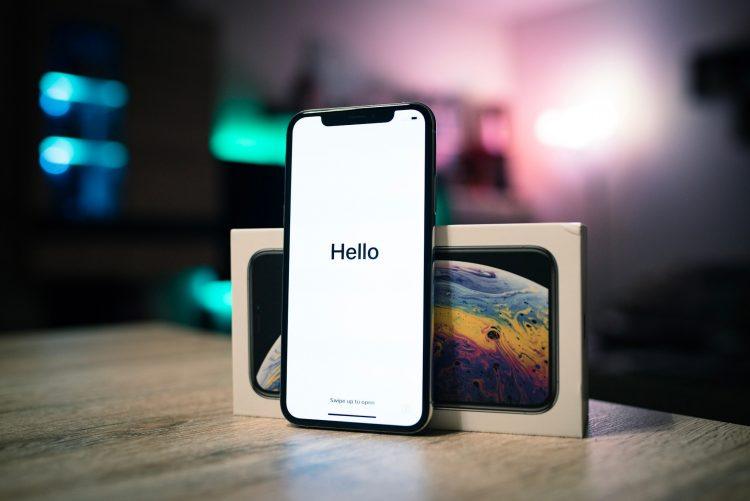
Photo credit: Pexels
Fast forward to 2019 and the reborn BOE Technology Group has a market valuation of about US$18 billion, employs more than 68,000 workers, operates in 19 countries, and is the world’s biggest display panel maker, with customers that include Apple and Huawei Technologies. In May, two days after receiving the David Sarnoff Industrial Achievement Prize in San Jose, California, company chairman Wang, now 62, told reporters he plans to step down this year.
Not bad for the former accountant, whose rule that panel-performance metrics must at least be doubled every 36 months for a given price point came to be known in the industry as “Wang’s Law.”
“BOE was founded 26 years ago, and since its founding day, we have never stopped growing,” Wang said in May. “The key for us has been staying focused and committing to innovation […] I have full faith in BOE’s bright future, whether I am at the helm or not.”
Wang hands over the Shenzhen-listed company that is poised to tackle the coming era of 5G mobile connectivity, which experts see as the enabling technology to connect everyday devices and usher in the industrial internet.
While the company added smart systems and healthcare services as its two other core businesses last year, BOE continues to make headlines around the world with its advances in display technology, specifically its flexible Active Matrix organic light-emitting diode (OLED) screen for Huawei’s Mate X 5G smartphone.
Apple is now in the final stages of certifying BOE’s flexible OLED displays for the 5G iPhone expected to be released next year, according to Japanese business journal Nikkei Asian Review, which cited sources in its report last week. BOE has been supplying liquid-crystal display (LCD) panels for Apple’s MacBook and iPad since 2017.
A spokesman for BOE had no comment when reached via WeChat messaging on Friday.
In the display market, worldwide foldable display revenues are expected to grow to US$8.4 billion by 2023, up from an estimated US$62 million this year, according to projections by Display Supply Chain Consultants.
BOE achieved a major milestone in the first quarter of this year, when it was ranked as the world’s largest television panel vendor in terms of unit shipments. It is also widely recognized as the world’s largest supplier of displays used in a broad spectrum of applications, including smartphones, tablets, notebook computers, monitors, vehicle displays, digital information displays, and wearable devices.
The company made its market breakthrough in 2003, when it acquired core display technology from thin-film transistor (TFT) LCD maker Hydis, then a subsidiary of South Korea’s Hynix Semiconductor, for US$380 million.
Hydis then had a 4% global market share of TFT-LCDs, which are used in personal computer monitors, mobile phones, car guidance systems, and color televisions.
“This core […] was in the hands of South Korean and Japanese companies,” said Wang, BOE’s chief executive when the takeover deal was made in February 2003. “An acquisition was the only way we could get hold of it.”





Stay updated on the go with our mobile app.
Get latest insights with smoother, more personalized experience through TIA mobile app.