Every day, 100k+ smart people read our newsletter. You can sign up here.
Hello readers,
I regularly gush about my love for Shopee because nothing comes close to the thrill of making an affordable impulse purchase. As a gold-tier member, I’ve carted out everything from two-dollar phone cases to 50-cent sticker sheets and clip-on earrings, and offset the cost further with Shopee coins. I’m not alone in seeking out instant gratification: in Singapore, the “buy now, pay later” (BNPL) model is on the rise.
Today we look at:
- Why BNPL could soon be the fastest-growing mode of online payment
- An Indian electronics startup’s US$100 million win
- Other newsy highlights such as Trump’s ban on Chinese payment apps, and Alibaba’s plans to raise US$5 billion
PREMIUM SUMMARY
No money, no problem: Why BNPL is here to stay

Who would have guessed the ecommerce surge amid the pandemic would fuel the rise of “buy now, pay later”? The BNPL model is hardly new in Europe, but is at last gaining traction among millennials and Gen Z consumers in Singapore. Its selling point: fuss-free installment payments minus the unpredictability of credit card debt.
- Instant gratification, check: BNPL looks to be the fastest-growing mode of online payment in the next five years. Payments are typically split over a maximum of four installments, which are interest-free so long as they’re paid on time. Once these payments have been made, BNPL firms then pay the business in full, thus absorbing a consumer’s credit risks.
- Out with the old: In Singapore, four players occupy the relatively nascent space: Rely, Hoolah, OctiFi, and Atome. According to Atome CEO David Chen, BNPL approvals are virtually instant: It takes a new user under two minutes to check out on an ecommerce site using the service, inclusive of registration time.
- Customers first: BNPL firms like Rely collect merchant commissions of between 4% and 7% of the total transaction, a fee that’s higher than what Mastercard and Visa collect. But sellers are hardly complaining, thanks to increased sales and reduced cart abandonment rates. Still, it’s early days yet. With the exception of Klarna – the Sweden-headquartered player reported its first annual loss in 2019 after years of profitability, citing overseas expansions – the BNPL trend hasn’t shown itself to be profitable.
Read more: Why the time is ripe for ‘buy now, pay later’ in Asia
STARTUP SPOTLIGHT
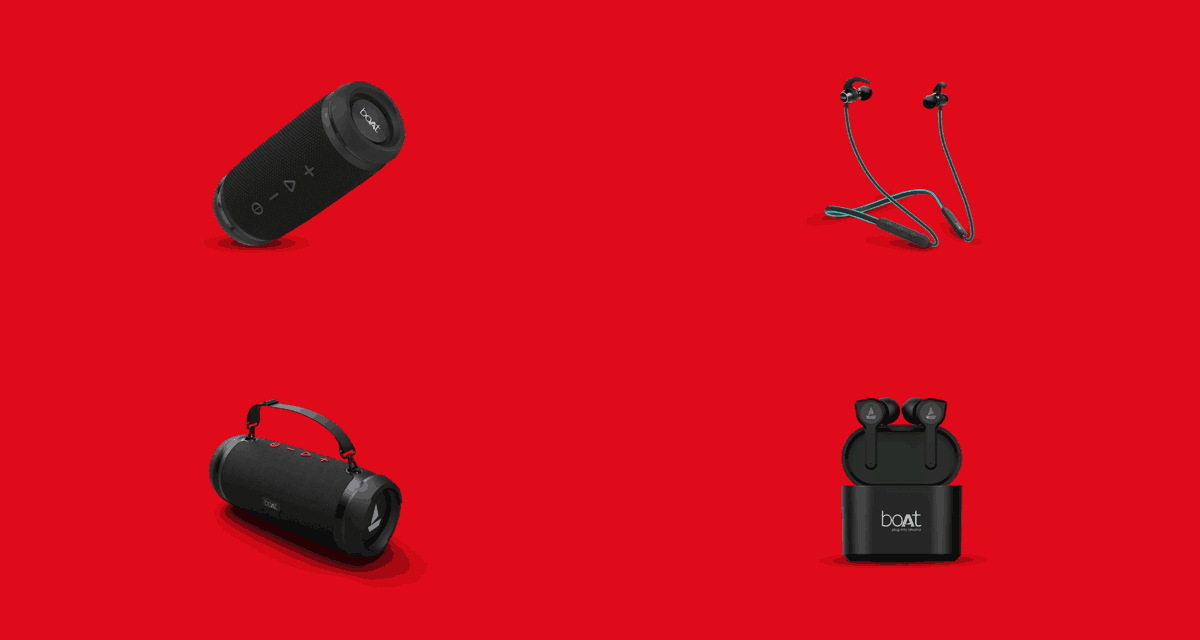
This Indian electronics startup just scored big
When being single affects your career





Stay updated on the go with our mobile app.
Get latest insights with smoother, more personalized experience through TIA mobile app.