 Wilson Chua · · 5 min read
Graymatics aims to give Google’s Artificial Brain a run for its money
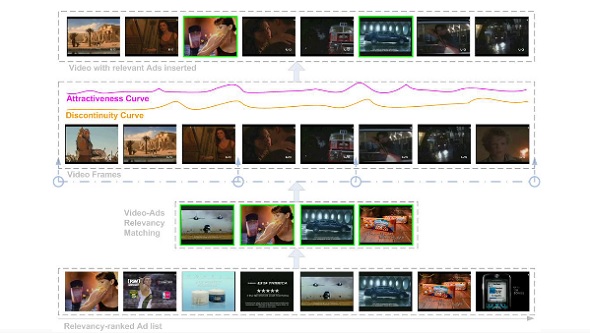
Graymatics can sense which part of a video is attractive for ads.
Imagine yourself at lunch hour in a hawker center, sometime in the near future. You see a diner with an appetizing food item. Rather than ask the diner about it, you decide to use your Google Glasses to take a snapshot of the food item, and then send it over to Graymatics’ cloud based cognitive media processing servers.
In a few milliseconds, Graymatics comes back to you and shows the results on the heads-up display of your Google Glasses. The food item is a new variety of Pineapple Chicken rice mixed with coriander sauce. Combined with data from HungryGoWhere, you find that it can be bought at Lian’s Food Stall located a just few meters away. You also see the latest reviews from past diners about the chicken rice.
The hawker center scenario above is but one of the promising use cases that Graymatics cognitive media processing can bring to life. The technology consists of algorithms that can instantly recognize and categorize image and video content that is fed to it. It can then tell users what the contents are about and who or what is in them.
Praveen Kakar and Sonal Chowdhary, Graymatics’ system engineer and business development executive respectively, told me that the system can achieve 90% accuracy. They point to their success in recognition fashion apparels. Apparently this is a highly difficult thing to do in this field of image processing.
Whoever can crack this could have a lucrative business on their hands. Graymatics is one of many innovators giving it a go. In a recent seminar at IDA for Cloud Call 6 in Singapore, I saw local universities NTU and NUS (check out Jiku) roll out similar technology. Google is also pursuing image processing with their Artificial Brain project, which managed to recognize cats and humans on its own after thousands of YouTube video were fed to it.
But Graymatics, headquartered in Santa Clara with a presence in Singapore, is on the verge of commercializing their solutions. It has already made demonstrations at the recent Techventure 2012, and is undergoing client test trials and pilot projects. Using this base technology, they have four services to offer: Image Assurance, Context Connect, TubeScan and Interest Insights.
The first two are related to imagery. Image Assurance, which is near real-time, is a filtering system that can detect nudity, violence, or content related to drug abuse. Online publications can use it to detect offensive advertisements and prevent them from showing.
Context Connect, which processes a picture every few seconds, helps publishers place relevant ads within images and videos, by matching the ad to the content.

How Context Connect works: When users see an image of Beyonce and click on the (-)icon, a pop up window shows up, displaying purchasing information about the dress.
TubeScan and Interest Insights relate to video. TubeScan is like Context Connect: it extracts metadata from the content to be returned to the publisher, who can take the information and monetize it. Interest Insights, meanwhile, allows publisher to take the meta data and use it to build viewer profiles.
There are limits to what the technology can achieve now. The process of using their API (as of publishing time) is mostly manual. Any publisher wishing to monetize their video will have to sign up, get the API, point the Graymatics servers to the URL to be crawled, wait for the servers’ algorithm to compute and process the images or video, then wait to get the metadata back.
| Editor’s note: |





Stay updated on the go with our mobile app.
Get latest insights with smoother, more personalized experience through TIA mobile app.










📅 Upcoming Events
22 October 2026
Payoneer x CSPN Summit 2026