Eva Xiao · · 6 min read
With rising government support, China’s esports industry looks offline for growth
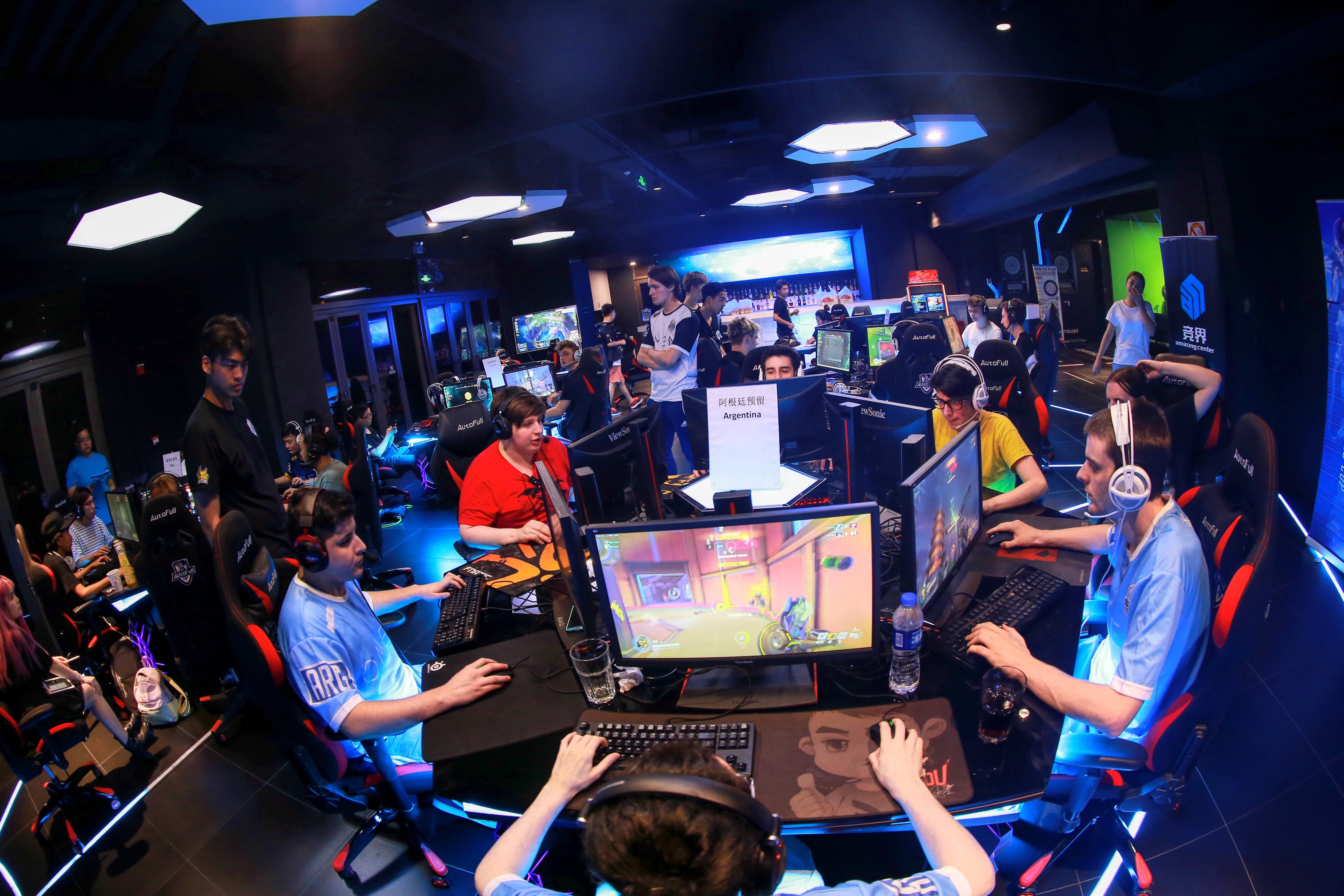
Professional gamers train at an esports center in Shanghai / Photo credit: Pengta Network Technology
Illuminated by fluorescent lights and geometric decor, the esports center looks modeled after the science fiction franchise Tron. Clusters of professional gamers sit around circular tables clicking furiously. At the back, an enormous screen shows a live stream of King Pro League, Tencent’s tournament for its mobile game Honor of Kings.
Welcome to the next generation of internet cafes in China. Called esports centers, these venues are better equipped, more professional, and enthusiastically supported – surprisingly – by the Chinese government. Despite their wariness towards game addiction, Chinese officials are warming up to esports.
“The government isn’t stupid – they might criticize [gaming], but the industry’s track record speaks for itself,” says Ren Li, president and CEO of Pengta Network Technology, a Shanghai-based startup that runs Amazing Center, a chain of esports centers in China.
Ren’s business has been able to expand quickly thanks to interest from local governments, some of which are creating their own “esports towns“, complete with esports stadiums and incubators for gaming startups. In exchange for esports expertise, officials are willing to provide the real estate, explains Ren.
“One center used to cost [US$1.6 million] to open – now it costs half that,” he says. “In some cases, the government pays us to open a center.”
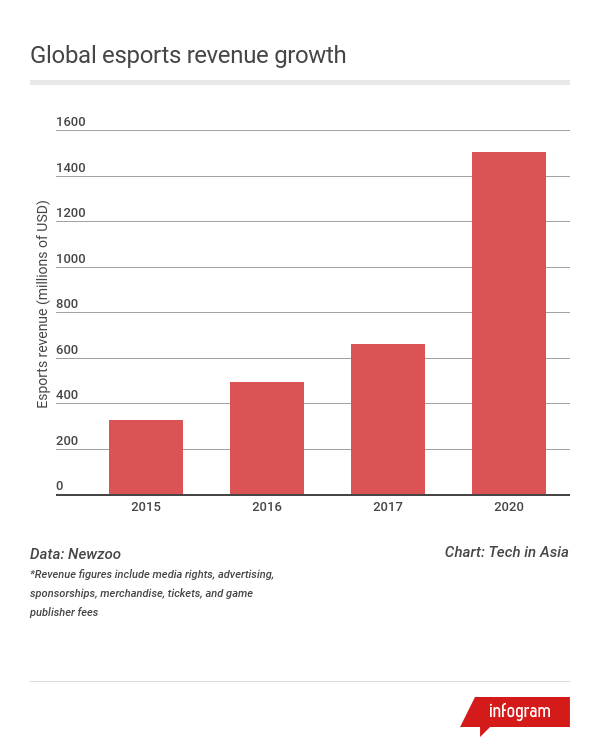
It’s not difficult to see why. China is the largest gaming market in the world, with a thriving esports scene that brought over US$100 million in revenue last year, according to market research firm Newzoo. At the same time, the industry is still nascent and lacks infrastructure when it comes to events, community building, training, and fan engagement. Like the movement offline in “new retail” and ecommerce, brick-and-mortar hubs like Amazing Center could have a symbiotic relationship with the esports industry, helping it grow and become more professional.
China’s internet cafes, for instance, have benefited enormously from competitive gaming. According to a 2016 report by Asian games-market researcher Niko Partners, China had 146,000 internet cafes with 20 million daily users in 2015. Both numbers are increasing year-on-year, as internet cafes have turned into social spaces for gamers and esports fans.
See: China’s internet cafes are coming back, thanks in large part to Tencent
“Internet cafes have become an important part of the esports ecosystem in China to promote esports to a larger audience. In return, the local events help increase the exposure of these cafes,” explains Tianyi Gu, China market analyst at Newzoo. Esports centers are seen as an upgraded version of internet cafes, which attract more professional players and hold higher-level tournaments, she says.
“The entry barrier to become an esports player in China is, overall, lower than other countries,” Gu adds.
The esports supply chain
Growing professionalism





Stay updated on the go with our mobile app.
Get latest insights with smoother, more personalized experience through TIA mobile app.