
Welcome to The Offset! Delivered once a month via email and through the Tech in Asia website, this free newsletter breaks down the biggest stories and trends in greentech. If you’re not a subscriber, get access by registering here.
Hi there,
I’m sure you’ve noticed that climate change has made its way into everyday conversation. Similarly, in the tech space, more startups are focusing on cracking the code on global warming.
Although there’s still skepticism around futuristic tech, such as one that sucks carbon dioxide straight from the air, greentech has attracted a lot of big-name investors like Bill Gates and Elon Musk in the past few years.
This growing shift is why we’ve launched The Offset, a monthly newsletter that tracks the latest developments, major players, and up-and-comers in the space.
Published on the first Monday of each month, this newsletter will run for 12 editions.
We hope that The Offset will become a useful resource for you to better understand what’s sure to be an important industry in the years to come.
— Nicole
Deep reads
1️⃣ Carbon offsets: a license to pollute or a path to net-zero emissions?
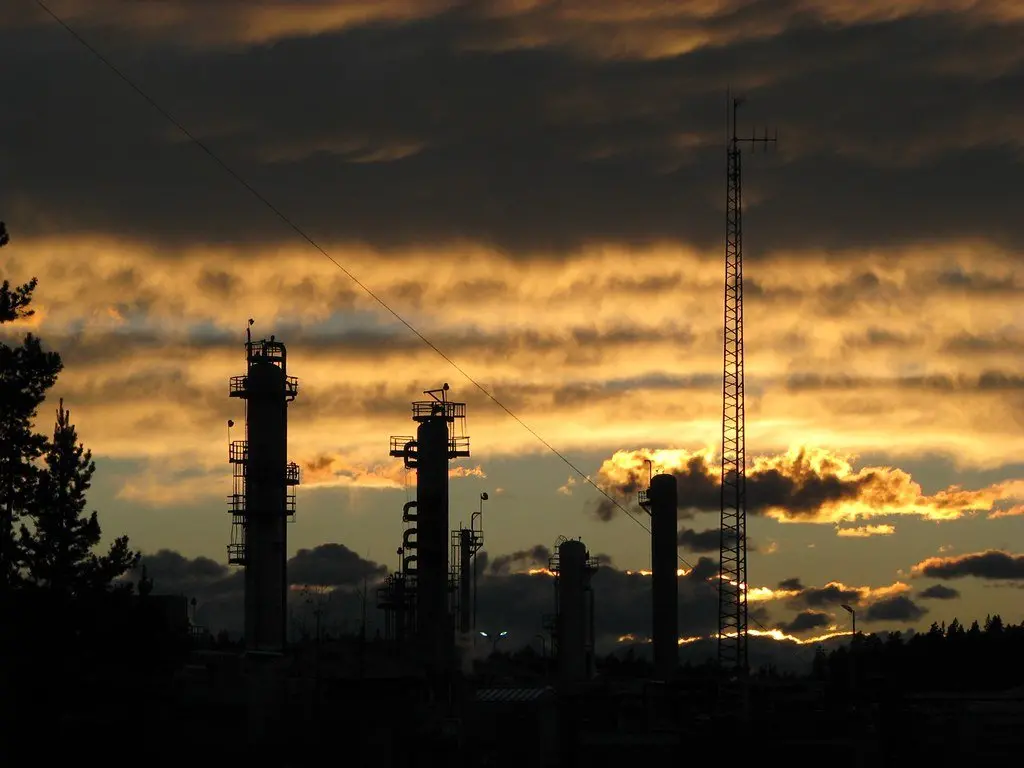
Photo credit: Wikimedia
Carbon offsets have become a popular – and controversial – tactic to fight against the warming climate in recent years.
In a perfect world, the mechanism encourages financing climate mitigation tech, as companies or individuals can invest in green projects to reduce their carbon footprint.
But rather than encouraging a switch to clean energy, major fossil fuel companies are using offsets to compensate for their emissions as they face more pressure to go green. In July, oil giant Shell signed a five-year deal with PetroChina to supply the Chinese company with an undisclosed quantity of “carbon-neutral” liquefied natural gas.
2️⃣ Why China’s crypto exodus is a boon for green bitcoin mining
Crypto mining’s huge energy footprint has long been a problem. Bitcoin, for example, consumes more energy than most countries in the world. In China, the primary source of power behind the crypto mining industry was fossil fuels.
Since a crackdown in June, however, crypto miners are taking their bases out of China and moving to countries with more stable or permissive regulatory regimes. But many of these destination countries are looking to adopt more renewable energy like solar power and slash their carbon emissions, so this may just push more crypto miners to adopt greener practices.

A bitcoin mining farm / Photo credit: Wikimedia
3️⃣ Climate crisis: Do we need millions of machines sucking CO2 from the air?
More companies are looking to develop ways to remove carbon dioxide directly from the air. But the technology – called direct air capture (DAC) – is still in its early days.
These science fiction-like solutions involve turning carbon dioxide into rocks, or burying it in depleted oil and gas reservoirs. Some upstarts have already sold their services to well-known investors such as Bill Gates, Swiss Re, Shopify, and Audi.
The nascent tech is far from being cost-efficient for large-scale deployment. While it may help combat climate change, some experts believe it is not a primary strategy for cutting emissions.
4️⃣ The rise of cleantech in Southeast Asia
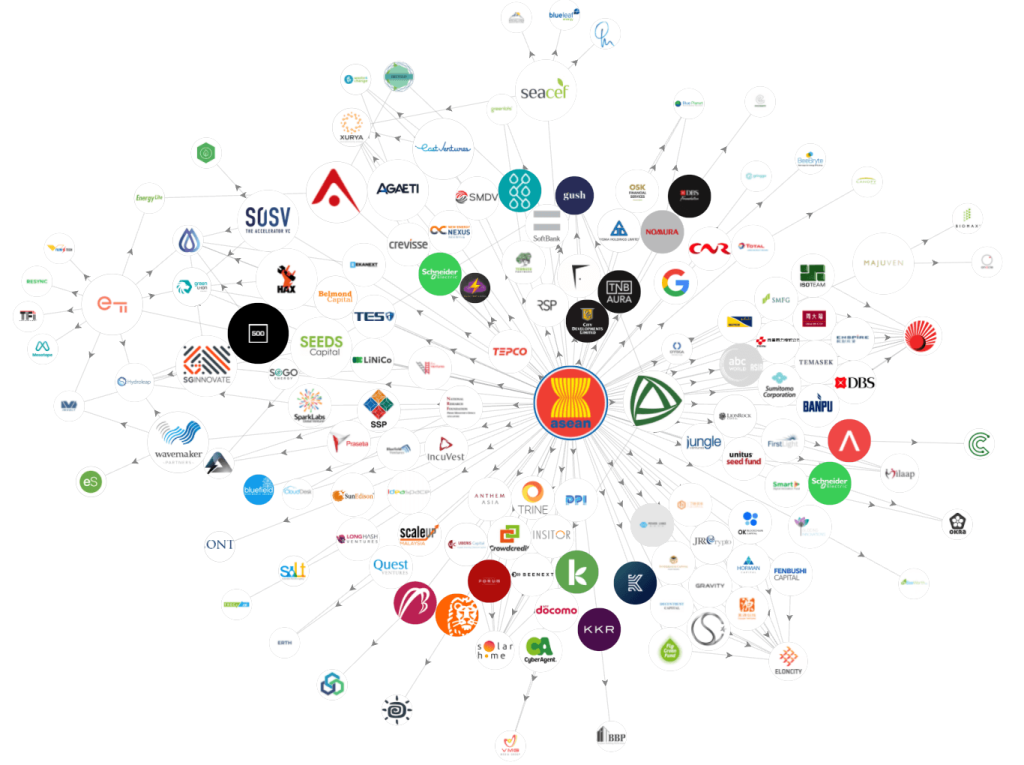
Taking into account existing and planned policies, investment in renewable energy in the region is predicted to reach over $16.4 billion from 2025 to 203o, according to the International Energy Agency.
While both investments and government initiatives are ramping up, Southeast Asia still lags behind neighboring China and India by a large margin.
There’s certainly more room to grow.
In cleantech, private sector investors and venture capital firms – including Entrepreneur First, Trirec, and SOSV – are becoming more active and will likely play a crucial role in the region’s transition to clean energy.
Trending news
You can also check out Tech in Asia’s coverage of Asia’s green tech scene here.
1️⃣ China to stop building new coal-fired power projects Abroad
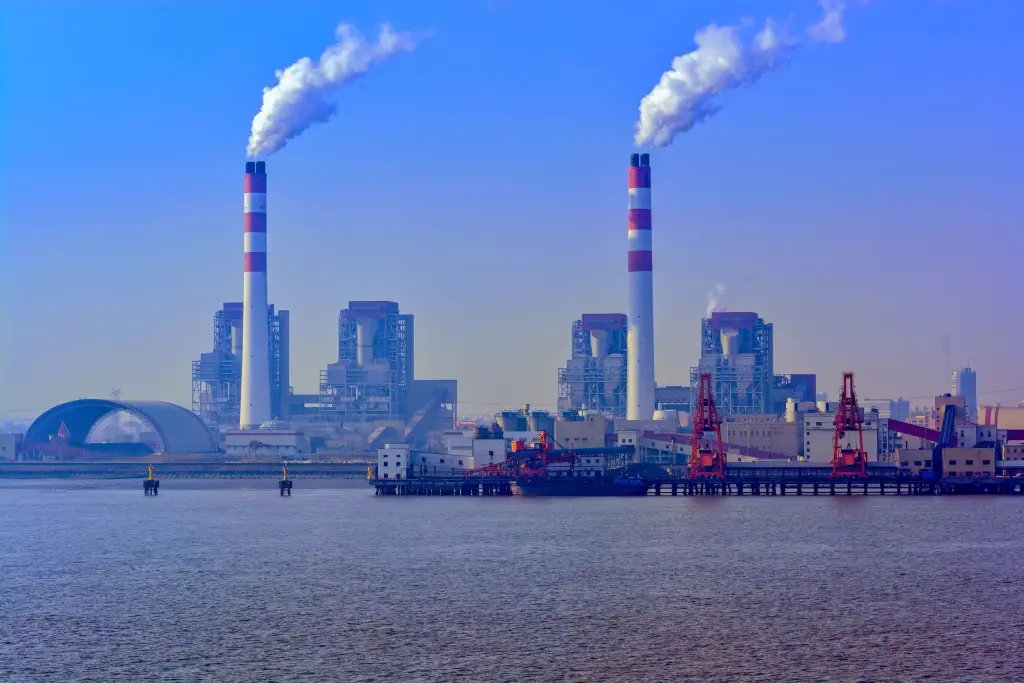
Photo credit: 123RF
President Xi Jinping announced during the UN General Assembly on September 21 that China will stop financing new coal-power projects abroad. The news came a year after Xi pledged that the country would be carbon-neutral by 2060.
Why it matters:
China’s decision could drive down coal development, given that more than 70% of coal projects built today rely on financial support from China.
2️⃣ Bill Gates secures cash from Microsoft, BlackRock for climate fight
Breakthrough Energy Ventures, the Bill Gates-led nonprofit, has raised investments from Microsoft, BlackRock, General Motors, American Airlines, Boston Consulting Group, Bank of America, and ArcelorMittal. The exact investment amount was not disclosed, but it was reportedly upwards of $1 billion. Breakthrough said the new investment would fund its new program focusing on financing and commercializing emerging clean tech.
Why it matters:
Money is flowing into climate tech as it gains more steam. Gates is not the only prominent investor in this space. In 2020, Amazon founder Jeff Bezos set up a $10 billion fund dedicated to “climate-oriented causes.” Similarly, Tesla CEO Elon Musk announced that he would donate US$100 million towards a prize for best carbon-capture tech earlier this year.

Microsoft founder Bill Gates / Photo credit: Wikimedia
3️⃣ Vanguard comes up short on the climate front, think tank says
Money manager Vanguard Group is falling short on tackling climate issues compared to peers like BlackRock, think tank Universal Owner said. According to its analysis, Vanguard has just one employee to track climate issues for every 300 of its portfolio companies, and it lacks the policy to divest from fossil fuels. Moreover, Vanguard helped finance major polluters like tar sands companies.
Why it matters:
With US$8.1 trillion in assets, Vanguard is one of the world’s largest investment companies. Amid mounting climate change concerns, an increasing number of investment firms are moving money away from carbon-intensive sectors. Vanguard was one of the significant players who jumped on the net-zero bandwagon earlier this year.
4️⃣ Climate change: Net-zero carbon emissions could cost Asia trillions
China, Japan, and South Korea will need to invest more than US$12 trillion just for the transport industry to hit their net-zero targets, Dutch bank ING said. According to its new report, these countries will have to boost their electricity-generating capacity to meet the needs of cleaner transportation options.
Why it matters:
These countries are three of the biggest carbon dioxide emitters, not only in the Asia Pacific but globally. Japan and South Korea are aiming to reach net-zero carbon emissions by 2050, and China is looking at 2060. Transportation is one of the major sources of greenhouse gas emissions.
5️⃣ Tesla co-founder announces plans for giant US EV battery plant
Redwood Materials, a battery recycling firm established by Tesla co-founder JB Straubel, is planning to build a battery materials factory in the US. The plan aims to produce 100 gigawatt-hour (GWh) per year for 1 million electric vehicles by 2025. For comparison, the production capacity of China’s largest power battery manufacturer and Tesla supplier CATL, was around 69.1 GWh for 2020.
Why it matters:
Although Redwood Materials is primarily in the recycling business, it wants to create a circular supply chain for EVs and clean-energy products in North America. The move is seen as an attempt to reduce the industry’s reliance on China, the primary producer of battery materials and components.
Startup watch
1️⃣ Singapore greentech startup nets $1.4m in seed funding
SGRecycle, a Singapore-based social recycling startup, has secured seed money of US$1.4 million in a round led by Tai Hing Group. Founded in 2020, the company aims to deploy a network of smart recycling stations in the city-state, where it currently has 30 such hubs.
2️⃣ Temasek joins $22m round of Singapore plant-based meat makeare
Growthwell Foods has raised US$22 million in its series A funding led by Creadev. Temasek and GGV Capital also invested in the round. The alternative-meat maker will use the funds to expand across Southeast Asia.
3️⃣ World’s biggest factory to suck carbon from the sky turns on in Iceland
Orca, the much-anticipated carbon air-capture machine by Swiss startup Climeworks, has begun operations in Iceland. The company is one of the most well-funded direct air capture companies in the world.
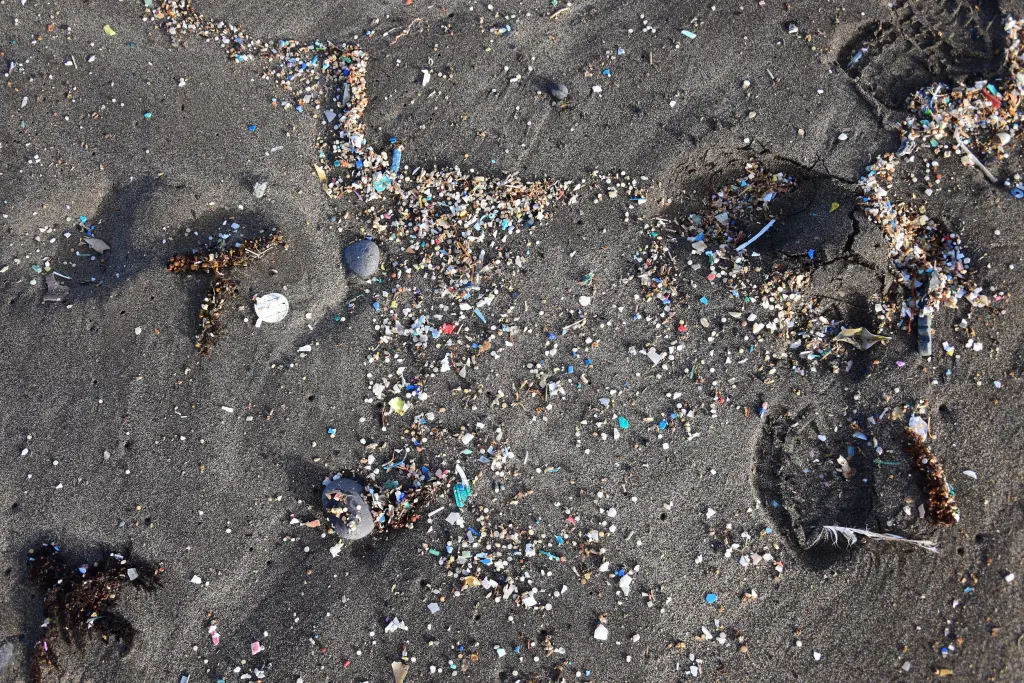
Photo credit: 123RF
4️⃣ Calyxia bags $17.6m to tackle the global microplastics problem
The Paris-based greentech startup has raised $17.6 million in a recent funding round. Calyxia develops biodegradable microcapsule tech, which can potentially reduce the amount of microplastics in the environment. It is working on getting its first product to market this year.
5️⃣ Bill Gates’ greentech fund bets on Silicon Valley farming robots
Iron Ox, which uses robotics and AI to make farming more efficient, has raised $50 million in a funding round led by Breakthrough Energy Ventures. The Silicon Valley-based startup says its hydroponic system consumes 90% less water than traditional farms.
That’s it for this edition – we hope you liked it! Do subscribe to continue receiving The Offset.
Not your cup of tea? You can unsubscribe from this newsletter by going to your “edit profile” page and choosing that option in our preference center.
See you next month!
It earned the best telco title in Global Views CSR Awards.
Taiwan Mobile is on a mission to transit to 100% green energy by 2040.
Stay updated on the go with our mobile app.
Get latest insights with smoother, more personalized experience through TIA mobile app.
Recommended reads
 Peptobiotics secures $6.2m to market agri-focused antibiotic substitute
 Sequoia India plans to raise $2.8b for new fund
 Exclusive: Two heavy equipment startups backed by Indonesian super angel merge
 Japanese 🍺 startup drinks to $615k seed funding
 Ex-Blackstone India head’s VC firm leads $20m round of drone startup
 Singapore robotics firm scores $4.25m in pre-seed round
 East Ventures, Temasek Foundation launch second climate tech competition
 Rise in China’s greentech exports unsettles the West
 Spacetech firm Aliena to spend half of $5.6m raise to ramp up engine production
 Is carbon removal tech’s moment here?





Editing by Terence Lee and Eileen C. Ang
(And yes, we’re serious about ethics and transparency. More information here.)






📅 Upcoming Events
22 October 2026
Payoneer x CSPN Summit 2026