 Malavika Velayanikal · · 6 min read
How a bootstrapped Singapore startup sold software to 1,800 bank branches in Mexico

Lucep’s co-founders Zal Dastur (left) and Kaiesh Vohra were childhood friends in Singapore who went to the same school. Vohra went on to study AI at Edinburgh University and Dastur got a master’s degree in marketing from Monash University. Lucep is their second startup. Photo credit: Zal Dastur.
When we wrote about Singapore startup Lucep two years ago, we focused on its website widget for pop-ups asking visitors if they want a callback. Sales leads from the callback invites go to a “click-to-call” app on the mobile phones of salespeople. An AI engine at the backend does user analytics to prioritize the leads and help with conversions.
Despite the promise of its AI-powered SaaS product, the bootstrapped startup found that selling to enterprises had very long cycles. As such, it needed to find a path with a shorter sales cycle.
The answer came serendipitously from another Lucep product designed to solve the problem of queues. Called VirtuaQ, it took the spotlight when India suddenly withdrew high-denomination currency notes in November 2016, leading to chaos at banks and ATMs. Lucep has an operations team in India and initially offered banks a simple SMS-based service for virtual queues. This evolved into an online-to-offline product for customer engagement.
The sales cycle for such a product was shorter, and it created an extra revenue channel. Lucep found that once a customer had used VirtuaQ, it opened up a range of other engagement possibilities. For example, high networth customers could receive special attention as soon they walk into a bank.
Any technology that can run a browser can run our tech. So, you don’t need to go out and buy new equipment.
Then the penny dropped. Why not also integrate the website engagement widget with the online-to-offline product?
“We’re calling it Lucep OmniPath,” says Zal Dastur, Lucep’s COO and co-founder. “It’s an omnichannel management system for customer engagement in specific types of businesses. So, it’s really built for banks and medical clinics.”
Whether people want to connect with a business in person or via digital means – mobile app, SMS, website, or telephony – Lucep’s OmniPath helps to funnel connections to one channel and direct them to suitable entities like a branch, call center, relationship manager, or customer support team. And where necessary, it can also use AI-powered analytics at the backend from its original online product.
The omnichannel product now accounts for a lion’s share of Lucep’s revenue. It’s also helping Lucep enter new markets such as Mexico, where its software is licensed for use in 1,800 branches of a leading bank chain. But it took much more than a shift in product and sales strategy to achieve that. One crucial breakthrough was a partnership business model.
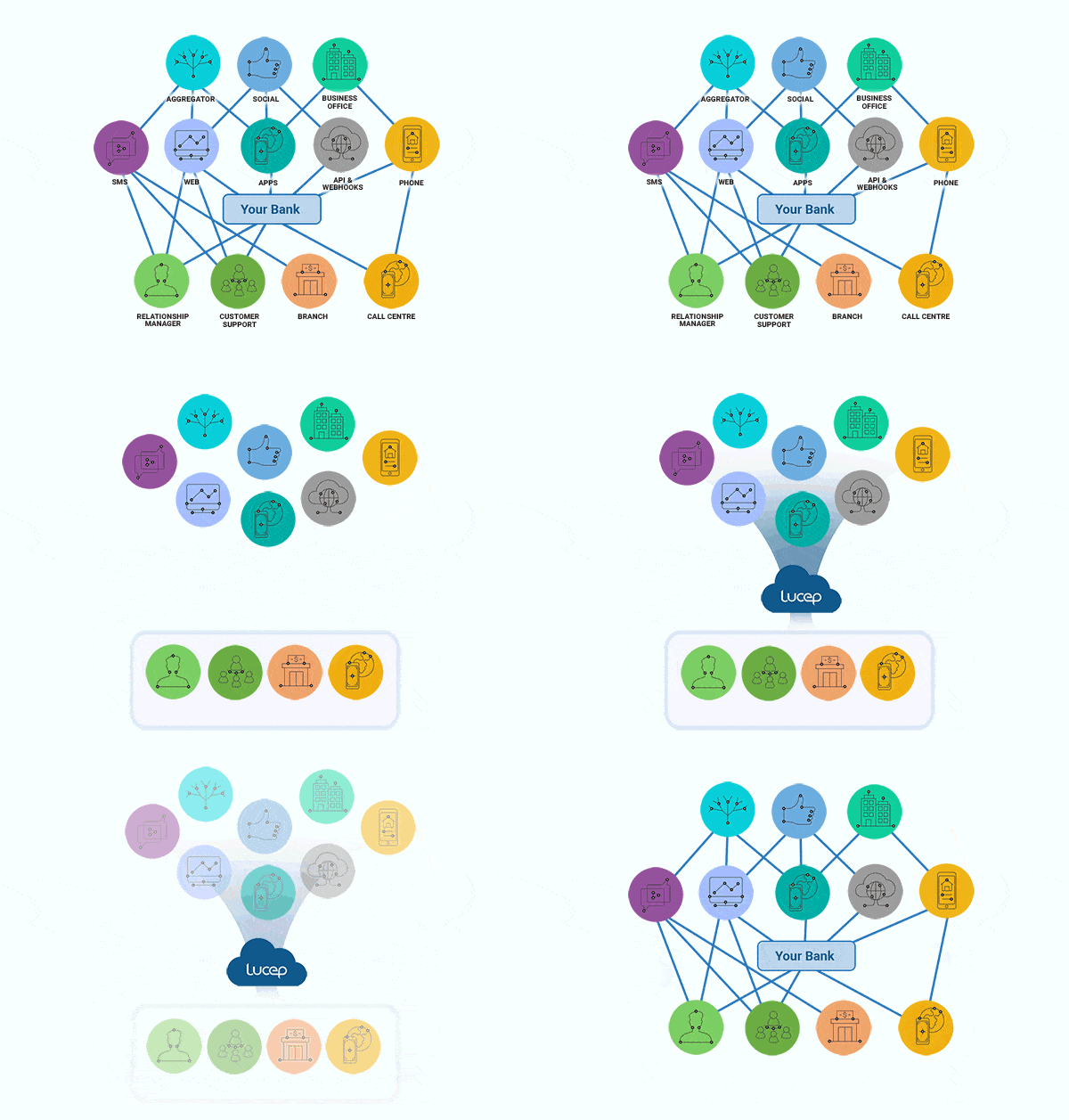
Image credit: Lucep
The partnership model
The break came from deploying its omnichannel product in the Singapore branch of a global bank. The bank’s innovation team was working on reducing its footprint to address concerns over branches getting too expensive to maintain. The success of the pilot led to an agreement for the bank to use Lucep OmniPath in all its branches that wanted to implement new digitization systems. The product went to Thailand, Indonesia, and Hong Kong first. Then it went half-way around the world.
This global bank – which cannot be named because of a non-disclosure deal with Lucep – has a partnership with one of Mexico’s three largest bank chains. It didn’t take long before it shared the benefits of adopting the omnichannel customer engagement system with its partner. And that’s how Lucep landed in Latin America – virtually. “We just made one trip to Mexico, but only after the deal was closed – just to meet the client, have some tequila, shake hands,” says Dastur.
Disrupting legacy systems
Bootstrapped by choice





Stay updated on the go with our mobile app.
Get latest insights with smoother, more personalized experience through TIA mobile app.










📅 Upcoming Events
22 October 2026
Payoneer x CSPN Summit 2026