- Premium Content It takes our newsroom weeks - if not months - to investigate and produce stories for our premium content. You can’t find them anywhere else.
 Gabriel Budi Sutrisno · · 5 min read
GoTo’s on-demand segment charts its roadmap to profitability
After more than a decade of operations, GoTo Group’s on-demand services business is almost in the black.
In the third quarter of this year, the company’s adjusted EBITDA loss for the vertical narrowed by 95% year on year to reach 48 billion rupiah (US$3.1 million).
GoTo’s on-demand services include mobility and food delivery businesses – both operated by Gojek. These are likely to turn a profit by Q4 2023, as GoTo previously forecast.
As of now, the on-demand segment also has the lowest adjusted EBITDA loss while contributing the biggest share of revenue compared to other segments within the group.
Nevertheless, the Indonesian transportation giant slightly lags behind regional rival Grab as the latter’s mobility and delivery units turned profitable faster.
The slog to profitability
Achieving profitability in the ride-hailing industry is certainly no mean feat. In 2020, Gojek and Grab each revealed that their transport business had been profitable, but it took the former 10 years and the latter eight years from founding to hit that milestone.
Ride-hailing pioneer Uber, whose Southeast Asian business was acquired by Grab in 2018, took 14 years to make an operating profit – which happened in Q2 2023.
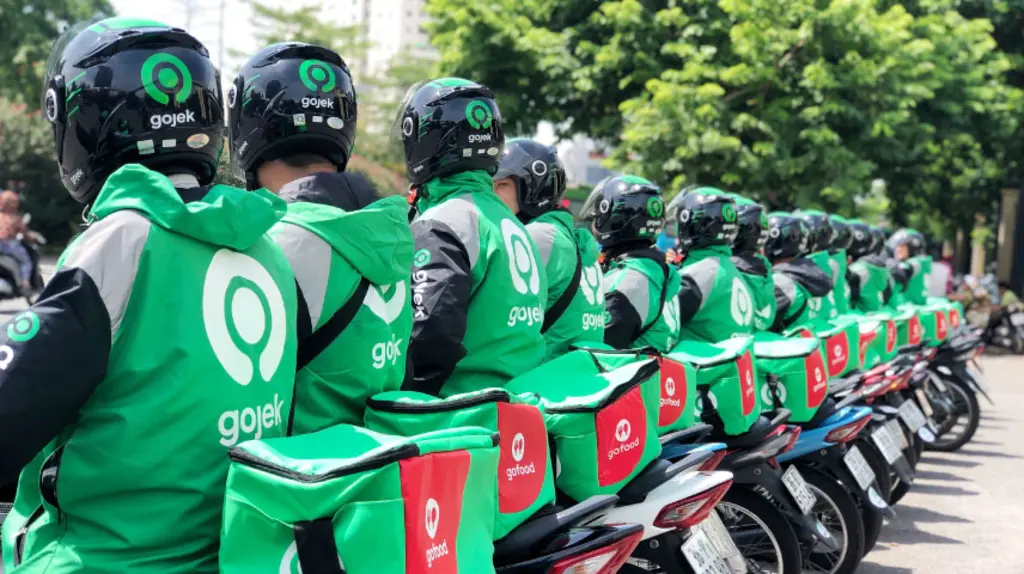
Photo credit: Gojek
It’s important to note that unlike Grab, GoTo does not disclose the financial performance of its transport business as a standalone unit.
See also: Uber’s path to profit: a roadmap for Grab?
As of September 2023, Grab is operating at a loss despite generating positive adjusted earnings at the group level. GoTo has had to cut marketing spend and slash at least 1,900 jobs across two rounds of layoffs to catch up.
Since the group aims for its on-demand segment to be EBITDA positive, Gojek has taken several initiatives to reduce subsidy expenses and expand its addressable market, chief transport officer Shobhit Singhal tells Tech in Asia.
Managing costs while expanding
Gojek has introduced several product solutions on the transport side, aiming to manage its costs while growing its market share in a new user segment.
These initiatives are “more accessible for value-seeking customers” and allow Gojek to reduce reliance on incentives, Singhal says.
Delivering better margins
Reducing reliance on third-party tech
Stay ahead in Asia’s tech landscape
This is premium content. Subscribe to read the full story.
Among the recent initiatives rolled out by its transport business to manage cost is GoCar Hemat, which has reached more than 60 areas in Indonesia.
We know this is not ideal. ⌛ Sign up in 20 seconds. Cancel anytime.
Our subscriber community includes professionals from these companies:





Stay updated on the go with our mobile app.
Get latest insights with smoother, more personalized experience through TIA mobile app.








📅 Upcoming Events
22 October 2026
Payoneer x CSPN Summit 2026