Jonathan Chew · · 6 min read
Why AI solutions need the right hardware to add bite to its bark

When you think of expensive cars, what comes to mind? Probably a sleek and shiny model that’s going to draw oohs and ahs wherever you go.
That said, what’s the point of having the best-looking car if it doesn’t have the right engine? You’re left with all style, no substance.

AI technology works the same way: Companies can have the best AI solutions money can buy, but without the right “engine” to power it, they won’t get the results they want or expect.
This is where high-performance computing (HPC) systems come in, enabling companies to make full use of their AI solutions with the necessary supercomputing abilities.
Peeking under the hood
In short, HPC systems are a collection of extremely powerful hardware components combined into a single infrastructure, and they’re meant to execute really difficult or high-volume computational tasks.
Such systems have been around for several decades and are often used to generate more traditional, non-AI based models such as molecular dynamics simulations, which can assist drug discovery efforts, according to Dennis Juan, associate vice president and deputy head of QCT Singapore.

Dennis Juan, associate vice president and deputy head of QCT Singapore / Photo credit: QCT
But as artificial intelligence became more prevalent, people realized they could “leverage the power of HPC for AI,” he says.
That’s because AI-based workloads usually deal with huge amounts of data and extremely complex algorithms. HPC systems, which consist of components including cutting-edge central processing units (CPUs) and graphics processing units (GPUs), have the right amount of computational power to deal with high volumes of data and execute the calculations that algorithms require.
“You can spend weeks or months feeding your AI with training data without the necessary computing power, or you could purchase an optimized computing infrastructure to enhance workload performance and shorten your time to market,” he adds.
GPUs, in particular, are a critical resource to have when dealing with deep learning – some high-end models are even specifically designed for it. The Frontier, the world’s fastest supercomputer to date, has almost 38,000 of GPUs, and when combined with the rest of the HPC system, they can perform more than a quintillion calculations every second. A quintillion is 10 raised to the power of 18 – if you write it down, that’s 1 followed by 18 zeros.
And one of the workloads the Frontier is designed for is – you guessed it – AI operations.
Improving lives
The convergence of HPC and AI holds much potential for businesses and organizations across a wide variety of industries. The medical sector, for example, can use HPC-powered AI to improve medical-imaging capabilities.
“Previously with medical imaging, you’d have to detect cancer, for instance, with human eyes. But with AI, you can automate the process and increase its accuracy just by letting an AI inference model mark areas at risk for cancer,” Juan shares.
In cases such as cancer detection, boosting the accuracy of medical imaging could also reduce the need for more invasive methods of inspection – such as tissue biopsies – and lessen associated hazards to patients.

Photo credit: treewat0071 / 123RF
Beyond that, having an HPC-powered AI solution can benefit decision-making. For instance, QCT provided a HPC and AI solution to a national hospital in Taiwan, which improved detection speeds of rare genetic diseases in newborns by 3x to 5x.
Medical personnel also have to classify diseases by giving specific codes based on a standard known as the International Classification of Diseases. With QCT’s Compute Platform for AI solution, which is powered by Intel technologies, the processing speed for this task was improved by 30x to 60x.
Another sector that could benefit from faster AI applications is climate studies and forecasting.
In this sector, the “convergence” of HPC and AI means that it isn’t just about the former being necessary for AI solutions. It’s also about how adding a layer of AI can dramatically improve speeds for “time to prediction” instead of “time to market.”
That’s because traditionally, weather forecasting relies on HPC simulations to handle large amounts of computations and data. However, the information still needs to be checked and processed. But time is of the essence for forecasting, and having AI solutions means that instead of systematic number-crunching, algorithms can be trained to detect patterns and make earlier predictions instead.
Spoiled for choice
The importance of combining HPC and AI for organizations is clear, but one of the biggest hindrances is the sheer amount of configurations and choices in the market. There are “hundreds” of different hardware and software provided by “thousands of vendors,” says Juan.
“The infrastructure and ecosystem is really complex, and knowing how to integrate all the components for HPC and AI systems to work well is a daunting challenge for most companies,” he explains.
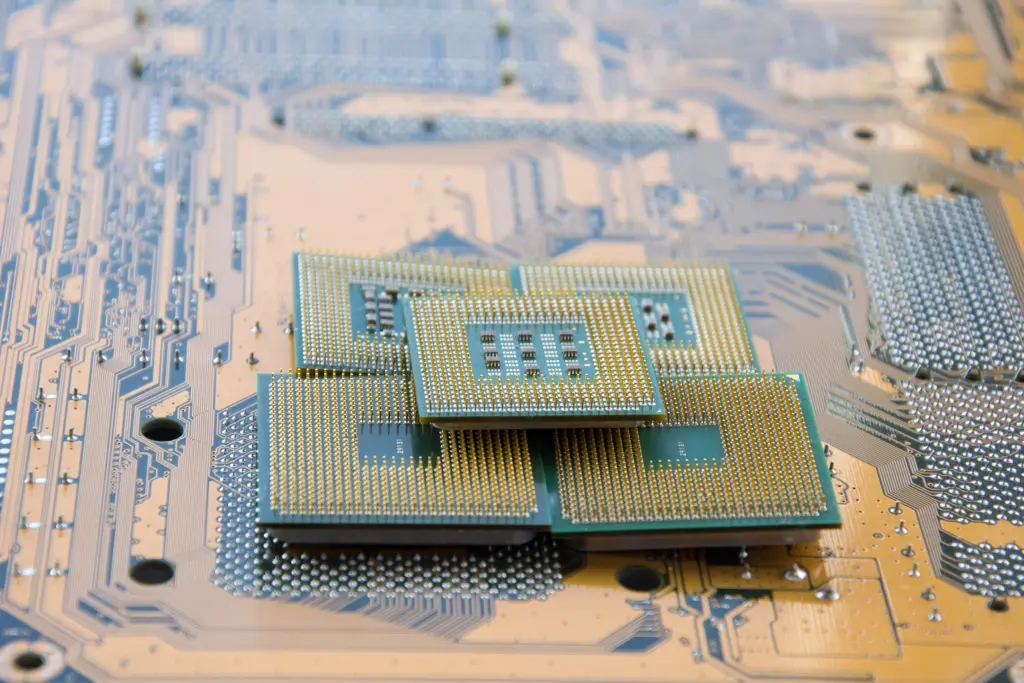
For many organizations, it might be better to save time and money by partnering with solution providers that have a vast ecosystem and are backed by industry leaders such as Intel. These providers have a much better understanding of how to match the right convergence of HPC and AI solutions based on a firm’s needs.
QCT is an example of a provider that works with Intel to provide converged HPC and AI systems. Its QCT Platform-on-Demand (POD), which offers an on-premise HPC infrastructure that’s already been pre-configured for customers based on the industry they’re in, further shortens the time needed to build a combined infrastructure from start to finish.
The QCT POD also shows the importance of being backed by tech majors like Intel, as it allows QCT to capitalize on high-end Intel components – like the Xeon series CPU processors, for instance – that suit deep learning workloads in image classification, speech recognition, and object detection, among others.
Approaching singularity
That said, the work isn’t over just because companies can combine AI and HPC capabilities.
According to Juan, the convergence of AI and HPC is trending toward further improvements in the coming years. Currently, even though AI and HPC are converging, they’re still usually set up on different infrastructures and platforms. For example, HPC and AI workloads still require the use of different programming languages, which may cause friction when both are combined.
However, this could change as AI and HPC become developed enough to be accommodated on a single unified structure, bringing additional benefits to companies looking to capitalize on these capabilities, Juan says.
“With that, you’ll have a much better total cost of ownership and you’ll be able to better manage it through a single system,” he adds.
QCT is a global data center solutions provider. It combines advanced hardware infrastructure with software technologies to support companies in building the right tech environment while shortening the time needed to begin their projects.
To find out more about QCT’s solutions, visit its website.
This content was produced by Tech in Asia Studios, which connects brands with Asia’s tech community. Learn more about partnering with Tech in Asia Studios.
Stay updated on the go with our mobile app.
Get latest insights with smoother, more personalized experience through TIA mobile app.
Recommended reads
 Life’s a game, and AI agents are Animoca’s new play
 Indonesian AI startup goes global
 Forrest Li on scaling Sea, building smarter bots, and founder grit
 An AI assistant that joins sales calls and scores team skills
 Beyond the check: Why VCs need more than capital
 SGX’s CEO says it doesn’t need a unicorn to win
 SMEs want AI too, but not the kind Big Tech is selling
 Oatside’s alt-milk rise hits a profitable gear
 Alibaba’s financial health in 12 charts
 Asia’s telcos bundle AI into mobile plans. Will it pay off?





Editing by Stefanie Yeo, Winston Zhang, and Eileen C. Ang
(And yes, we’re serious about ethics and transparency. More information here.)