Steven Millward · · 2 min read
In search of exotic items, China’s online shoppers set to spend $100b overseas

À la recherche de macarons inabordables. Photo credit: Elsie Hui.
Salmon from Alaska. Makeup from Korea. Handbags from Italy. Infant milk powder from New Zealand. Those are just a few of the things being snapped up from overseas by China’s voracious online shoppers. It’s creating a booming segment called cross-border ecommerce.
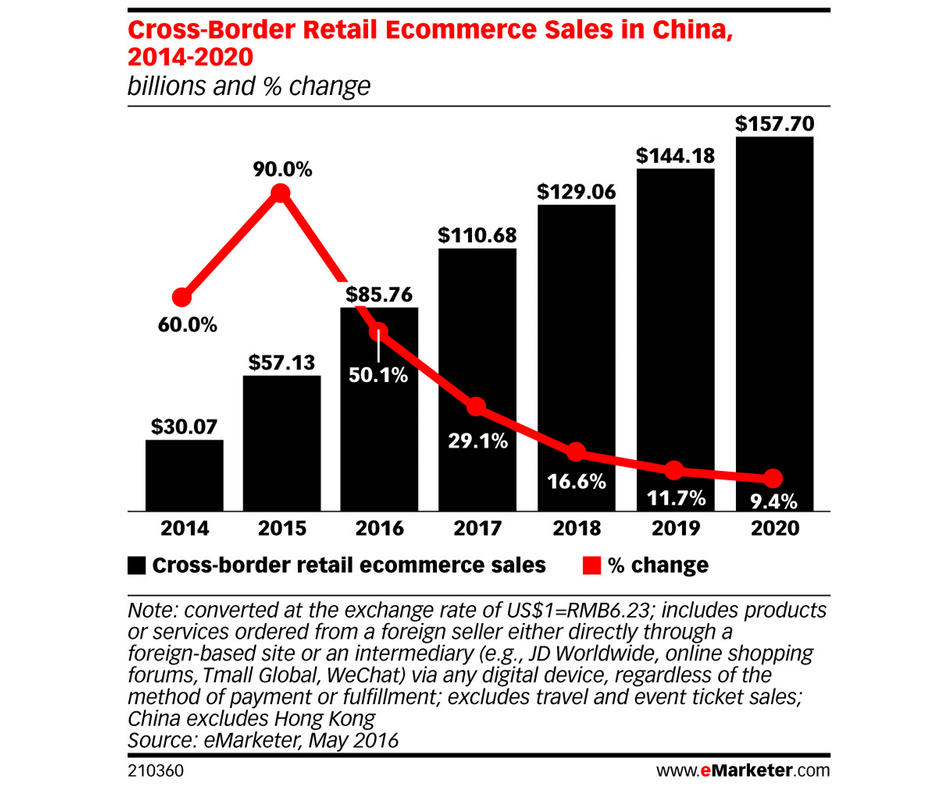
All that cross-border spending on the web will amount to US$85.8 billion by the end of 2016 – nearly triple the US$30 billion tally in 2014. It will soon surge into 12 digits, hitting US$110.7 billion in 2017. Then it will go as high as nearly US$160 billion in 2020, according to data released today by Emarketer.
Alibaba has been getting merchants outside of China onto its Tmall marketplace.
“While the new cross-border ecommerce tax implemented in April this year negatively affects some categories of goods, the demand for foreign goods via the cross-border ecommerce channel is still expected to remain strong due to better prices compared to offline retailers, perceived quality, and better variety,” says Emarketer forecasting analyst Shelleen Shum.
It may also be a backlash against the fake items that plague some online stores – see Alibaba’s unending travails as it fails to scrub its site of pirated items – as well as the food scares that frequently rock Chinese consumers.
An estimated 181 million Chinese people – out of a total of over 400 million ecommerce users in the country – will do some cross-border online shopping this year. They’re expected to spend an average of US$473 each on their imported purchases, which is more than they generally spend on domestically available items.
These shoppers are mostly using Chinese stores for this global shopping spree. Over the past few years, China’s top ecommerce company, Alibaba, has been getting merchants outside of China onto its Tmall marketplace in order to sate this hunger for stuff that’s different or better quality from what can be purchased within the mainland. It experimented with some fresh foods like flounder from Alaska and Hawaiian macadamia nuts in 2013 and then launched Tmall Global dedicated to this purpose in 2014. Alibaba has opened offices in the US, the UK, Germany, France, and Italy expressly for the purpose of bringing overseas merchants onto its marketplace.
Alibaba arch-rival JD has made similar moves with its JD Global store.
Some foreign companies are also benefitting from this trend. That’s why stores like Bloomingdales, Macy’s, and Saks Fifth Avenue have taken steps to make it easy for China’s online shoppers to buy from their respective websites.
Editing by Michael Tegos and Nadine Freischlad
(And yes, we’re serious about ethics and transparency. More information here.)





Stay updated on the go with our mobile app.
Get latest insights with smoother, more personalized experience through TIA mobile app.