- Insights This article was written by a TIA community member. Insights pieces undergo the same rigorous editorial process that newsroom-produced articles have.
 Evgeny Ponomarev · · 5 min read
Struggling to find users, decentralized apps have a long way to go
Following Ethereum’s rise and the subsequent craze around initial coin offerings, decentralized applications or DApps were pegged as the next promising wave of innovation in the blockchain space. Their initial popularity helped propel the broader cryptocurrency narrative towards unstoppable applications and benefits.
However, DApps have faced numerous barriers to adoption over the last year, ranging from technical hurdles to a general lack of familiarity with the underlying technology.
At Fluence, we sought to understand the evolving DApp ecosystem and identify shortcomings of the young cryptocurrency industry.
We reached out to literally every project we could find and received detailed feedback from 160 of them. We also dove into the DApp development process, covering platform composition, technology stack, development tools, monetization, user experience (UX), and more. You can find the full report here and the raw data here.
Of all the projects we surveyed, 72 percent began development in 2018 and 87 percent were built on Ethereum. The responses provide some critical insights into the DApps’ adoption as 2019 begins.
Struggling user adoption
One of the most salient takeaways from the study is the endemically low user numbers of DApps across the board, especially compared to traditional, centralized applications available on Google Play and App Store.
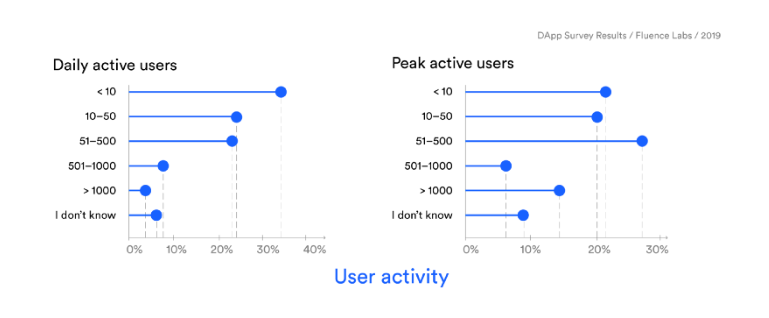
We found that 58 percent of DApp projects reported having less than 50 daily active users (DAUs), with only 12 percent having more than 500 DAUs.
The most common pain point for developers in attracting more users was the limited number of people familiar with how to interact with DApps using cryptocurrencies. The challenges in onboarding new users also correlate directly to the poor UX of cryptocurrency platforms and the arduous task of explaining how target audiences can interact with a DApp.
In particular, gaming, which requires more consistent interactions with integrated cryptocurrency web wallets like MetaMask for in-game activities, precludes many users from regularly using games built on Ethereum. Using MetaMask for fluid application environments creates friction, which users are not accustomed to.
“For simple one-tab games, MetaMask works fine. But complex games like [ours], which can be played in 10 tabs simultaneously, make it pop all over the place,” said Chibi Fighters, an Ethereum-based role-playing game.
Moreover, challenges around mainstream users’ interaction with blockchain-based projects are well-known. We believe that addressing the problem with better integrations between web browsers and cryptocurrency wallets can help overcome the issue.
Projects like Opera and Brave are already working on solutions for this, but making more meaningful progress is necessary before users become more comfortable with using DApps.
Technical barriers
Cryptocurrency presents some unique hurdles for developers: unpolished developer tools as well as documentation and connectivity issues.
Biggest pain points
Conclusion





Stay updated on the go with our mobile app.
Get latest insights with smoother, more personalized experience through TIA mobile app.









📅 Upcoming Events
22 October 2026
Payoneer x CSPN Summit 2026