Ride-hailing company Gojek said on Thursday it was still preparing for a future initial public offering despite a change in leadership structure after its founder and former CEO Nadiem Makarim stepped down to join Indonesia President Joko Widodo’s cabinet.
Makarim has helmed Gojek since 2010 and steered the firm to a US$10 billion valuation. Following his departure, Gojek president Andre Soelistyo and co-founder Kevin Aluwi will become Gojek’s co-CEOs. Makarim will remain a passive shareholder in the company.
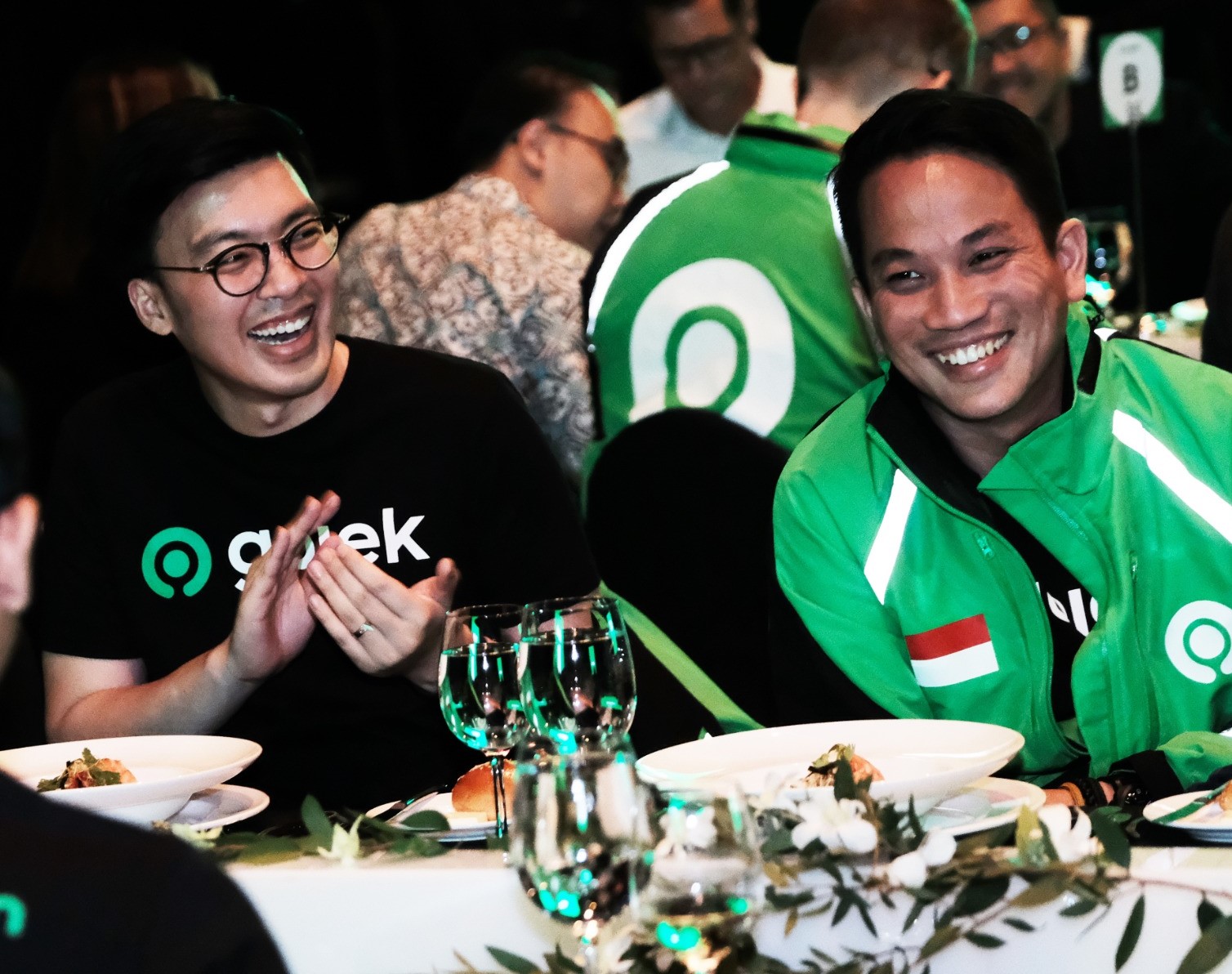
Gojek co-CEOs Kevin Aluwi and Andre Soelistyo / Photo credit: Gojek
At a press briefing on Thursday, Soelistyo said there was no set date for the IPO, adding that the company’s aim was to derive half its user base from the international market and half from home market Indonesia.
“We are already moving along with the journey and processes that we need to improve, to be able to be at that world class standard that global public companies are at, so we’ve done a lot of things in building better governance,” he said.
Investors and analysts alike are watching the leadership transition closely as the firm continues to compete with rival Grab in the region.
“Kevin and Andre have mentored me to be the leader I am today. They are quite simply Gojek’s best,” said Makarim in a letter sent to Gojek staff on Wednesday.
“They have been running this company for a number of years and I have complete faith not just in their technical skills and ability to execute flawlessly, but also in their integrity and their desire to do the right thing every step of the way.”
The departure of Makarim, who has long been the face of Gojek, comes at a critical juncture for the ride-sharing company. Over the past year, it has attempted to expand regionally to markets such as Thailand, Vietnam, and Singapore, breaking away from a singular focus on home turf Indonesia as it remains locked in competition with Singapore-based Grab – a rival that had a head start in regional expansion.
Gojek’s regional expansion has not always been smooth. Its Vietnam affiliate, Go-Viet, has seen several top executives leave after less than a year, and Grab remains the market leader in Singapore, Vietnam, and Thailand. Gojek also faces questions about its strategy to appoint co-CEOs at a time when it is fighting to keep up with market leader Grab.
“The co-CEO model will be a challenge for Gojek going forward,” said Chua Kee Lock, chief executive of Singapore venture capital firm Vertex Ventures, which was an early investor in Grab.
“This doesn’t usually happen at most companies. Usually [they] make the best bet [on who should be CEO].”
Chua pointed out that a co-CEO model could hinder quick response time when it comes to decision-making, especially in industries like ride-hailing, food delivery, and payments, where the conditions can be constantly changing.
A company losing its founder can also be a difficult thing to navigate, especially since they tend to embody the spirit of the company, according to Li Jianggan, founder and chief executive of Momentum Works, an early-stage startup accelerator in Singapore.





Stay updated on the go with our mobile app.
Get latest insights with smoother, more personalized experience through TIA mobile app.